
[Music]
[Applause]
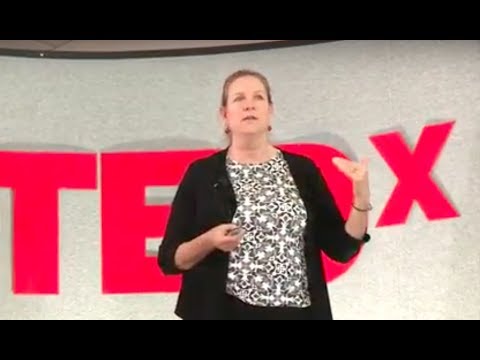
this is Jacqueline Jie she’s a professor
of deaf culture and American Sign
Language or ASL we both work at Kent
State University
Jackie’s going to be talking today in
her first language which was American
Sign Language so she’s talking to the
deaf community and she’s not
interpreting so this is rather unique
because usually she’s in an interpreter
role just saying what I’m saying in sign
language so she’s speaking in her own
language which is really exciting so I
wanted to talk about how this topic came
about we found this chasm facing u.s.
American deaf education and culture so
it happened that this deaf student she
was a struggling student and she asked
if the Geography Department could
provide a note-taker
so we were discussing this as geography
professors and we said why does she need
a note-taker if she already has an
interpreter so yes Jackie I said why
does she need a note-taker
she said that’s because all of the words
in English there’s no sign for so she’s
struggling she needs all the notes she
has to memorize every single word so not
only that but I was asking my other
professor she said what is she Spanish
why does she need everything in English
and so I started corresponding with the
student I soon realized that her English
level was very very low and her emails
to me and I I was very surprised by this
this jurist together to research this
topic that we’re talking about today the
low level of education and English so
globally 80 percent of the world 70
million deaf have no access to education
it’s true though in the United States we
do have access to education so what is
the problem here
so the problem is there’s still a gap in
language acquisition so 95% of deaf
children have hearing parents the
problem being they don’t learn ASL so
here they are thinking well in five
years
my child’s going to learn English then
we’re going to have some great
communication times so but the problem
being from zero to five years is the
time when you need language acquisition
so you even have a place in your brain
where you make connections it has to
have a place to go in order to aid and
learning so the learning parent thinks
that oh well I’ll just wait till they go
to school but in fact when you go to
school for a hundred and thirty seven
years the deaf community has capped out
at a fourth grade level so this is
shocking to us what is going on why are
they at a fourth grade level in literacy
so we thought what if there was college
spon seniors who read at a fourth grade
level and wrote it at rode at a fourth
grade level in English they’d shut this
school down so this seems to be okay for
deaf students so how did this happen how
is it that that’s okay and they’ve been
passed along so we found out that in
1880 there was a deaf conference in
Milan and they decided for the Deaf’s
benefit in order to fit into hearing
society that they would now Institute
oralism and oralism is basically
lip-reading you’re going to mouth the
words a lot of their education is based
on speaking English even though they
have nothing to tie that to so sign
language was forbidden around the world
so there were some deaf schools that
still maintained both but for the most
part oralism became the the mode of
operating so let me just give you a
little feel for what that’s like
so did y’all get that oh I just did the
first couple sentences of the Gettysburg
Address so we’re getting a feel for that
now another another example is I was in
Beijing and this was a crazy trip I took
two little girls two ten-year-olds one
was my daughter
and so I got to the hotel I had I had a
lot of help to get there and then they
wanted to eat at the Hard Rock Cafe so I
I went down to the front desk and he
said oh well I’ll get you a taxi and I
was like oh okay you know thinking that
I’m gonna use my English and be fine and
so he said oh you’ll need this and he
wrote in a little post at the name of
the hotel in Mandarin so so then I’m
meeting at the restaurant I got there
fine and then I’m out on the street
thinking I’m gonna have to get a taxi
and I realized no one around me speaks
English
not one person no sign I can read I have
no idea what I’m doing and I’m panicking
and the girls are looking at me like yay
and I’m like I’m having a heart attack
that I’m trying not to show it so I’m
searching my pocket it’s looking and if
finally I find stuck to the back of a
bill this post-it note with the with the
hotel name on it so I hate a taxi I give
him this little piece of paper you go oh
yeah yeah he’s talking to me I can’t
understand him he can’t understand me
obviously but if we get back to her
hotel but I thought this is what a deaf
person has to go through every single
day so that’s nothing new for a deaf
person so after these dark ages for the
deaf education in America which I’m
talking about for oralism since that
time that’s been a fourth grade level so
that’s roughly a hundred and
thirty-seven years if anyone is above
that level in their education they’re
phenomenal they’re having to memorize
and and to get beyond that level
extraordinary measures so we’ve looked
back into history in the 1800’s there
was the enabling act by Abraham Lincoln
because of the level of literacy was so
high at a college level he made in all
deaf college and that was because there
was so many people that had ASL as their
first language so once you have that ASL
as your first language you’re able to
learn English then you have a place to
put your learning in your brain so this
this was before the wind of teachers
were at that literacy level so I want to
talk about what goes on in the in the
typical college classroom so the Deaf
student would be in the front row there
they’d have to watch the interpreter so
that’s there they’re relying on the
interpreter for their information
they’re missing out on maybe what’s on
the PowerPoint they might show a video
they’re gonna have to read those
subtitles then they’re gonna have to
watch what the teachers saying not only
that but listening to her for her tone
well how’s the how are they going to do
that so all of that peripheral
information is lost and I can think of a
time where my math teacher said I don’t
want to hear another peep out of you and
I went but thought I was really clever
and she said get out like that and I had
to leave and I thought what would this
deaf student know if there’s grumbling
behind them or or they’re getting all
that information that you just hear is
all lost so not only is the tone lost
but also here’s an expression in English
and hearing we don’t really exaggerate
our expressions it’s kind of weird to do
so so when I was watching these
interpreters for Jackie’s parents and
the exaggeration I’m like geez you know
what’s going on there but in fact in ASL
when you’re speaking it you also are
giving the tone and and so exaggerated
facial expression really means something
so what is this girl saying who knows
right so so in fact that’s another gap
in education so not only is their
literacy gaps but there’s also the tone
of the voice missing and then expression
so think of the tremendous loss and the
difficulties that they’d have to
overcome for that
so there’s also another gap that we
found and that is in culture so this top
picture here is a picture of Jackie’s
grandfather when he graduated from high
school at the the Ohio School for the
Deaf her mother also attended the school
and they had deaf teachers and they had
they taught sign language alongside of
oralism so they were really benefiting
from this culture wise because culture
is learned so they had a sense of
belonging a sense of identity and and
they just were learning from their first
language of American sign language so
the picture below is a picnic I attended
these are all the folks they now attend
deaf clubs and so it’s pretty much an
older generation thing though now so
they have been friends for for ages
since they were in school together and
they have community and so this was
really cool but it was so strange
there’s a bunch of people at this picnic
completely silent and I’m like
whispering to Jackie it was just so
bizarre I thought how could all these
people be here not making any noise
so what really strikes me though is the
difference between her parents now teddy
her dad he’s there at the ball cap he
was from a huge all deaf I mean all
hearing family and he was the only deaf
and depent
ten children so they had made up signs
but for the most part did not
communicate with them at all so they
kind of wave
and he was dropped off with his suitcase
at the Kentucky School for the Deaf and
the parents said goodbye he had no idea
what was happening
they were heartbroken dropping him off
without knowing what he was what was
going to happen to him
so for the first time at nine years old
he learned his name he had never known
his name before that and he learned
American Sign Language and they also
taught him a trade so he was a printer
he was a taxpaying citizen and in
contrast oh and he reads at probably a
second grade level and writes as such
also so contrasting Betty Liu her mother
she was born to an all-deaf family her
mother grandparents everything so she
was born into that society and learned
the culture she had a sense of belonging
identity knew why she was being dropped
off at the deaf school was happy to go
there and learn and she reads at a
twelfth grade level she also can write
at a twelfth grade level and she worked
for Packard Electric for 25 years
and also paid taxes and was very much
member of society so what’s happening
now with this culture transfer is it
being transferred in these communities
to the new deaf students so here’s my
answer
this is what’s happening with the deaf
students very very much like hearing
students with texting about 7% of
information comes across in a text
message but this is what you’ll see now
it’s kind of a virtual community so is
that a bad thing so it’s not what’s
really happened all through history
here’s this woman she has her toga on
over her tunic a symbol of a being a
Roman citizen okay but here’s her
daughter running around and just her
tunic she’s dropped the toga she’s who
even knows if she’s a Roman citizen
anymore so we were thinking isn’t that
true that all through history cultures
been replaced and the younger generation
were like kids these days
they’re doing such a thing well is that
a bad thing that that deaf culture has
kind of turned into this virtual world
so we were talking about how the times
have changed there’s been devastation
though for the deaf community as as a
deaf student you’ve been mainstreamed
normally or they may be the only deaf
student at the school and not only that
but you are not a part of a group you
have no culture identity and no sense of
belonging so this is a sign here for
equality
what kind of equality are we talking
about well we were talking about the
Equality of language it’s about time
that we can learn about what needs to be
done here
deaf children really must learn ASL as
their first language otherwise we’ll
never bridge that gap of literacy and
what we can do by doing that by giving
them language we can bridge these
culture both the culture and the English
gap and literacy and by doing that we
can go back maybe to the 1800s like they
once were and be flourishing in society
as poets and literature and now we’ve
capped them down and oppressed them so
that they can cannot overcome that
unless they’re absolutely extraordinary
so thank you
[Applause]
[Music]
Please follow and like us: