
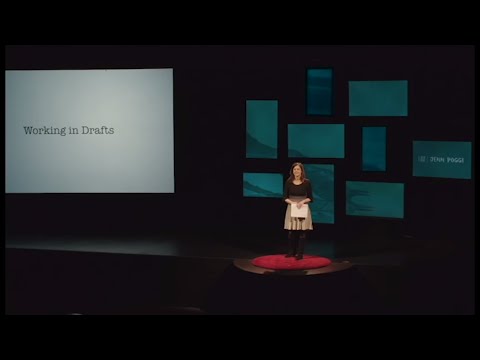
at RIT are
prior to complete a senior capstone this
is a year-long documentary project in
which they research and pitch and
produce a story on a topic of their
choice their work is held in accordance
with the highest professional
photojournalism standards three and a
half years ago when I arrived at RIT I
was tasked with developing and
implementing this curriculum I was also
at that time completing my own master’s
project that cohort of students was
about twenty-one people but within one
semester it was down to thirteen I know
it doesn’t sound very successful but
actually it really wasn’t that big a
deal the capstone process is daunting
and students as they realize the
magnitude of what they were being asked
to produce for some it was just a little
too much the results of the projects
that year formed a perfect bell curve
there were one or two that were good
most of them were average and a couple
of them just didn’t work at all today I
want to talk to you about what I’ve
learned from the capstone process and I
want to share with you how that is
impacting me and the work that I’m doing
today most people approach this process
with a gripping sense of fear they look
at the blank page or canvas and they
feel anxiety and fear just like I feel
right now I they look at it and they
they see a sense of possibility but that
possibility is a double-edged sword it’s
the possibility for success but it’s
also the possibility for failure I
divide the capstone students into three
groups there are the believers there are
the undecided
and there are the doubters those who
embrace the process they tend to
approach the capstone with a cautious
sense of confidence that really opens
them up to opportunities the doubters
they’re reluctant they often also doubt
the value of doing such a project by and
large most of the people fall into the
undecided category they accept that this
is a requirement and they’re prepared to
do the capstone but they’re nervous and
they are maybe secretly doubting or not
so secretly doubting whether they have
what it takes all three of these groups
look at the blank canvas and they feel
that anxiety and fear that I mentioned
before but what sets these groups apart
the the patterns become clear with
really within the first few weeks of
that year and the only thing that will
so following that first cycle of
Capstone’s
we did a pretty rigorous post-mortem and
we isolated lots of things that were
where there were room where there was
room for improvement but we also
isolated one key factor that was
preventing our students from making
meaningful progress in their Capstone’s
our felt our students were reluctant to
create first drafts the our students
were reluctant to create first drafts
and it was actually quite confusing to
us at first because they were already in
the middle of the of the process and
they were making good work it was a
simple yet stunning revelation without a
first draft all forward progress was
stunted and quite stalled the quality of
their final projects it turned
could be directly traced back to how
early they had created their first
drafts and completed a first draft what
this also revealed was an overwhelming
number of students were turning in final
projects that were actually just their
first drafts they were genuinely proud
of what they had turned in and the fact
that they had completed the project but
what they what they were not
understanding was that the quality of
the work that they were producing was
taking a backseat this too was a huge
revelation for me because it was really
the first time that I understood that
many of these students never actually
believed that they could produce
this project in the first place this is
a picture of President Obama and he’s
working on a speech on health care that
he delivered to a joint session of
Congress in 2009 I love this picture
it’s certainly was not his first draft
and I’m guessing it probably wasn’t the
last draft and I can understand that if
you look at this picture you might feel
some sense of anxiety but I feel comfort
I look at this and I think even the
president works in drafts and in a time
when we scrutinize everything I think
it’s a really powerful statement that he
was not afraid to show this the students
that completed
I’m sorry here’s what I know to be true
the fear of failure and rejection are
powerful and they’re their forces that
can prevent positive progress but if a
student can transform their thinking
they can learn to see these as
opportunities for future success the
students that completed the first draft
early on they were able to obtain
meaningful feedback they were able to
isolate elements that were missing from
their storytelling and they were able to
get started on those changes much
earlier
this also made them more confident and
as they had they gained that confidence
they were more likely to take risks in
their own storytelling in their shooting
and in their editing as I was complete
as I was going through this process with
them I was also completing my my
master’s project and I was myself riding
a roller coaster of emotions the
serendipitous timing of this really
allowed me an opportunity to see what my
students were confronting and the pieces
of the puzzle were beginning to fit
together we all have that answer inside
our heads to the I am statement what it
turned out for me what it turned out to
be for my students was actually a
powerful predictor that answer to the I
am statement was a powerful predictor
for how they might do on the capstone
how they what kind of work they might
produce and how successful they might be
if I can transform my own approach at
the beginning of the process when I’m
working with students there’s a chance
that I can also combat the psychological
factors that are preventing hard-working
students from making meaningful progress
and if the students can transform their
own thinking they also have a higher
probability of a successful outcome
asking students to shift their thinking
I asked them not to think about the
capstone project as a problem that they
have to overcome or work through but I
asked them to think of it instead as an
opportunity for them to dream big to
work slow and to walk away with a really
successful story along the way I talked
about failure as an essential part of
the capstone process
an equation I encourage them to fail
early and fail often I also tell them
that their first drafts are gonna suck
but that it’s also gonna lead them to
some unexpected leaps in their work I
talked about my own mistakes and I
definitely talk to them about fear and
how crippling it can be and also how it
can lead to shame
last spring I finished my master’s
project and at the end of my defense my
committee members were talking about the
possibility of being published and the
possibility of a future exhibit and I
laughed a little bit uncomfortably
because the reality was that I was just
relieved that it was over and then one
of them turned to me and she said Jen
you know this is really just the
beginning and there it was the biggest
revelation of all for me I hope students
walk away from the capstone process with
an amazing documentary project and so
many of them do I also though hope they
walk away with a greater and sense of
confidence about what they’re capable
and perhaps a more affirmative answer to
that I am statement because in the end
the capstone experience is really just
the beginning for all that they will
face in life thank you [Applause]