
[Music]
[Applause]
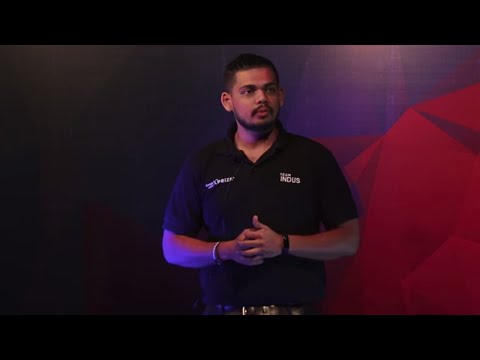
– ladies and gentlemen my name is Rajesh
Sharma and I’m here to share my journey
with India’s first private manned
mission that’s not Wally that’s a girl
she’s the rover so yeah like this slide
says quite simply put a we team in this
are attempting to architect a new India
one moon short at a time both
figuratively and literally tell me if
you recognize this photograph on the
screen great fantastic audience so like
many of you my first ever contact with
space and science itself was through
science fiction and I think it’s
amazingly lucky that all of us are born
in an age in time where there’s rich
science fiction to augment and inspire
the dreams that we have to code a very
famous writer today’s imagination is
tomorrow science a little closer to
reality no points for guessing who this
gentleman is he is amazing he’s
literally out of the pages of a science
fiction novel the kind of things he’s
trying to do the way humans interact
through technology with the world that
surrounds them not only just on one
front but six different fronts is
amazing but his work in space in the
space industry is what inspires me the
most
he once famously said that he’d like to
die on Mars just not while landing a
little closer to home so this is a
little quiz can anybody guess what’s on
the screen right now hey snow yes this
is an astro facility but what mission is
this any guesses sorry
a little before that so this is
chandrayaan-1 India’s first ever space
exploration mission this happened in
2008 and this is the first time India
entered this elite club of countries
that had embarked on space exploration
missions so why am I telling you all of
this this is to basically set context as
to why we’re doing what we’re doing
because your natural assumption would be
is that we’re crazy why would a private
enterprise want to fly something to the
moon so this is why we’re doing what
we’re doing this is called the Google
Lunar XPrize it’s a global space race
that started off in 2007 we discovered
this competition in 2009 and just like
any Indian we said yeah somebody else
could do it
we when we discovered this competition
there was no Indian diamond and we just
naturally assumed that yes some Indian
will do it and what we will do is we
will support them so we waited a year
and a half then literally the last day
of registration where you know I think
the XPrize foundation were the
organizers got fed up and said why don’t
you register and that’s when it hit us
you know it’s about time we stopped
waiting for other people to do something
and become the change we wanted to see
if we wanted to change India as a
country what’s thought of this country
and the ecosystem in which we are
growing today we had to be that change
we can’t wait for somebody else to
change it and then go forward and
support it so we officially became the
30 or the 29th team in the Google Lunar
XPrize in February of 2011 and we’ve
been the only Indian team since start
off with 29 teams went down to 16 teams
in 2014 and as of the start of this year
there are just five teams in this
competition there are two American and
Israeli a Japanese and US so out of
these five teams was just us
[Applause]
I mean it’s great that you’re clapping
cuz we’re tall fyke is what I’m gonna
say next might make you wanna clap more
but out of the two American teams none
of them have a chance the Japanese the
Japanese are flying their rover aboard a
spacecraft and I’ll get back and get to
that in the next slide and the Israeli
our only real competitors so honestly
speaking it’s a two horse race
we’re not top five a top two so just to
encapsulated something that would be
easy for everyone to remember theme in
this is flying a privately funded
spacecraft to the moon in early 2018
this is a feat that’s been achieved by
only three other countries before us
it’s been the USA and the USSR back in
the 1960s 70s and China most recently in
2013 they’ve all done it through their
government agencies and they’ve all done
it with infinite resources and time like
I said we started off with four people
today when you look at the pioneers and
leaders of private space industry names
that come to mind are SpaceX Blue Origin
Virgin Galactic all of them have started
with the immense amount of experience in
the aerospace industry an even deeper
pockets we start off with four people
and no background and literally one of
the first things that we did as a
company was Google search how to build a
spacecraft since we had a have solutely
no idea so the exact opposites in
prerequisites of you know starting an
aerospace company I think we pick it a
little too hard when Richard Branson
said that the first the quickest way to
become a millionaire is to start a
billionaire and invest in aerospace so
these are the three major protagonists
of our mission when it comes to
technology – all of your far right is
the pslv-xl it’s a medium lift rocket
it’s it slows wars and it has the
capacity carry 1.4 tonnes this is
something that we are purchasing from
ISRO directly and this is not something
that we’re going to be building what
we’re going to be building is the
spacecraft and the rover now our
spacecraft is what’s going to solve the
problem
of getting to the moon and soft landing
there that’s part of the problem
statement of the google lunar xprize
weighs about 600 kilograms at liftoff
out of those 600 kilograms about 400 to
420 kilograms is all whew so when we
land we’ll be between a 180 to 200
kilograms and it’s what’s going to carry
all of our primary payload so one of our
primary payloads is a rover iike not
Wally so any guesses what echo might
stand for ECA no idea it’s a Hindi
phrase yeah sorry yeah he’s a yeah good
ego stands for a chhoti SI asha because
we believe that eco is someone who’s
going to be carrying a billion hopes
with her or small in size and you know
take the hopes and dreams for billion
Indians to the moon and kind of become
the first Indian to ever set wheels
there so she’s the one she’s one of our
primary payloads our other primary
payload is the Japanese Rover like I
told you team hakuto doesn’t have a
spacecraft of their own hence they have
to hitch a ride with us she’s going to
be the first of our kind on the moon or
below seven kilogram Rover or micro
class in comparison the lightest rover
on the moon
today is 135 kilograms so this is our
space map we get dropped off to my far
right by the PSLV that’s about 800
kilometers from the Earth’s surface we
do a couple of orbits around the earth
and then slingshot towards the moon once
we get close enough to the moon we slow
down and basically get caught by the
moon’s gravity once we’re caught by the
moon’s gravity we keep reducing our
orbits till we enter what’s our orbit s3
which is a saline eccentric orbit and
that’s how far chandrayaan-1 god so
we’re 99.99% confident we’ll get till
here because the mission director of
Shenron one is now the mission director
of Team in this movie mission as well so
that’s the kind of experience that’s
going behind executing this mission once
we’re in s3 and you know dawn occurs on
the surface
we initiate our descent and this is by
far the most exciting 900 seconds of
this mission their entire journey from
the earth to the moon is about 28 days
900 seconds is what keeps us praying to
every god we know because this is a
completely autonomous process this is
the most tricky and crucial part of this
mission and that’s why only three
countries in the world have managed to
land on the moon it’s not it’s not quite
as easy as dry as building a
self-driving car on earth but it’s it’s
about 10 times more or order of
magnitude complexity problem over there
so once we initiate descent it’s a
completely honest process the spacecraft
initiates a descent autonomously lands
on the surface of the moon once we are
there we have 14 days of surface
operations and we get to drive Iker
around for 14 days so this is the team
that I’m part of and this is as you can
see on the screen a very very diverse
bunch of people we have basically three
different average ages across the
organization there’s the 25 to 27 year
olds where I fall in there is the 65 to
80 year olds where the retired eyes are
assigned this work for us and just
amongst them we have about 400 years
worth of space science experience that
goes to work for us every day and then
in the middle we have what’s called
adult supervision the 40 year olds for
both sides actually so and this is also
our secret sauce because we have a group
of young enthusiastic and hungry
engineers wanting to prove themselves
and they have a firm hand of guidance
and experience from these low experts
and it’s amazing to watch this dynamic
work when you’re sitting in front of a
gentleman who’s launched 49 different
satellites and you tell him no you’re
wrong so along the way another thing
that we’ve done is we’ve grain gained a
lot of credibility because it was very
hard early on in 2012 2013 to convince
anyone that a group of 20 year olds were
building something that’s going to the
moon
so our first major piece of credibility
like I’m sorry I forgot to your name so
sorry when I was introduced we said
we won the google lunar xprize milestone
price so that was said MIT set midway
through the competition and we want a
million dollars to be able to prove that
our spacecraft in would launch and land
on the moon back then that was a lot of
money a million dollars is a lot of
money in hindsight today it’s about
170th the cost of this entire mission
also along the way another major
milestone in terms of credibility was
that we got a launch contract from IEEE
Asaro making us the first-ever private
enterprise in India to be ever given a
dedicated PSLV and also becoming the
first-ever private enterprise in the
world to be to be assigned a PSLV rocket
Google is also another private entity
that’s purchased a PS RV but ours is the
only one in production we’re launching
about six-and-a-half months from now and
as I’m currently speaking the first
pieces of our psi rocket are being built
into your ricotta but now the major
space agency that we’ve signed with is
kanessa which is the french space agency
and they’re sending our cameras along
they’re sending their space create
cameras along with us so these are some
of the backers they’re as crazy as we
are but what really really ties them
together is what they truly believe this
mission stands for it’s one thing to say
that this is technology being built out
of India the kind of ecosystem growth
that this will bring about but it’s also
the kind of impact that is going to have
on the generations to come
if you remember in 1969 when Neil
Armstrong landing on the moon every
American then truly believed that they
could do anything that they wanted and
dreamed in dreamt and believed in so
that’s the kind of impact these people
believe that we are going to bring about
in India and hence that’s why they’re
supporters so when when we had these
people when we had these people come in
and support us we realized that this was
not a moonshot or or a problem saving
that we we had to keep restricted to
ourselves this was something that we
needed to share with the people of India
because at the end of the day when we do
land on the moon we make India the
fourth nation to do so this was
something that we wanted to take out to
the public if India and share with as
many people as possible and truly make
this moonshot every Indians hence we
named this campaign the HAR Indian
common shot and
first efforts in in this attempt to take
this mission to as many people as
possible was launched in June of 2016 it
was called laughter moon it was a
challenge to anybody below the age of 25
to come forward and design an experiment
that we could fly to the moon and that
would help sustain human life in space
the second initiative is we designed a
bus and outfitted with artifacts of our
mission we’ve taken it to over 11
different locations all across India and
covered about 40,000 government school
kids because they don’t have the access
that we would to be able to understand
and learn about this mission on a daily
basis and finally for people who are
over 25 or missed out on lapped moon and
I’m not standing in government school
kids as Goong school kids we we’re
paying to launch something that’s called
the moon short to do this is this is a
program where we’re inviting every
Indian to come forward and associate
themselves with this mission stand up
and be counted and you know basically
make sure that something like this
happens out of India we’re hoping that
out of a country of 1.2 billion 10 lakh
people will come forward and are these
10 lakh people will give 5,000 people
5,000 people and a chance to experience
this mission firsthand just to quickly
take you through so basically what
happens is you come forward and because
you’re helping this mission happened we
will take your name and inscribe it on a
cube made out of nickel and carbon fiber
put it aboard our spacecraft and launch
it to the moon your names will forever
remain on the surface of the Moon
because there is no material degradation
and you’ll be immortalized that way
another thing that one of 50 of the
5,000 people will get to see is sitting
in our mission command center as this
mission goes live you’ll get to see
something that only three kinds of
people get to see in India either the
prime minister or a person working in
ISRO or an owner of a PSLV rocket you
get the witness one of the rocket launch
of our mission life you get to celebrate
with the team as this mission happens on
a daily basis
and finally you get to witness a moment
in history that has never been seen
before you get to watch as a country
becomes part of a club of elite
spacefaring nations and you will for
Humanity see the first time private
enterprise embarked on a space
exploration mission something that we
never ever done before so that’s us
that’s team and listen that’s me
and yeah that’s the end of my talk thank
you
[Applause]
[Applause]
– ladies and gentlemen my name is Rajesh
Sharma and I’m here to share my journey
with India’s first private manned
mission that’s not Wally that’s a girl
she’s the rover so yeah like this slide
says quite simply put a we team in this
are attempting to architect a new India
one moon short at a time both
figuratively and literally tell me if
you recognize this photograph on the
screen great fantastic audience so like
many of you my first ever contact with
space and science itself was through
science fiction and I think it’s
amazingly lucky that all of us are born
in an age in time where there’s rich
science fiction to augment and inspire
the dreams that we have to code a very
famous writer today’s imagination is
tomorrow science a little closer to
reality no points for guessing who this
gentleman is he is amazing he’s
literally out of the pages of a science
fiction novel the kind of things he’s
trying to do the way humans interact
through technology with the world that
surrounds them not only just on one
front but six different fronts is
amazing but his work in space in the
space industry is what inspires me the
most
he once famously said that he’d like to
die on Mars just not while landing a
little closer to home so this is a
little quiz can anybody guess what’s on
the screen right now hey snow yes this
is an astro facility but what mission is
this any guesses sorry
a little before that so this is
chandrayaan-1 India’s first ever space
exploration mission this happened in
2008 and this is the first time India
entered this elite club of countries
that had embarked on space exploration
missions so why am I telling you all of
this this is to basically set context as
to why we’re doing what we’re doing
because your natural assumption would be
is that we’re crazy why would a private
enterprise want to fly something to the
moon so this is why we’re doing what
we’re doing this is called the Google
Lunar XPrize it’s a global space race
that started off in 2007 we discovered
this competition in 2009 and just like
any Indian we said yeah somebody else
could do it
we when we discovered this competition
there was no Indian diamond and we just
naturally assumed that yes some Indian
will do it and what we will do is we
will support them so we waited a year
and a half then literally the last day
of registration where you know I think
the XPrize foundation were the
organizers got fed up and said why don’t
you register and that’s when it hit us
you know it’s about time we stopped
waiting for other people to do something
and become the change we wanted to see
if we wanted to change India as a
country what’s thought of this country
and the ecosystem in which we are
growing today we had to be that change
we can’t wait for somebody else to
change it and then go forward and
support it so we officially became the
30 or the 29th team in the Google Lunar
XPrize in February of 2011 and we’ve
been the only Indian team since start
off with 29 teams went down to 16 teams
in 2014 and as of the start of this year
there are just five teams in this
competition there are two American and
Israeli a Japanese and US so out of
these five teams was just us
[Applause]
I mean it’s great that you’re clapping
cuz we’re tall fyke is what I’m gonna
say next might make you wanna clap more
but out of the two American teams none
of them have a chance the Japanese the
Japanese are flying their rover aboard a
spacecraft and I’ll get back and get to
that in the next slide and the Israeli
our only real competitors so honestly
speaking it’s a two horse race
we’re not top five a top two so just to
encapsulated something that would be
easy for everyone to remember theme in
this is flying a privately funded
spacecraft to the moon in early 2018
this is a feat that’s been achieved by
only three other countries before us
it’s been the USA and the USSR back in
the 1960s 70s and China most recently in
2013 they’ve all done it through their
government agencies and they’ve all done
it with infinite resources and time like
I said we started off with four people
today when you look at the pioneers and
leaders of private space industry names
that come to mind are SpaceX Blue Origin
Virgin Galactic all of them have started
with the immense amount of experience in
the aerospace industry an even deeper
pockets we start off with four people
and no background and literally one of
the first things that we did as a
company was Google search how to build a
spacecraft since we had a have solutely
no idea so the exact opposites in
prerequisites of you know starting an
aerospace company I think we pick it a
little too hard when Richard Branson
said that the first the quickest way to
become a millionaire is to start a
billionaire and invest in aerospace so
these are the three major protagonists
of our mission when it comes to
technology – all of your far right is
the pslv-xl it’s a medium lift rocket
it’s it slows wars and it has the
capacity carry 1.4 tonnes this is
something that we are purchasing from
ISRO directly and this is not something
that we’re going to be building what
we’re going to be building is the
spacecraft and the rover now our
spacecraft is what’s going to solve the
problem
of getting to the moon and soft landing
there that’s part of the problem
statement of the google lunar xprize
weighs about 600 kilograms at liftoff
out of those 600 kilograms about 400 to
420 kilograms is all whew so when we
land we’ll be between a 180 to 200
kilograms and it’s what’s going to carry
all of our primary payload so one of our
primary payloads is a rover iike not
Wally so any guesses what echo might
stand for ECA no idea it’s a Hindi
phrase yeah sorry yeah he’s a yeah good
ego stands for a chhoti SI asha because
we believe that eco is someone who’s
going to be carrying a billion hopes
with her or small in size and you know
take the hopes and dreams for billion
Indians to the moon and kind of become
the first Indian to ever set wheels
there so she’s the one she’s one of our
primary payloads our other primary
payload is the Japanese Rover like I
told you team hakuto doesn’t have a
spacecraft of their own hence they have
to hitch a ride with us she’s going to
be the first of our kind on the moon or
below seven kilogram Rover or micro
class in comparison the lightest rover
on the moon
today is 135 kilograms so this is our
space map we get dropped off to my far
right by the PSLV that’s about 800
kilometers from the Earth’s surface we
do a couple of orbits around the earth
and then slingshot towards the moon once
we get close enough to the moon we slow
down and basically get caught by the
moon’s gravity once we’re caught by the
moon’s gravity we keep reducing our
orbits till we enter what’s our orbit s3
which is a saline eccentric orbit and
that’s how far chandrayaan-1 god so
we’re 99.99% confident we’ll get till
here because the mission director of
Shenron one is now the mission director
of Team in this movie mission as well so
that’s the kind of experience that’s
going behind executing this mission once
we’re in s3 and you know dawn occurs on
the surface
we initiate our descent and this is by
far the most exciting 900 seconds of
this mission their entire journey from
the earth to the moon is about 28 days
900 seconds is what keeps us praying to
every god we know because this is a
completely autonomous process this is
the most tricky and crucial part of this
mission and that’s why only three
countries in the world have managed to
land on the moon it’s not it’s not quite
as easy as dry as building a
self-driving car on earth but it’s it’s
about 10 times more or order of
magnitude complexity problem over there
so once we initiate descent it’s a
completely honest process the spacecraft
initiates a descent autonomously lands
on the surface of the moon once we are
there we have 14 days of surface
operations and we get to drive Iker
around for 14 days so this is the team
that I’m part of and this is as you can
see on the screen a very very diverse
bunch of people we have basically three
different average ages across the
organization there’s the 25 to 27 year
olds where I fall in there is the 65 to
80 year olds where the retired eyes are
assigned this work for us and just
amongst them we have about 400 years
worth of space science experience that
goes to work for us every day and then
in the middle we have what’s called
adult supervision the 40 year olds for
both sides actually so and this is also
our secret sauce because we have a group
of young enthusiastic and hungry
engineers wanting to prove themselves
and they have a firm hand of guidance
and experience from these low experts
and it’s amazing to watch this dynamic
work when you’re sitting in front of a
gentleman who’s launched 49 different
satellites and you tell him no you’re
wrong so along the way another thing
that we’ve done is we’ve grain gained a
lot of credibility because it was very
hard early on in 2012 2013 to convince
anyone that a group of 20 year olds were
building something that’s going to the
moon
so our first major piece of credibility
like I’m sorry I forgot to your name so
sorry when I was introduced we said
we won the google lunar xprize milestone
price so that was said MIT set midway
through the competition and we want a
million dollars to be able to prove that
our spacecraft in would launch and land
on the moon back then that was a lot of
money a million dollars is a lot of
money in hindsight today it’s about
170th the cost of this entire mission
also along the way another major
milestone in terms of credibility was
that we got a launch contract from IEEE
Asaro making us the first-ever private
enterprise in India to be ever given a
dedicated PSLV and also becoming the
first-ever private enterprise in the
world to be to be assigned a PSLV rocket
Google is also another private entity
that’s purchased a PS RV but ours is the
only one in production we’re launching
about six-and-a-half months from now and
as I’m currently speaking the first
pieces of our psi rocket are being built
into your ricotta but now the major
space agency that we’ve signed with is
kanessa which is the french space agency
and they’re sending our cameras along
they’re sending their space create
cameras along with us so these are some
of the backers they’re as crazy as we
are but what really really ties them
together is what they truly believe this
mission stands for it’s one thing to say
that this is technology being built out
of India the kind of ecosystem growth
that this will bring about but it’s also
the kind of impact that is going to have
on the generations to come
if you remember in 1969 when Neil
Armstrong landing on the moon every
American then truly believed that they
could do anything that they wanted and
dreamed in dreamt and believed in so
that’s the kind of impact these people
believe that we are going to bring about
in India and hence that’s why they’re
supporters so when when we had these
people when we had these people come in
and support us we realized that this was
not a moonshot or or a problem saving
that we we had to keep restricted to
ourselves this was something that we
needed to share with the people of India
because at the end of the day when we do
land on the moon we make India the
fourth nation to do so this was
something that we wanted to take out to
the public if India and share with as
many people as possible and truly make
this moonshot every Indians hence we
named this campaign the HAR Indian
common shot and
first efforts in in this attempt to take
this mission to as many people as
possible was launched in June of 2016 it
was called laughter moon it was a
challenge to anybody below the age of 25
to come forward and design an experiment
that we could fly to the moon and that
would help sustain human life in space
the second initiative is we designed a
bus and outfitted with artifacts of our
mission we’ve taken it to over 11
different locations all across India and
covered about 40,000 government school
kids because they don’t have the access
that we would to be able to understand
and learn about this mission on a daily
basis and finally for people who are
over 25 or missed out on lapped moon and
I’m not standing in government school
kids as Goong school kids we we’re
paying to launch something that’s called
the moon short to do this is this is a
program where we’re inviting every
Indian to come forward and associate
themselves with this mission stand up
and be counted and you know basically
make sure that something like this
happens out of India we’re hoping that
out of a country of 1.2 billion 10 lakh
people will come forward and are these
10 lakh people will give 5,000 people
5,000 people and a chance to experience
this mission firsthand just to quickly
take you through so basically what
happens is you come forward and because
you’re helping this mission happened we
will take your name and inscribe it on a
cube made out of nickel and carbon fiber
put it aboard our spacecraft and launch
it to the moon your names will forever
remain on the surface of the Moon
because there is no material degradation
and you’ll be immortalized that way
another thing that one of 50 of the
5,000 people will get to see is sitting
in our mission command center as this
mission goes live you’ll get to see
something that only three kinds of
people get to see in India either the
prime minister or a person working in
ISRO or an owner of a PSLV rocket you
get the witness one of the rocket launch
of our mission life you get to celebrate
with the team as this mission happens on
a daily basis
and finally you get to witness a moment
in history that has never been seen
before you get to watch as a country
becomes part of a club of elite
spacefaring nations and you will for
Humanity see the first time private
enterprise embarked on a space
exploration mission something that we
never ever done before so that’s us
that’s team and listen that’s me
and yeah that’s the end of my talk thank
you
[Applause]
Please follow and like us: