
[Music]
I’m sure all of you are aware that co2
emissions are leading to the climate
change that is happening all around us
almost all of us are affected in some
way or the other
we need about climate changes headlines
very regularly newspapers it’s affecting
our travel schedules
it’s affecting our grocery bills because
of vast devastations and agricultural
output because of untimely rains or
because of no rains draught or excessive
rains right and inside and somehow we
don’t take any action against it right
did you know that the built environment
the infrastructure that we build
contributes to 40% of all the co2
emissions and therefore it has a very
very big impact on climate change in
India our buildings consume 30% of all
the electricity and 50% of all our
energy buildings one’s built last for
5,200 years right so if designed wrongly
or inefficiently we will pay the price
for it for the next 50 200 years it’s
high time that all of us engage in our
decision-making right the next time we
buy a house or we rent one or we give
specifications for a building that we
engage with our designers with the
developers in these conversations where
we specify the efficiency for energy
water and waste we should use our
collective buying power to drive change
at a massive scale one such company one
such company
Infosys decided they will really be
unreasonable and reduce their carbon
footprint by a factor of two Infosys 10
years ago was adding 20
thousand new employees per year and they
were adding 20 lakh a two million square
feet of new build space every year and
they realized the impact of their built
environment on the climate change so
what do they do first
they set up an extensive monitoring
system they metered and measure every
building of emphasis they also started
sub metering and measuring all the major
equipments right and as a result of this
rich data that they were gathering they
realize how energy was being wasted at
nights and how energy was spent in
machines all around their campuses they
collected this huge data set and created
a set of goals for for their consultants
for their new projects remember they
were adding twenty thousand new
employees and two million new square
feet every year so what the kind of goes
right and why it’s unnecessary to be
unreasonable
right so they took on goal saying that
the heat load coming from a facade
should reduce by a factor for right the
lighting use should come down by a
factor for now you might wonder that you
know these glass buildings that they
were designing why do they need like so
much lighting right but it was causing
so much glare that people put the blinds
down and they had to use artificial
lights all the time right motors they
they had documented that the motors were
consuming maximum amount of energy at
emphasis and the highest amount of
energy was in HVAC systems and so for
both of them they had a factor to
reduction target now of course when they
socialize this with their consultants
the first reaction was I mean this is
impossible
are you suggesting that we are designing
such poor buildings that is that you can
do a factor for factor to kind of
reduction and what Infosys did is
because they thought that the guys are
not taking them seriously decided to
link their their fees with the
performance criterias
saying if you don’t deliver on these
performance numbers we won’t pay your
fees point everybody woke up and started
taking it very very seriously and were
the successful well let’s see
so buildings which are very high-tech
looking but very uncomfortable for the
occupants inside suddenly changed right
the window wall ratio from being 100%
glass went down to 40 to 30 percent
right Architects are specifying
insulation on our buildings earlier it
was thought that insulation is already
necessary for poor climates but
insulation works both ways right
it doesn’t let the heat come in and so
what they saw is they started using
super windows now windows and glass
let’s traps heat right and so you you
have to use a very judicious in
especially in a warm and tropical
climate like India and there was a
dramatic change the heat gained into
these buildings came down from four
square foot to 0.5 watts a square foot
that’s a 8x reduction which was possible
only because they stood the ground and
started demanding very unreasonable
goals but this was very simple to
achieve it wasn’t unreasonable in
hindsight right next the goal was that
how do you reduce your lighting energy
but 4x right and so what was happening
is that these deep very deep buildings
started becoming very skinny and
architects were very innovative they
does a lot of research they did a lot of
simulation and they realized that if
they can reduce the floor plan of each
wing to a maximum of 16 meters or 50
feet they could ensure that 90% of the
floor space was completely dealt now if
you sit in the daylight environment you
know it really helps you and it can
actually increase 45 to 50 minutes of
additional sleep during a day in the
night so designing such buildings
and that you know now you were exposed
to data and didn’t have to use
electricity in the daytime right and
additional electricity used for lighting
also introduces heat so then the heat
loads can also came down but then what
about glare how do you how do you
control glare and again a lot of
research and experimentation led to this
idea of introducing a light shelf at a
height of one third from the top of the
glass which bounces the light much
deeper into the space and ensures that
the entire floor is lit but the light
chef also ensures that there is no glare
it shades the glass and ensure that
there is no glare coming into the eyes
of people who’s sitting right next to
the windows right so the new building
that emphasis had no blinds and people
could therefore look even though they
had glass buildings earlier they could
not look outside and now in these
buildings their access to beautiful
campus views all through the day motors
and in turn pumps and fans consumes 60
percent of all the energy in the world
60 percent and so inferences to Qatar
get that how can we reduce that by a
factor – now if you see that in most of
the plant rooms there are lots of pipes
all with 90 degree bends right what we
are trying to do is we are pumping water
so 90 degree bend through friction loses
some of the energy and then gets
diverted right so one of our brilliant
engineers from Singapore mr. Liang Locke
took inspiration from the human heart
right he studied the human heart and
found out that the human heart can pump
100,000 kilometres through our body
through the blood vessels and consumes
only 1.5 watt of energy per GPM whereas
those chilla plants that we were
designing or consuming 15 watts of
energy per GPM as a result he decided to
eliminate 90 degree bends if you want to
achieve 90 degrees it was to 45 degree
bends
and what really resulted was more than a
2x reduction in this imagine if this can
this idea can be taken by all industries
across the world what are the massive
change we can drive in the next level
the next target that we had given was
reducing the HVAC energy by a factor –
right now why do we need air
conditioning it’s for comfort so we
started researching what is comfort for
somebody right because of metabolic them
our body temperature internal body
temperature is at 37 and a skin is at 34
but what is your comfort level so about
24 right in that range so if you want to
be comfortable you always have to give
up a heat now when you explore how does
the human body really give up a heat you
know physics has really taught us that
heat is given up by either conduction
convection or radiation and we know that
the radiation is the fastest way of
giving up heat the sun’s radiation which
is in eight minutes in convection is the
slowest right in chemistry school school
chemistry we’ve learned that you know
between solid liquid and gas
the gas molecules are far apart and it’s
the least efficient in terms of heat
transfer right but what does the air
conditioning use the condition use is
uses air which is gas and it uses
convection so both according to physics
and chemistry in terms of heat transfer
air conditioning is the least efficient
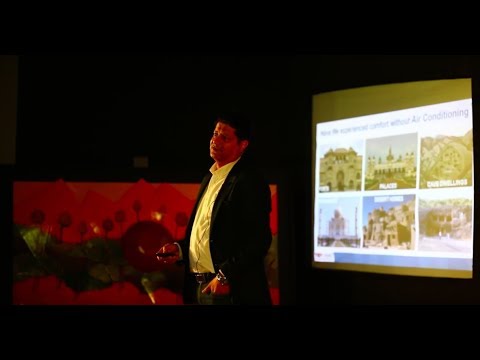
what are the most prevalent right so it
kind of baffled us and all of you have
actually visited you know some of these
places you’ve gone to palaces you’ve got
monuments you’ve gone to caves and
haven’t you experienced that it’s really
nice and cool but there’s no electricity
there so there’s no air conditioning so
what is this mechanism right and if you
dive down deeper you realize that these
walls are these monuments or these caves
are much cooler than your body and the
way your body is giving up a heat is by
radiation to these surroundings and if
you feel nice and cool 45% to 50% of how
the human body gives away heat is my
radiation and we were not exploiting
that fact
so what Infosys has decided to do was to
to work on how we can do this right they
put water pipes inside the slab during
construction and started passing cool
water what that did was exactly like a
cake the monument it cool down the slab
the concrete and then people were able
to radiate to the cooler slab and feel
nice and comfortable extensive studies
and enforces with the help of University
of Berkeley reveal that this this
cooling was far more comfortable there
were no hot spots because you know
engineering an air conditioning system
requires a lot of effort it’s an art to
ensure that there are no hot spots in
the whole room whereas I can radiate
with an eyeliner sight to any part in
the room and feel nice and cool and so
this became the norm in the next 50 lakh
square feet or five million square feet
of buildings but done with this new
technology called reading cooling this
is a big idea and has to be exploited if
we really want because today in urban
India as people aspire to you know you
start using air conditioning in their
homes 50% of all electricity in urban
cities is going in air conditioning and
so we have to innovate and we have to
think differently on how we are going to
cool our future buildings right and
these are the kind of pipes that are put
inside the slabs so Infosys achieved its
goal of 2 x and the reason for this is
because now you were transporting heat
from your room to the exterior using
water and water is three thousand four
hundred times more efficient in
transporting heat than air and also you
are using a much much higher temperature
waters to cool the slab as opposed to
air conditioning and so as a combination
of these two the energy reduction was
more than 50%
how do you prove that to the world and
how does the whole adopt this right
so what inferences did in its first
experimental building they took a
building in to house the left half of
the air-condition and the right half was
reading cooler right and the last seven
years of data shows that the right half
is more than 50 percent more efficient
and far more comfortable than the
air-conditioned side right so in god we
trust’ everybody else brings data was
what normal tea kept telling all of us
and he wanted data to prove to the rest
of the world that this is possible right
now what we have is we have scientists
from all over the world coming here to
study and experience this so that they
can start implementing and recommending
it in their buildings the next important
thing is really to have control okay
monitor and control is really really
important in this new IOT age if you can
monitor and manage all your assets
really well then you can operate them at
the most optimum level and that itself
can lead to an additional 10 to 15
percent savings maybe even more
audits of a lot of projects and I
realized that you know just by operating
the system at its design levels you can
actually improve by a factor of 20 25
percent and in terms of comfort you know
the the next big thing that is happening
now is passing on the controls in the
hands of the users right today we put a
sensor to tell us you know how cold it
is or how warm it is and we put a cutoff
saying that if it touches 24 degrees you
know cut it off what does the sensor
doesn’t work right the best sensor is a
human skin a human body we know whether
it may feel hot for less or more and so
if we can actually on our mobile phone
can adjust it instead of using another
sensor we can really operate that system
at its very optimal level and I see this
trend happening more and more where user
control is going to take over from
sensors so how does all these learnings
right help I mean none of this is can it
can actually work and it cannot be you
know it won’t work unless it is
sustained by profits right and so was
this whole journey at Infosys profitable
well what happened is that the lesser
heat gained right for Less the heat gain
they used super insulated buildings very
high-performing windows all of that so
that increased costs but what also
happened is that they were able to
reduce the cost of the equipment’s the
mechanical equipments came down
dramatically which is the chillers pumps
cooling towers they choose the size of
all of those equipments came down
dramatically the connected load
electrical load came down dramatically
so the size of the DG sets the
transformers the cables came down
dramatically because these two came down
the size of the utility building came
down dramatically right so all of this
reduction these costs the MEP costs was
far more than the cost they invested in
making the buildings more efficient so
in the end Infosys was able to save five
percent in capital costs and 50% in
operating costs
so can we not take this learning from
this one company over the last 10 years
extremely well-documented and take these
learnings to all over the world
we tried that very hard you know we
published all this information in the in
the on the internet but there are very
few takers there very very few takers
all the success stories of Infosys of
you know having grown their employees to
end by a hundred and twenty percent at
the same time the energy grew by only
thirteen percent they save hundred
million dollars in operating costs in
eight years right
none of this really made a big dent in
developers in our country and so my one
formula of really making change driving
change at scale is to incentivize the
developers dramatically if you give them
a 25% additional profit what will happen
overnight they’ll do a PhD in green
buildings right and that not just give
them profits but the tenants who are
occupying these buildings will pay 50
percent less in their electricity bills
in electricity bills constitute about 25
percent of the rent right the everybody
around them will go because you will
consume less resources so it’s a benefit
it’s a win-win-win situation for the
developers tenants community and the
world in general and this I think is
really important that we all
collectively start demanding action and
driving change
it’s our individual choices that can
really drive change thank you
[Applause]
Please follow and like us: