
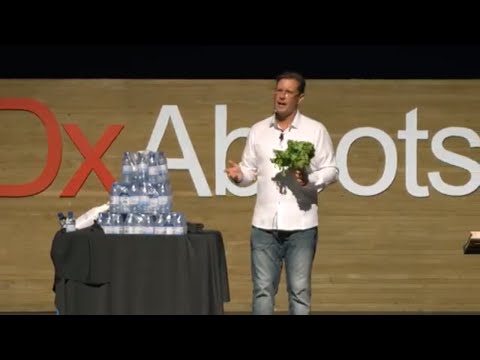
anybody here travel more than 2,000
kilometers to come to TEDx Abbotsford
today okay well I’m gonna introduce you
to a little guy that did travel more
than 2,000 miles thank you Tim and here
he is this little guy traveled all the
way from Southern California to be here
with us today isn’t that just fantastic
now he’s had a rough week of travel
though it hasn’t been easy if I’m being
honest he started out in a farmer’s
field and then went into a crate went
onto a skid had a little tractor ride to
a little warehouse on another truck to
another warehouse on another truck all
the way up to the border no trouble
getting across he has Nexus straight
through to a Canadian warehouse went on
another truck and then finally to the to
the lovely retail shop where I walked by
and I couldn’t resist I mean how could
you resist look at that face besides a
horrible week of travel and if I’m
honest he probably looked a little
perkier when he was a little younger
although we all did didn’t we
he probably looked a little better but
it took a lot to get him here yeah one
of the things that took besides a lot of
diesel fuel is it took a lot of water to
bring this little guy into existence any
any guesses as to how much water it
takes to make a head of lettuce like
this any any thoughts at all well I’m
gonna cut to the punchline it it’s 26
litres of water for one for one of these
guys that’s actually quite a bit isn’t
it the other thing that it takes a lot
of is is this stuff so pesticides have
you ever read the side of a bottle of
pesticide it has a lot of interesting
warnings and health warnings the most
interesting one to me was was that you
should wash your hand
if you’ve used pesticide you should wash
your hands before going to the bathroom
so with that lovely thought I’m not sure
why so it took a lot of diesel a lot of
water and a lot of pesticides to get
them here but but what does that really
matter
well our mothers told us to eat our
greens and we as good Canadians do in
fact we import as a country two hundred
thousand metric tons of lettuce every
year into Canada any idea how much two
hundred thousand metric tons of lettuce
is what that looks like it’s about a
billion of these to give you an idea
that’s a lot so we we have a lot a lot
of lettuce available to us because we
eat about 65 heads of lettuce a year and
I know you’re all beginning to salivate
so I’m just going to cut this guy up we
are let’s get him ready to eat shall we
now we have to cut off the bottom bit
because it’s really too hard and sort of
woody too to eat try not to murder
anybody while I’m up here now these
outside bits are just a little bit nasty
so we’ll just sort of put these here and
I just got this yesterday but it it’s
been here yeah so this is about the
amount that we have that we can eat so
we’d wash this up and get the pesticide
off of it and then begin to eat it it’s
actually a lot of waste isn’t it
but interestingly this little guys
actually the lucky one a lot of his
friends didn’t make it on the journey
when they went to harvest all of him and
his friends some of them just didn’t
look good enough so they just left him
in the field and then some of them when
they got to that second warehouse they
didn’t look quite good enough so they
just toss them into the compost and then
when they finally got to the retailer if
they didn’t look quite good enough to go
on the shelf
then they got toss in the compost as
well and of course we have to come in
buy these things within a couple days or
of course it’s just going into the
compost as well it’s an enormous amount
of waste
for a little bit of salad isn’t it you
see the the real point in the topic that
I have today salads don’t collect travel
points the reason is they don’t like to
travel they need to be eaten where
they’re grown
you see lettuce as soon as you harvest
it and cut that root off it begins to
decay it’s a very thin leaf it’s mostly
water weight and so as soon as you
harvest it it begins to shed its water
and it just doesn’t last very long of
all the things that we eat this needs to
be grown where we live and thankfully
now the technology exists to make that
happen
and that’s what I want to share with you
today so just like a half a century ago
greenhouse technology really took off
around the world and it changed how a
slice of produce in the world is grown
and now we can have peppers cucumbers
tomatoes we can have them 12 months a
year and they can be grown much near
where population centers are well we’ve
got new technology now that lets us do
that with leafy greens but they can be
done anywhere on earth hot climates cold
climates it can be done cost-effectively
near where people live so no longer does
salad or lettuce have to be shipped all
over the place let me show it to you if
it looks like a shipping container it’s
because it is and this is a technology
that was invented only 20 miles away
that Bevo farms in Langley a very large
greenhouse in fact this is what the
inside of it looks you’ll see at the top
there’s a big row of LED lights and
inside is a machine a conveyor belt that
has hundreds of trays that hold
thousands of heads of lettuce that move
the produce throughout and every 2 weeks
you can harvest 4,000 heads of lettuce
just going to show you sort of an
expanded view of it here for those of
you that like technical drawings kind of
cool
now this is a dozen of them inside an
environmentally controlled warehouse
here you can sort of see the side the
rows of light at the top the trays are
moving up to the light and away from the
light and it takes about an hour and a
half to bring a whole tray of produce
from the back to the front so you can
actually stand at the front of the
machine do all the harvesting all the
planting so it’s physically easy work
now isn’t that ridiculously good-looking
lettuce and don’t I look ridiculous in a
hairnet I want you to notice that right
there so the good news is is that we can
grow produce locally but why does that
matter well the local part obviously
matters a lot we don’t have to ship
these things all over the place anymore
but there’s there’s several other
enormous benefits to growing these
things locally one of the first is that
it only actually takes about one liter
of water to grow a head of lettuce in a
cubic farm much much less and because
it’s grown in a clean contained
environment there’s no pests so you
don’t need any pesticide and here’s what
a tray of produce looks like very
similar to what you just saw on that
video this is one week old this lettuce
another week from now it’ll be a single
sized serving head just like you saw in
that short video why is it important to
be a single size serving of lettuce that
you grow and eat you can see the
enormous amount of waste that you end up
having when you grow such a large head
the bottom several inches are too hard
to eat it it’s it’s inedible and we need
to throw it away the outside leaves are
always getting a little bit ratty so
when we grow single serving size heads
you eat the whole thing you’re able to
cut the root off but the whole thing on
the plate dress it up not chop it up
don’t have to wash it it’s clean and
ready to go the other thing you noticed
is that the root stays on
until you go to eat that produce and
that’s crucial as soon as you cut those
roots off that lettuce begins to decay
and it starts to die it will last for
weeks in the fridge if you leave that
root on and in a nice little container
this is a picture of a dozen of them it
almost kind of looks like a greenhouse
doesn’t it so here we have clean lettuce
locally grown one cubic farm one eight
foot wide by 40 foot long cubic farm can
produce the same amount of produce as an
acre of field farming enormous amount of
productivity in a very small amount of
space and do it 12 months a year and do
it anywhere on earth hottest climates
coldest climates it really doesn’t
matter but why does this matter let’s
say you don’t care that it takes a lot
of diesel to get your lettuce to you
let’s say it doesn’t matter how much
fresh California water is used to make
your lettuce you don’t really mind and
maybe you enjoy pesticides on your salad
I mean so let’s say you don’t care about
any of that there are two things you
should care about one this lettuce is
delicious when it’s locally grown and
that root is on it is still alive it
tastes fantastic I mean when you’re a
kid and you’d go out to the garden and
you’d pick a liquor it out you rinse it
off with the hose and eat it and it’s
just taste so much better because it’s
fresh it’s alive it’s just vibrant
the other thing that you should care
about is the nutritional value as soon
as a head of lettuces is harvested it
does begin to lose its nutritional value
if you’re eating something with the root
on that is still alive it retains all
that wonderful nutritional value so
between the taste and the nutrition
great reasons to grow produce locally
and now the technology exists where it
can be done
cost to fly cost-effectively and that’s
very important it’s nice to be able to
do all of this locally but if it’s too
expensive then nobody can access
but it can be done at very similar
prices to any other kind of farming for
lettuce so we have new technology it’s
gonna let us grow leafy greens all sorts
of leafy greens locally herbs micro
greens lettuces but what can we do I
think we should go into our grocer and
we should ask could you get produce for
us that’s grown locally twelve months a
year
and could you get it and assure us that
it’s using as little fresh water as
possible the world’s running out of
fresh water we need to preserve it and
could we have it grown in a clean
environment so we don’t have pesticides
along with our salad and could we grow
it in a single serving size so we don’t
have to throw so much of it away and
could we have it with the roots still on
so that it’ll stay alive in my fridge
for more than a day wouldn’t it be
wonderful to have lettuce that lasts for
weeks in your fridge well this does so
one thing to say lettuce anyone
thanks for listening
[Applause]
Please follow and like us: