
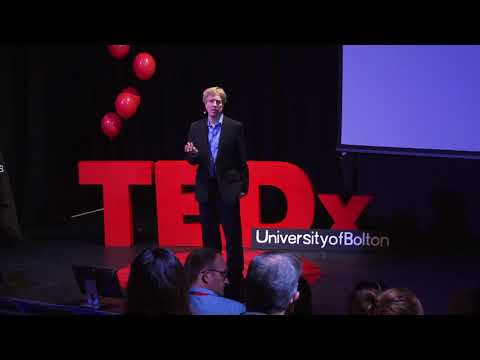
I was 23 and I was in prison
surrounded by murderers rapists serial
offenders perhaps I should be more
precise I wasn’t exactly a prisoner but
I was in a prison because we were in
Edinburgh as students about to perform a
play that I directed at the Edinburgh
Festival and we decided we would like to
try it out in straw in prison which is a
long term prison for serious offenders
and the governor was very generous in
allowing us to do that
the play was Pericles by William
Shakespeare and most people had never
heard of it never let alone seen it and
so this was a bit of a challenge but
nevertheless we were young we were
enthusiastic and we had ideas and so the
play begins with a chorus which in our
case was played by three people two of
whom were beautiful young women Barbara
and Judith they came up the stage the
prisoners went mad whooping shouting
cheering catcalling the very first scene
of the play was about incest actually
child abuse it involved a father who was
abusing his daughter
another Judith came on another very
beautiful young woman
far from it shocking the audience all
the references through the child abuse
the incest and in fact this gorgeous
young woman made them get more and more
exciting so it was as every successive
attractive young woman came on to the
stage they got more more
and I began to think maybe this wasn’t
such a good idea after all
until the middle of the play when there
is a storm and is often the case with
Shakespeare in the storm tragedy happens
but also hope and Pericles loses his
wife the storm is at sea and she dies in
childbirth and she has to be lowered
overboard into the sea and Pericles is
left holding his little baby by this
time the atmosphere had changed to one
of her rapt attention then there’s a
time jump and it’s a baby marina called
marina because she was born at sea is
now a 15 year old her father has there
to be brought up elsewhere he hasn’t
seen her for 15 years and then there is
a murder attempt now the audience had
bought into this young girl and they
watched carefully as she was murdered or
attempted to be murdered she escaped and
then was forced to be a prostitute in a
brothel
and as the pimp was trying to get her to
prostitute herself she refused to do so
has a wonderfully strong speech and
eventually convinces him to let her
teach and if only she could teach you
with her more money so he agrees to that
unknown to her her father was still
alive although he was by this diet
having a nervous breakdown he could
oddly speak because of the loss of his
wife and his daughter who he believed be
dead and someone suggested that this man
who was having this nervous breakdown
should encounter this young woman
because she had such powerful healing
properties and so they met I mean this
wonderful scene at the end of
Shakespeare’s play the father and the
daughter are reunited
and many of the prisoners cried it was
at that moment that I thought I want to
be a theatre director and they cried
because someone understood what it was
like to be separated for that length of
time for years and years the ears from
your wife from your daughter and maybe
never to see them again and most
importantly to be forgiven at the heart
of that was empathy now we’ll move
forward 18 years and I’m in a small room
not much bigger than this space here and
this time the audience of about a dozen
women are sitting around in this front
room of a place called turning-point
which is the charity these women are all
addicted to prescription but but drugs
and this time I’m doing a play called
the last Yankee by Arthur Miller the
world premiere were the British premiere
actually of his play and this play is
about two women who are seriously
addicted to prescription drugs a
cocktail really valium prozac and we
were toward the end of rehearsal and I
thought we owed it to the kind of women
who were suffering in this way to be
certain that our account was authentic
sensitive and real and I thought the
best way to do that would be to play it
for them and find out because the fact
that I had no idea what it was really
like being afflicted in that way it felt
like when the drugs were coursing
through your system so we played the
play no props no costumes just said
rehearsal clothes in a tiny little front
and at one point zoë Wanamaker who was
playing the main role started crying and
the sound of the sobbing of the women as
close to her as I am to the front row
here closer in fact was simultaneous
with her own
sobbing and these women realized someone
understands someone understands not only
does someone understand but there is
hope for me in my situation now we’ll go
forward another 10 years this time I’m
in a pub outside of Doncaster and I was
making a film with BBC set in the miners
strike the 1984-85 miners strike and I’d
agreed with the BBC that all of the
supporting artists or what commonly
known as extras would be people from the
local community and we decided to set up
a community project the film was called
faith and the community project was
going to be called have faith and I said
put it around through the television and
through the local newspapers wasn’t
social media at the time that anybody
who wanted to be in this film could be
in this film and work alongside
professional actors like Maxine Peake
Clive Russell and I said there’s only
one condition that is you have to come
to an acting workshop before if you’re
prepared to do that and still want to do
it then you could be in the film 350
people decided they want to be in the
film and the first workshop I held was
in this tiny room above a pub and
frankly the – former miners most of them
some still – although that pitted sadly
closed down they were very very very
suspect
who was this person from the south
because the BBC frankly had deceived
them badly
there was even famous footage in which
they reversed the order of events on the
9 o’clock news which made it look as if
miners were throwing bricks and then the
police charge actually it wasn’t tiling
the other way round
the police charge – in trainers and
t-shirts and then the miners threw mud
it was a conscious decision on behalf of
the BBC who were supporting Margaret
Thatcher’s such as government at that
time to distort the truth so no – were
going to take very kindly to this young
man from the South of England coming
everybody actually we began working
there subtleness in a circle and I
showed them a book which had wonderful
photographs for the miners strike and
all they had to do was pick one
photograph each they could pick any
photo they wanted to and when they’d all
picked their photograph we began to
construct an improvisation around that
photograph now the interesting thing was
the one thing these people wouldn’t do
they would not play policemen and were
even worse they wouldn’t play Scouts and
the idea of playing ASCAP for those of
you don’t know what a scab is it’s the
term in trade unionism for breaking a
strike a strike breaker that was about
the worst thing you could possibly be
but so I had to persuade them not only
that there was I was going to make a
film that would honor them but also why
they should be required to do this and I
did this as in the first to insist
through empathy to help them understand
two things one what it is might be like
being somebody else and also what the
purpose of the whole in
that was once they understood that they
were on board and on that first workshop
one man could limp
they caught me bravely step forward and
said he’d experiment with being a scab
he wasn’t even interested in being in
this film to begin with it just comes
with his daughters want to be in it and
so I worked with him I tried to make him
feel safe and tried to help him create
what it would be like being this other
human being in these circumstances last
night I’ve texted him I hadn’t spoken to
him for 30 years I want I told him I was
going to be doing this talk today and I
said I just want to know that I am not
imagining or romanticizing this and I
said do you think about this at all
it was 30 years ago
said I think of it every day even
yesterday I was looking at photographs
of us filming it that was the first time
I really felt I was part of the family
working alongside people like Maxine and
working and being pushed and it made me
feel I was worth something it made me
feel confident it made me feel what it
was like to be respected now when we
began this degree course the I was given
the great privilege of being asked to be
professor of theatre here but also
simultaneously to continue in with my
involvement at the Octagon theater and I
am associate artistic director there
which we
I direct two of the octagons productions
a year so I am simultaneously working as
a teacher and as a director and eight
years ago when I got the job at the
Octagon I thought I’d actually take a
look at what my practice as a director
really was like to see if I could
develop and learn from it
and one of the things that I now do at
the beginning of every the first day of
every rehearsal the actors and I sit
around the table with other people other
bands of the creative team and I put
them a proposition
now I learnt this proposition from my
third son is a cross-country runner or
was when he was 15 when I learned to
take him to his races into training
about the PB the personal best and I
said them if we were doing our PB
production of whatever the play is we’re
not going to compare it with anybody
else’s it’s just our personal best
production what would we how would we do
that and then we discuss it now almost
every time different groups of actors
start off with the same proposition
which is I want it to be a safe space
and what feels safe are what feel able
to fail I want to be able to risk
failure I don’t want to be judged I
don’t want be humiliated I want to be
made to feel that everyone is working
together to create something feeling
safe we then go on to discuss how we do
that now
when I started the task of teaching here
I found myself adopting exactly the same
practice with the students which is to
start every not necessarily every lesson
but every module by day how are we going
to do this as well as we possibly can
and what it makes us all know is that we
are learning together if you look at
little babies I have a niece who has a
little three-year-old so I’m beautiful
little boy Gordon Noah learning is as
natural as breathing no one has to teach
a baby to learn or a young but they want
to learn as much as they want to put
those bricks together they want to know
what that word means they want to know
what that is don’t know what that color
is the role of the rest of us is to help
them learn and the role of the director
or the teacher is to help learning to
create the circumstances that are safe
where creativity can happen with that
fear now there are things that get in
our way of doing that much of that has
been created by the world in which we
live these little babies are subjected
to all kinds of terrible things that
happen to them psychologically in terms
of their social background in terms of
the kind of treatment they they get from
adults that’s right when they get from
institutions I don’t by any means I mean
to imply that teachers are in any way
responsible for this it’s a system
that’s responsible for that and we have
all had wonderful wonderful teachers
who’ve made it huge
in our life but two things the define
was of course as an artistic director
when I director playing I can direct it
however I want to I can do whatever I
want to do I can rehearse it as long as
I want to do within the financial
constraints I can rehearse it how I want
to I can proceed how I want to in an
educational institution of course you
can’t do that really if I could of
course the very first thing I would do
would be a scrap any marking of any kind
and scrap any examinations because to
mark people numerically is about as
stupid as me in a rehearsal room marking
actors and saying I’m going to give you
a mark at the end of this rehearsal
process I’m going to give you a 40 or 29
or thing do we think that would help
actors it would inhibit them it would
make them feel judged at every step it
would be a completely pointless activity
marking students is equally pointless in
my opinion not only is it pointless it
actually is counterproductive it induces
fear anxiety and concern when we should
actually be creating exactly the
opposite safety to create without fear
and we have to look at the whole
business of assessment in a completely
different way assessment should just be
like it is in my rehearsal room
I aim strive and want to give actors
feedback positive helpful advice and
feedback and in so doing that helps them
achieve their PB in a teaching
institution
that is exactly what we should be doing
we can’t really because the system
lettuce but insofar as we can sneak
under the radar
the more we can regard feedback as being
constructive helpful and the more we can
allow students to really believe that it
is a good thing to not know something
because not knowing something makes you
find and discover how to know it and how
to achieve your PB
[Applause]
Please follow and like us: