
[Music]
[Applause]
you
so I’m going to talk to you about
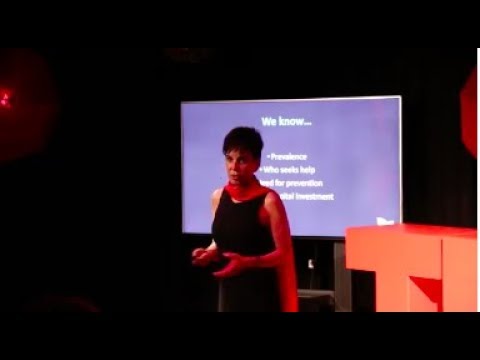
prevalence my work started in 1986 when
I came to Australia with a scholarship
to the research for PhD and we know that
in most countries one in every five
people experience severe anxiety or
depression throughout their lifetime the
high risk times transition into
adolescence hormonal changes having a
child
menopause or retirement those are high
risk times but both throughout life most
families have at least one person that
has experienced severe anxiety
depression so it’s not a stigma because
it happens to 20 to 25 percent of the
population so we know that so many
children in so many adolescents so many
adults experience anxiety depression
however when we look at who seeks help
only three in every 100 people in
average so seventy many many many people
go throughout life without ever talking
about it or seeking help or developing
skills to be able to cope so knowing
there were about twenty years ago there
was an investment in looking for
prevention what can we do to prevent
young side of anxiety and depression
what can we do for people for children
for families to prevent this and there
were some allocation of funds towards
developing research projects in schools
because the idea was if children and
adolescents and adults don’t come to us
we can go to them we can go to schools
and give children skills to help them
become resilient and strong in the face
of adversity and be able to cope in
positive ways and not just in schools
but also go to the workforce and go to
other organizations where adults are
dealing with difficulties and being able
to develop coping skills so that there’s
another very powerful idea developed by
James Ackerman
who won the Nobel Prize of economy in
the year 2000 so this gentleman was not
a psychiatrist not a psychologist not an
education researcher he was a specialist
in economy and they looked at the power
he was very interested in what
governments can do in terms of the
investment of keeping children from a
very young age social-emotional skills
in this way my talk is very connected
with a previous talk
there the importance of connection of
social relationships of emotional
intelligence and being able to give
children and their teachers and their
family social-emotional skills and he
showed that implementing these programs
in the school curriculum was one of the
best investments that the government
could do we also know from many research
studies that are present up there their
social giving children social-emotional
skills has got a very significant impact
on academic outcomes on reducing
bullying in schools on social
relationships within the school
environment and also in terms of the
ability to believe in themselves and to
be able to make wise choices career
choices or just pure relationships with
their family with their teachers with
their schools the World Health
Organization has repeatedly said in
numerous conferences that the highest
risk issues in Western society obesity
type 2 diabetes lifestyle diabetes
anxiety and depression and these are
going to be the greatest source of
expensive for government’s in the next
50 years so if we know this it’s our
ethical obligation to try to address
what we know it’s going to be growing in
our communities and my area
fashion is to treat and prevent anxiety
and depression and also to promote
resilience in school communities in
children and families and adults I’m
very proud to say that a few years ago
corrective services in Queensland has
implemented our adult resilience program
in all the jails in Queensland and more
than more importantly that the inmates
love doing the program they love
receiving those skills and they’re very
enthusiastic and positive and welcome
learning those skills because it’s
phrased in the positive what can we do
to give you power and to give you skills
so to improve your life rather than
what’s wrong and what’s missing we go in
the project from a positive why giving
resilience to people okay so what is
resilience this world is very very
popular and it’s very trendy to talk
about resilience in the Oxford
Dictionary they say it’s the ability to
overcome adversity in a positive way but
I’ve always thought that it’s also to
the ability to become strong by
embracing change and by being able to
face new challenges and opportunities
both things overcome adversity but also
have the strength the inner strength to
embrace change and to embrace
opportunities that’s also being
resilient now some and they all said we
never lose we either either we win or we
learn that’s a very powerful statement
okay so what do we teach children in
these social and emotional resilience
problems we teach them about feelings
they’re all feelings are okay and that
we can communicate about our feelings
and we also teach them about empathy
training the ability to feel what other
people are feeling in other living
beings are feeling because we all feel
the same way and what can we do if we
put ourselves in thy price what can we
do to help them feel better what can we
do to help then we also teach them
relaxation techniques and breathing
techniques that all sports athletes
learn and a very brief and they work
like doing deep breathing relaxing your
muscles
cetera we teach them how to change their
thinking because everyone has negative
thinking sometimes and helpful thoughts
and how to change those unhelpful
thoughts into helpful thoughts into
powerful thoughts we teach them how to
face challenges in small steps so they
feel strong to proceed and to get to the
end result to break challenges in small
steps and face them rather than avoid
them we teach them how to reward
themselves and when we hear about
rewards we always imagine material
rewards and things that you can buy but
we really focus on interpersonal rewards
spending time with people that are very
valuable to you and that you have fun
with and doing having shared experiences
it doesn’t need to be extraordinary
event like going overseas but it can’t
just be sharing a meal together or
playing a game together or planting a
plan together everyone has different
interests but sharing time together
giving other people time doing something
they love is a very powerful reward and
we also teach them to practice
resilience is a language it’s like
England learning English or learning
Japanese the more we practice the bear
will become at it the same thing with
practicing music so the more you
practice resilience skills in your life
in your school community in your home
the strong you’re going to be when you
need to face a new challenges or
adversity and also we teach children and
adults and teachers how to think about
values by his role models we really talk
about values identifying what’s
important in their lives
and thinking about role models emulate
those values and also surrounding
themselves with support networks like at
the end I in the school community or in
the family extended family people that
can support them in what they’re trying
to achieve ok so we show them the
importance of body Clues becoming
friends with your body the importance of
mindfulness and being present and paying
attention with your five senses with
each children younger
children the idea of helpful thoughts
the idea of being brave looking people
in the eye the idea of empathizing with
all living beings in our environment
because we are interconnected we all
feel the same thing and you know we also
teach children the on the right hand
side you can see the skills with each
other lessons which are more complex in
nature our problems will go across the
lifespan from preschool to adulthood and
we can also teach children how to make
choices thumbs up choices or thumbs down
choices so if feeling very angry that’s
okay it’s okay to feel angry you’re
feeling really sad that’s okay everyone
feels sad sometimes but can you make it
thumbs up choice or thumbs down choice
and children really understand and
connect with those ideas so education is
the most powerful weapon which you can
use to change the world and we know that
we can educate people to prevent anxiety
and depression in to promote resilience
these are skills that people can learn
to improve their lives and to improve
the life of the school community guy
this this slide shows that the
interaction between risk factors and
protective factors explains everyone’s
emotional development in your
development of life so risk factors
these these these risk factors and
protective factors are established by
research methanol it extends so they’re
not my choice the established through
research so at the moment 2017 we know
the major risk factors for emotional
development are physiological
sensitivity at birth and we know that
one in every five children independent
of socioeconomic status gender race
ethnicity one in every five children are
born more sensitive than others through
hard right sweat index people dilation
etc we also know there at certain
periods in life in development at
children and adults are more at risk
specific points in life and we know that
life events that are traumatic can have
it can be a risk factor for through
development but the protective factors
as you can see is a much longer list
which is very positive there’s lots of
things we can do to protect people from
becoming very emotionally distressed so
the first one in most important is
attachment being able to develop and
maintain as stable attachment positive
relationships starting at birth with
parents or with grandparents or with
carers and going throughout life with
your peers at school with your teachers
stable attachments are our strongest
protective factor followed by what we
call now mindfulness being able to pay
attention with our five senses and being
fully there it’s very powerful beautiful
moments when you eat really enjoy look
at the colour of the food that taste the
smell when you’re in night should look
at the color of the trees being able to
pay attention without judgment and being
fully there in a mindful wise a very
powerful powerful protective factor the
third one we all know that people
they’re thinking positive wise and can
change the negative thinking into
positive thinking is a it’s a very
strong protective factor being able to
stay a positive thinking throughout life
it’s very powerful in terms of your
emotional well-being then being able to
have values by role models and support
networks which in the school community
of course can develop there and we all
know that schools are very powerful
protective environments for children and
for the teachers they’re working them if
we can hold these idea of values and
having your role models the support
networks in that school or in that
school community with parents and other
family’s health factors we’ve known
since the Greek times that the way your
mental health is related to your
physical health we know that sleep is
extremely important and we’re sleeping
less and less because of technology in
bedrooms and the vision of the electric
life light prolonged the die so sleep is
extremely important for health staying
active and staying active is not
necessarily being just
and loving to run and everything that’s
fantastic but some people are not sporty
but it’s very important to stay active
and to stay active for at least an hour
a tie so walk to school bicycle ride
garden dance but staying at physically
active is extremely important and of
course what we eat is extremely
important and what we know at the moment
is that reducing sugar and specially
processed sugars which are in almost
every single thing you buy these days is
extremely important for your health and
also choosing a plant-based diet is very
important for your health and there’s a
lot of research if you can you want you
can go to our website and we can find
scientific articles about health and
eating so I notice I avoid the word diet
because diet is associated with food
restriction and it’s not about food
restriction is about food choice
prevention programs have been proved for
more than 30 years now there they can
promote mental health and emotional
well-being
there’s beyond that the countries that
really have implemented is statewide in
all the schools and countrywide in all
the schools are Island Canada and New
Zealand where all children do social
emotional problems as part of the
curriculum the school curriculum and we
can see gradually what the results are
in terms of how deaths have a positive
impact on the academic outcomes and the
school relationships the reduction of
bullying in schools etc of course giving
back to the community is very powerful
because that’s the time children and
adults learn that it’s not just about
work and my family gave me but can my
school give me but can my country give
me but the reverse what can I give to my
family what can I give to my community I
can get can I give to my country and in
every community there’s many
opportunities for giving back and
participating giving your time doing
charity work
I don’t know elderly people people in
hospital animal welfare in the
environment going clean places plant
trees etc the Nordic countries are
God giving back to the community as part
of the school curriculum from grade 1 to
grade 12 so every Friday they have to
participate for a couple of hours in
community-based projects now what they
found is that the level of self-esteem
and the level of self-confidence and
also the ability to make choices about
their own careers when they grow up as
really as shall the dramatic change
since the children’s are participating
not just once a year but on a weekly
basis in community-based activities so I
just would like to point out to you that
we are at the point of paradigm changes
in my area which is this stigma tiding
mental health and mental illness and
changing the statistics in Australia
which are very high for depression and
suicide in especially in a young
population we’ve had many paradigms
changes in the history of humanity and
I’ll just mention a few so they are dia
they are the earth the whole solar
system is around the earth and then
people challenging they’re like the
Vinci and Bruno and Psyche know that
there’s many solar systems and the earth
is just one little planet that goes
around the Sun and so there are many
people lost their lives but there was a
massive paradigm shift another paradigm
shift the idea that if you’re born with
a different color skin you have the
right to abuse and use other people with
a different color skin and they’re the
racism issue and there was a massive
paradigm shift United States went to war
for many years over their paradigm shift
but now it will be absurd to think that
someone else is worth less because they
born with a different color scheme there
was a massive paradigm shift a very
recent paradigm shift which sounds like
a job where you can go and look at the
history which is there women can’t think
straight therefore they can’t vote and
in 1976 for the first time in in
Switzerland their women could vote but
in New Zealand it happened maturely but
now of course all women and men can vote
there was sexism of course there was a
massive paradigm shift there all of us
can vote
whether we born male or female but that
sounds absurd to you cuz you can’t
imagine someone sitting next to you not
being able to vote because they’re
female but they are occurred very
recently and they have to have a
paradigm shift in my area of interest
which is mental health physical health
we talk about the same thing everyone
experiences emotional distress and we
should be able to talk about it support
people recognize that many people
experience anxiety and depression and
being able to support them and not feel
stigmatized as a family where as an
individual as a child if they experience
those feelings because guess what we can
help they can learn skills that are
going to make them feel resilient in
cope better another paradigm shift which
is a great passion of mine so I have to
mention it even if it’s like the
previous speaker said speak boldly we
have to have a massive paradigm shift
about our environment and the way we
treat other species species though we
cannot continue doing what we do to
other species because it’s unjust it’s
not justified and it’s ruining our
environment as well it’s all
interconnected so Confucius 500 years
before Christ said our greatest glory is
not in never falling but in rising every
time we fall very powerful statement and
emulates what I’m trying to come to talk
about which is giving people resilience
focus on positive skills we can give
children and adults all throughout the
lifespan so that they can cope better
and I just wanted to say thank you and I
hope I would inspire you to promote
communication in your schools and now
that there are many skills people can
learn not rocket science it’s very
simple skills that can be taught and can
be implemented in schools in work
environments corporate environments
government environments for people to be
able to become stronger and resilient
and co-parent with adversity but also be
able to embrace opportunities there come
their way thank you
[Applause]
[Music]
[Applause]
you
[Applause]
you
so I’m going to talk to you about
prevalence my work started in 1986 when
I came to Australia with a scholarship
to the research for PhD and we know that
in most countries one in every five
people experience severe anxiety or
depression throughout their lifetime the
high risk times transition into
adolescence hormonal changes having a
child
menopause or retirement those are high
risk times but both throughout life most
families have at least one person that
has experienced severe anxiety
depression so it’s not a stigma because
it happens to 20 to 25 percent of the
population so we know that so many
children in so many adolescents so many
adults experience anxiety depression
however when we look at who seeks help
only three in every 100 people in
average so seventy many many many people
go throughout life without ever talking
about it or seeking help or developing
skills to be able to cope so knowing
there were about twenty years ago there
was an investment in looking for
prevention what can we do to prevent
young side of anxiety and depression
what can we do for people for children
for families to prevent this and there
were some allocation of funds towards
developing research projects in schools
because the idea was if children and
adolescents and adults don’t come to us
we can go to them we can go to schools
and give children skills to help them
become resilient and strong in the face
of adversity and be able to cope in
positive ways and not just in schools
but also go to the workforce and go to
other organizations where adults are
dealing with difficulties and being able
to develop coping skills so that there’s
another very powerful idea developed by
James Ackerman
who won the Nobel Prize of economy in
the year 2000 so this gentleman was not
a psychiatrist not a psychologist not an
education researcher he was a specialist
in economy and they looked at the power
he was very interested in what
governments can do in terms of the
investment of keeping children from a
very young age social-emotional skills
in this way my talk is very connected
with a previous talk
there the importance of connection of
social relationships of emotional
intelligence and being able to give
children and their teachers and their
family social-emotional skills and he
showed that implementing these programs
in the school curriculum was one of the
best investments that the government
could do we also know from many research
studies that are present up there their
social giving children social-emotional
skills has got a very significant impact
on academic outcomes on reducing
bullying in schools on social
relationships within the school
environment and also in terms of the
ability to believe in themselves and to
be able to make wise choices career
choices or just pure relationships with
their family with their teachers with
their schools the World Health
Organization has repeatedly said in
numerous conferences that the highest
risk issues in Western society obesity
type 2 diabetes lifestyle diabetes
anxiety and depression and these are
going to be the greatest source of
expensive for government’s in the next
50 years so if we know this it’s our
ethical obligation to try to address
what we know it’s going to be growing in
our communities and my area
fashion is to treat and prevent anxiety
and depression and also to promote
resilience in school communities in
children and families and adults I’m
very proud to say that a few years ago
corrective services in Queensland has
implemented our adult resilience program
in all the jails in Queensland and more
than more importantly that the inmates
love doing the program they love
receiving those skills and they’re very
enthusiastic and positive and welcome
learning those skills because it’s
phrased in the positive what can we do
to give you power and to give you skills
so to improve your life rather than
what’s wrong and what’s missing we go in
the project from a positive why giving
resilience to people okay so what is
resilience this world is very very
popular and it’s very trendy to talk
about resilience in the Oxford
Dictionary they say it’s the ability to
overcome adversity in a positive way but
I’ve always thought that it’s also to
the ability to become strong by
embracing change and by being able to
face new challenges and opportunities
both things overcome adversity but also
have the strength the inner strength to
embrace change and to embrace
opportunities that’s also being
resilient now some and they all said we
never lose we either either we win or we
learn that’s a very powerful statement
okay so what do we teach children in
these social and emotional resilience
problems we teach them about feelings
they’re all feelings are okay and that
we can communicate about our feelings
and we also teach them about empathy
training the ability to feel what other
people are feeling in other living
beings are feeling because we all feel
the same way and what can we do if we
put ourselves in thy price what can we
do to help them feel better what can we
do to help then we also teach them
relaxation techniques and breathing
techniques that all sports athletes
learn and a very brief and they work
like doing deep breathing relaxing your
muscles
cetera we teach them how to change their
thinking because everyone has negative
thinking sometimes and helpful thoughts
and how to change those unhelpful
thoughts into helpful thoughts into
powerful thoughts we teach them how to
face challenges in small steps so they
feel strong to proceed and to get to the
end result to break challenges in small
steps and face them rather than avoid
them we teach them how to reward
themselves and when we hear about
rewards we always imagine material
rewards and things that you can buy but
we really focus on interpersonal rewards
spending time with people that are very
valuable to you and that you have fun
with and doing having shared experiences
it doesn’t need to be extraordinary
event like going overseas but it can’t
just be sharing a meal together or
playing a game together or planting a
plan together everyone has different
interests but sharing time together
giving other people time doing something
they love is a very powerful reward and
we also teach them to practice
resilience is a language it’s like
England learning English or learning
Japanese the more we practice the bear
will become at it the same thing with
practicing music so the more you
practice resilience skills in your life
in your school community in your home
the strong you’re going to be when you
need to face a new challenges or
adversity and also we teach children and
adults and teachers how to think about
values by his role models we really talk
about values identifying what’s
important in their lives
and thinking about role models emulate
those values and also surrounding
themselves with support networks like at
the end I in the school community or in
the family extended family people that
can support them in what they’re trying
to achieve ok so we show them the
importance of body Clues becoming
friends with your body the importance of
mindfulness and being present and paying
attention with your five senses with
each children younger
children the idea of helpful thoughts
the idea of being brave looking people
in the eye the idea of empathizing with
all living beings in our environment
because we are interconnected we all
feel the same thing and you know we also
teach children the on the right hand
side you can see the skills with each
other lessons which are more complex in
nature our problems will go across the
lifespan from preschool to adulthood and
we can also teach children how to make
choices thumbs up choices or thumbs down
choices so if feeling very angry that’s
okay it’s okay to feel angry you’re
feeling really sad that’s okay everyone
feels sad sometimes but can you make it
thumbs up choice or thumbs down choice
and children really understand and
connect with those ideas so education is
the most powerful weapon which you can
use to change the world and we know that
we can educate people to prevent anxiety
and depression in to promote resilience
these are skills that people can learn
to improve their lives and to improve
the life of the school community guy
this this slide shows that the
interaction between risk factors and
protective factors explains everyone’s
emotional development in your
development of life so risk factors
these these these risk factors and
protective factors are established by
research methanol it extends so they’re
not my choice the established through
research so at the moment 2017 we know
the major risk factors for emotional
development are physiological
sensitivity at birth and we know that
one in every five children independent
of socioeconomic status gender race
ethnicity one in every five children are
born more sensitive than others through
hard right sweat index people dilation
etc we also know there at certain
periods in life in development at
children and adults are more at risk
specific points in life and we know that
life events that are traumatic can have
it can be a risk factor for through
development but the protective factors
as you can see is a much longer list
which is very positive there’s lots of
things we can do to protect people from
becoming very emotionally distressed so
the first one in most important is
attachment being able to develop and
maintain as stable attachment positive
relationships starting at birth with
parents or with grandparents or with
carers and going throughout life with
your peers at school with your teachers
stable attachments are our strongest
protective factor followed by what we
call now mindfulness being able to pay
attention with our five senses and being
fully there it’s very powerful beautiful
moments when you eat really enjoy look
at the colour of the food that taste the
smell when you’re in night should look
at the color of the trees being able to
pay attention without judgment and being
fully there in a mindful wise a very
powerful powerful protective factor the
third one we all know that people
they’re thinking positive wise and can
change the negative thinking into
positive thinking is a it’s a very
strong protective factor being able to
stay a positive thinking throughout life
it’s very powerful in terms of your
emotional well-being then being able to
have values by role models and support
networks which in the school community
of course can develop there and we all
know that schools are very powerful
protective environments for children and
for the teachers they’re working them if
we can hold these idea of values and
having your role models the support
networks in that school or in that
school community with parents and other
family’s health factors we’ve known
since the Greek times that the way your
mental health is related to your
physical health we know that sleep is
extremely important and we’re sleeping
less and less because of technology in
bedrooms and the vision of the electric
life light prolonged the die so sleep is
extremely important for health staying
active and staying active is not
necessarily being just
and loving to run and everything that’s
fantastic but some people are not sporty
but it’s very important to stay active
and to stay active for at least an hour
a tie so walk to school bicycle ride
garden dance but staying at physically
active is extremely important and of
course what we eat is extremely
important and what we know at the moment
is that reducing sugar and specially
processed sugars which are in almost
every single thing you buy these days is
extremely important for your health and
also choosing a plant-based diet is very
important for your health and there’s a
lot of research if you can you want you
can go to our website and we can find
scientific articles about health and
eating so I notice I avoid the word diet
because diet is associated with food
restriction and it’s not about food
restriction is about food choice
prevention programs have been proved for
more than 30 years now there they can
promote mental health and emotional
well-being
there’s beyond that the countries that
really have implemented is statewide in
all the schools and countrywide in all
the schools are Island Canada and New
Zealand where all children do social
emotional problems as part of the
curriculum the school curriculum and we
can see gradually what the results are
in terms of how deaths have a positive
impact on the academic outcomes and the
school relationships the reduction of
bullying in schools etc of course giving
back to the community is very powerful
because that’s the time children and
adults learn that it’s not just about
work and my family gave me but can my
school give me but can my country give
me but the reverse what can I give to my
family what can I give to my community I
can get can I give to my country and in
every community there’s many
opportunities for giving back and
participating giving your time doing
charity work
I don’t know elderly people people in
hospital animal welfare in the
environment going clean places plant
trees etc the Nordic countries are
God giving back to the community as part
of the school curriculum from grade 1 to
grade 12 so every Friday they have to
participate for a couple of hours in
community-based projects now what they
found is that the level of self-esteem
and the level of self-confidence and
also the ability to make choices about
their own careers when they grow up as
really as shall the dramatic change
since the children’s are participating
not just once a year but on a weekly
basis in community-based activities so I
just would like to point out to you that
we are at the point of paradigm changes
in my area which is this stigma tiding
mental health and mental illness and
changing the statistics in Australia
which are very high for depression and
suicide in especially in a young
population we’ve had many paradigms
changes in the history of humanity and
I’ll just mention a few so they are dia
they are the earth the whole solar
system is around the earth and then
people challenging they’re like the
Vinci and Bruno and Psyche know that
there’s many solar systems and the earth
is just one little planet that goes
around the Sun and so there are many
people lost their lives but there was a
massive paradigm shift another paradigm
shift the idea that if you’re born with
a different color skin you have the
right to abuse and use other people with
a different color skin and they’re the
racism issue and there was a massive
paradigm shift United States went to war
for many years over their paradigm shift
but now it will be absurd to think that
someone else is worth less because they
born with a different color scheme there
was a massive paradigm shift a very
recent paradigm shift which sounds like
a job where you can go and look at the
history which is there women can’t think
straight therefore they can’t vote and
in 1976 for the first time in in
Switzerland their women could vote but
in New Zealand it happened maturely but
now of course all women and men can vote
there was sexism of course there was a
massive paradigm shift there all of us
can vote
whether we born male or female but that
sounds absurd to you cuz you can’t
imagine someone sitting next to you not
being able to vote because they’re
female but they are occurred very
recently and they have to have a
paradigm shift in my area of interest
which is mental health physical health
we talk about the same thing everyone
experiences emotional distress and we
should be able to talk about it support
people recognize that many people
experience anxiety and depression and
being able to support them and not feel
stigmatized as a family where as an
individual as a child if they experience
those feelings because guess what we can
help they can learn skills that are
going to make them feel resilient in
cope better another paradigm shift which
is a great passion of mine so I have to
mention it even if it’s like the
previous speaker said speak boldly we
have to have a massive paradigm shift
about our environment and the way we
treat other species species though we
cannot continue doing what we do to
other species because it’s unjust it’s
not justified and it’s ruining our
environment as well it’s all
interconnected so Confucius 500 years
before Christ said our greatest glory is
not in never falling but in rising every
time we fall very powerful statement and
emulates what I’m trying to come to talk
about which is giving people resilience
focus on positive skills we can give
children and adults all throughout the
lifespan so that they can cope better
and I just wanted to say thank you and I
hope I would inspire you to promote
communication in your schools and now
that there are many skills people can
learn not rocket science it’s very
simple skills that can be taught and can
be implemented in schools in work
environments corporate environments
government environments for people to be
able to become stronger and resilient
and co-parent with adversity but also be
able to embrace opportunities there come
their way thank you
[Applause]
[Music]
[Applause]
you
Please follow and like us: