
[Applause]
so I am the descendant of German
immigrants an American manufacturer in
the last of 46 great-grandchildren to
work in the fourth generation of our
family business and I’m here to tell you
that the American Dream is dead my
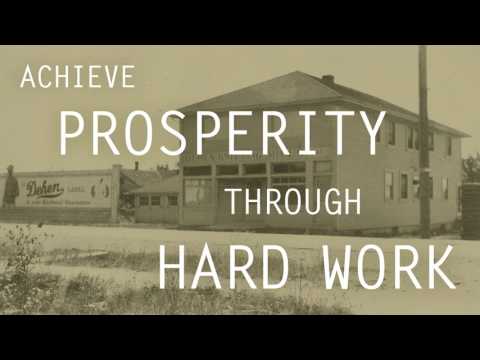
definition of the American Dream dates
back to 1931 the ideal that every US
citizen should have an equal opportunity
to achieve success and prosperity
through hard work determination and
initiative let me clarify the American
Dream is only mostly dead there’s a big
difference between mostly dead and all
dead
I also believe that the city of roses
can be part of the resurrection but
before I get into that I want to share
with you a little bit on the history of
knitting my family has been running a
knitting company in Portland for nearly
100 years we are passionate about it we
are dedicated to it we love knitting
so the best we can tell knitting began
in Egypt around the Year 1000 seee and
the oldest knitted items to be
discovered are these 700 year old wool
socks from Egypt knitting then spread
into Spain either carried over by Arabs
during the Islamic conquests or brought
back by Spaniards during the Crusades
14th century paintings of the Knitting
madonna tell us two things
not only had knitting spread into Italy
in Spain but it was now the cool thing
to do for upper-class women by the end
of the sixteenth century
knitting was an established craft driven
by a very powerful fashion trend for
Italian and Spanish men of style
knitted stockings were as fundamental to
a renaissance man’s wardrobe as blue
jeans were to James Dean the more
elegant the stocking the more
fashionable the man
and then in 1589 an English clergyman by
the name of William Lee invented the
first knitting machine and knitting
guilds began to establish themselves
exclusively mail they were organized to
protect trade secrets and to improve the
quality of the profession this is the
point in history when knitting
transitioned from a simple hobby into a
business fast-forward to the Industrial
Revolution and we all remember Eli
Whitney knitting machines became more
sophisticated the textile industry began
to boom and the manufacture of knits
fully transitioned from human hands into
machine to machines now in the 21st
century there are knitting machines all
over the world we live in a culture of
an on-demand lifestyle consumers are
wanting things faster and cheaper more
now than ever before and the industry
has compressed traditional manufacturing
style cycles to keep up with these
trends but in stark contrast to this
fast fashion and planned obsolescence we
take an incredible amount of pride in
our product we believe in heavy duty
old-school truth our sweaters are made
of over three pounds of wool and can be
passed down through generations if you
were to unravel one of our sweaters
you’d be astonished to find nearly eight
miles of yarn every garment has 247
years of experience knit into it but as
a country we continue to outsource
materials labor and the very
manufacturing jobs that were once the
backbone of our American economy talent
trade will continue to leave our country
for more competitive markets while
paradoxically we are not opening our
borders to the very people that helped
us build our nation in the first place
this is not sustainable the notion of
building walls and travel bands these
are not collaborative messages to be
sending to the world
there is no question that immigrants
create an engine of economic prosperity
and they are the bedrock of this country
it deeply troubles me and strikes me to
my core with my family roots and where
we come from you see my family’s pursuit
of the American dream began when my
great-grandfather William emigrated from
Germany he made a decision to leave
everything that he knew sitting out for
a foreign land with a new culture in an
unknown language in the hopes of
creating a better life with him he
brought five hundred dollars an
incredibly strong work ethic a healthy
respect for tradition and a fearless
pioneering spirit you see when William
came from a family of knitters his
parents making wool socks and sweaters
back in his native Germany so it’s no
surprise that he eventually found work
at Janssen Knitting Mills as the knight
factory manager and then in 1920 after
cobbling together his savings and a bit
of borrowed money he left Janssen and
started started a business doing what he
knew best by the late 1920s Williams
small company became the definition of a
family business William was a Salesman
his wife Celia ran the company and their
children dropped out of school after
eighth grade to work in the factory but
with the stock market crash of 1929 came
the Great Depression and the bank
foreclosed on the business but the
family was undeterred my great uncles
broke into the padlocked mill in the
dead of night
they removed two one-ton knitting
machines
this is a true story they remove the
machines piece by piece and then
reassemble them in the basement of their
home when one particularly tall machine
didn’t fit they actually cut a hole in
their kitchen floor they quietly
maintained operations and peddled
sweaters door-to-door sometimes even
taking food as payment remember this was
the depression they took pride in
providing for other people and our
family through barter and trade this
idea of equality resonated with a family
who did not subscribe to any notions
that race religion or class affected a
person’s worth in the 1940s
[Applause]
[Music]
in the 1940s I hired otto rutherford
without giving any thought to the color
of his skin well initially hired as a
mechanic mr. Rutherford went on to
become a master knitter at the company
but this was just the beginning of
Otto’s own journey it was his pursuit of
equality they would eventually have him
running the Oregon chapter of the
n-double a-c-p and teaming with Senator
Mark Hatfield and getting key
anti-discrimination bills passed by the
oregon legislature
[Applause]
then around the time of the Vietnam War
the company was expanding and had a
standing job posting at the
international refugee center here in
Northeast Portland now this was not for
any moral reason rather it was because
these were hard-working individuals who
came to this country with little more
than sewing skills and the desire to
achieve prosperity through hard work
very much like my family many people
associate Southeast Asian sewers with a
textile community but the reality here
is that this is just one demographic
following world conflicts Germans
Italians Greeks Irish Eastern Europeans
Koreans Chinese Japanese Latinos all
spent time in this industry all working
towards their own American Dream working
in an apparel menu of apparel Factory is
hard work but it is good honest work
we’ve always employed immigrants
refugees conflict workers and anyone
else willing to work hard I’ll make a
prediction my company will be hiring
Syrians owers before long
[Applause]
[Music]
we are proudly American we were proudly
Portland we are proudly independent but
most importantly we have created a
family atmosphere within our
organization that is built on love
respect and pride in our product and who
we are I mentioned earlier that 247
years of experience goes into everything
that we produce I want to point out
these numbers are not industry
experience these numbers represent years
working in our company so you might be
wondering why is sandy been working the
same shipping job at the same small
business for the last 44 years well the
answer is our definition of family we
welcome all comers regardless of
bloodline and background is at the
center of who we are we don’t even have
a written mystery of mission statement
but if we did this would be it a message
that transcends borders and
nationalities it comes down to fostering
a culture of people who want to be part
of our family
business is simply a byproduct of this
we are a small business we are a family
business of the 46 great grandchildren
I’m the only blood relative left and
there was a time when I was worried
about the future of the company and what
my role with the company might be but I
now realize that this is way bigger than
me and way bigger than a bloodline we
have created an institution of inclusion
we’ve spent the last 97 years putting
people first we will continue to hire
the autos and the Sandy’s we will do
what we have always done can we believe
in people
so Portland my challenge to you is this
rose city to the world this is a
declarative statement that captures two
things one we must be continued to be
leaders in the craft maker movement
to take pride in manufacturing and in
small business there is sacrificing this
because it does not always yield a high
return monetarily and to do it in a way
that combines independence and
inclusivity these things do not have to
be mutually exclusive and can be
implemented in any workforce I promise
you that ultimately your success will be
measured by your helping others achieve
prosperity we are a country built on
hard work determination and initiative
we have always been a beacon of hope and
opportunity we lift our lamp beside the
Golden Door yet we’re not currently
fostering open borders for talented
passionate hard-working loving people to
come to our country
so because the American Dream dead in a
lot of places it is at the same time we
are seeing revivals and communities
across our country cities like Austin
Brooklyn Detroit Denver Pittsburgh that
list continues to grow but in Portland
being a sanctuary city is simply not
enough a sanctuary is to find us safe we
don’t want to be safe we need to take
risks and we need to welcome all comers
this is not limited to immigrants we as
a city can be and should be and need to
be a shining light an example to the
rest of our country and our world
Portland is open for family business we
want to provide the opportunity for a
Syrian refugee to achieve their American
dream that would make my German
immigrant great-grandfather very proud
thank you
[Applause]
Please follow and like us: