
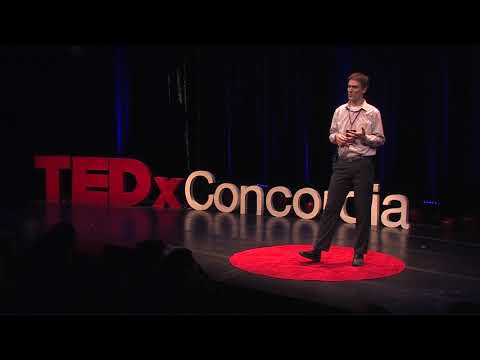
[Applause]
[Music]
my main occupation I’m a software
engineer computer scientist security
operations technologist and what do I
have to do with the performing arts and
stage well actually if you have
something to show in your lab in your
research lab and you navigate it out
there to real world to the real
production it’s kind of not as
satisfying as much so I joined dr. Mayer
song to work on the illimitable space
system for real-time motion graphics for
stage so we could that meant performing
arts with a motion capture and put
something interesting we tried different
public spaces but our real first
production was in 2013 in the ascension
dance during the Chinese New Year gala
show so we tried let’s let’s put it out
there let’s see how audience perceives
that and how it all works so we went
there we brought a big bulky computer
monitors some cables we had in a lab and
it didn’t work because we were never
ready for this stage we didn’t never
knew how the stage works what kind of
cables we need how do we put the things
all the way to the booth to the
projector to how do we connect our
sensors our cables are no long enough
all kinds of technical difficulties
arose in six hours
the show starts we managed to pull it
off it was successful it actually
encourages to go out and do other
performances we went internationally in
Beijing we went in Montreal we were
again doing a few other things in LA and
in district 3 demo day we did a few
shows projecting on people so that that
experience actually enriched us
significantly to continue and to
maintain this system two of us were not
enough we didn’t scale anymore so we
actually engage lots of students to work
with us and to enhance this performance
and the system so we have a
multidisciplinary team of software
engineers and computer
who work and the right beautiful coat
beautiful software architecture and
algorithms and we have computation arts
students who do the beautiful design
likewise you have to do your acceptance
testing that’s what you do in software
engineering – with actual artists on
stage and for the only way to do that is
to be agile and to be flexible and
that’s how you develop the software
architecture for this so and some of our
software engineering students even one
of them she was so inspired and she
rediscovered her talent for dance so she
was actually performing in one of our
shows after developing and debugging and
deploying this system so the challenge
here is real time so you see here I’m
actually being captured with different
camera the depth that’s where the
software engineering aspect comes in
real time is challenging because things
might not work or they don’t work as
expected to work so this is really a
thrill to it actually so you try to put
this test
see how lighting interacts with your
system how other things deal with your
system and try to get a good show so
people could appreciate the art of
performance and all the visuals that
come with it so that’s what essentially
we do we extract the body shape of a
person in real time we extract the
skeleton of this and then we put the
visuals together and all the students
that we talk about multidisciplinary
students from computation arts from
software engineering they have to work
together to make it possible to have all
these visuals running like they are now
so these aspects of engagement of the
student student participation and the
fact that we have multidisciplinary
teams is actually the two days age so no
longer you can pull it out alone so you
have engineers with a product in the lab
you have visionaries you have
interpreters with business plans and
artists with good concert
and design but they need to act as a
team to produce something and put it on
stage so this the software engineering
as I mentioned where my nerdy part comes
back to me is we need a lot of
algorithms we need computer vision
techniques we need pattern recognition
machine learning AI so we can capture
the depth and analyze it like you see
here now there is a depth image and we
abstract that image we get a contour so
we can take this contour with a texture
map in it and put something around that
information and put it together it can
also capture something like a skeleton
with the skeleton you can have your
joint and you can put some interesting
visuals based on those joints
in two different space within your
theatrical performance so coordination
between artists between programmers
between software engineers is paramount
here and the only way to achieve it is
to be agile the agile type of
methodologies that we do so I hope I
convince you of that that the only way
to do that is to work collaboratively
together so before I finish we have
something to show you
so and now I’m going to have a
performance a live performance before
with the illimitable space system we
only had it done for theater and dance
now the first time ever here in a TEDx
Concordia we do it with martial art and
that should be quite a thrill – so from
Han Kuang wushu school please welcome
applaud to Fung and Brian for their live
performance
[Music]
[Music]
[Music]
[Music]
[Music]
[Music]
[Music]
[Music]
[Music]
the
[Music]
[Music]
[Music]
[Music]
[Music]
[Music]
[Music]
[Applause]
Please follow and like us: