
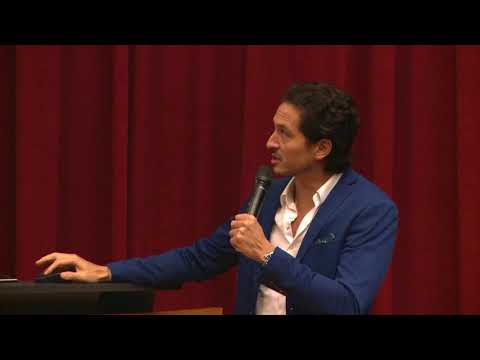
[Applause]
thank you so much for kind introduction
hello everyone thank you for spending
Friday evening with us very honored to
be up here and that was a wonderful
talking either
the importance of the Arts I think is
really understated in Hong Kong is
something that I’m personally trying to
change as well so thank you again so my
talk is a little bit about what I do
it’s very image-heavy to make it easy on
you tonight breathing it’s about passion
and combining passion with purpose
really to use your creative in a talents
and your passions to affect change and
also in our case towards the end we’ll
talk a little bit about tech and how
that can be applied to the area of
conservation as you mentioned right so I
used to be an a magazine editor
promoting luxury lifestyle promoting
unchecked consumerism wrong right we
don’t need more luxury lifestyle we
don’t need more billionaires we need
smart people coming up with great ideas
to make our cities live more sustainably
and greener and enhance communities not
only in the cities but also out there in
the world I used to be why I still have
a TV TV host and I’ve made it films for
independently but also for National
Geographic
so I tell stories about successful
people but also about people or animals
who don’t have the voice to speak up for
themselves unfortunately ray here she
died of cancer but she was an incredible
influence in my life she really spoke
out for young people living with cancer
in the city and I learned a lot from her
so as as you mentioned I am the also the
CEO of authentic studio we really
specialized in branded content but also
really pushing our augmented reality and
virtual reality what she didn’t mention
was I’m also the CEO and founder of
project see change see change X place is
my non-profit organization and we use
storytelling to raise consciousness to
change people’s habits of consumerism
and raise money for charity in the
process so we see here that nice little
graphic consumerism is what we try to
target how we consume we need to consume
more responsibly the future of retail
the future consumerism
I believe the younger generation want to
buy products which have been made
ethically want to live more sustainably
because perhaps the previous generation
have kind of screwed things up for us so
your fault
no we the difference now between the
previous generation our generation is
that we know what the issues are so
we’re going to talk a little bit about
the issues and the quote there says it
all I think the greatest threat to our
planet is this idea that someone out
there is going to save us someone else
is going to invent something that’s
going to clean up all the plastic in the
oceans there are organizations doing
terrific work there are charities doing
terrific work and they’re doing lots
beyond what we can see however they’re
not doing enough and it may be too
little too late so I’m really trying to
sort of motivate you to go out and do
your own social enterprise or create
your own environmental technology and
really tap into that unknown capacity to
do so whose board okay good
so I set up project sea change which to
me was a lot of work but it’s also been
a lot of fun because I’ve gone and met
incredible people I’ve gone to the top
of Kilimanjaro where some celebrities
climbed 6,000 meters to raise awareness
about the depleting glaciers this
glacier here the northern glacier it’s
receded about 500 meters in the last few
years within a few decades it will be
gone it’s been there for thousands of
years so this is a very visible signal
about manmade climate change and how
quickly we’re changing the composition
climate change as you know is a serious
issue who here believes in climate
change
you better put your hand up now no no
Donald Trump’s in here but climate
change is a ever-present threat the UN
has just revised its estimates saying
there I should we’re gonna hit three
degrees centigrade rise in temperatures
by the end of the century
the Paris climate treaty was to agree
not to go above two degrees centigrade
so already saying that we’re not going
to make that target and the scientists
are just astounded by how fast things
are deteriorating we’ve gone over the
400 parts per million of co2 in the the
atmosphere what that means for us simply
is that cities from Shanghai to Miami
will be flooded from rising sea levels
and also the increased co2 in the oxygen
is going to acidify the oceans thereby
really affecting marine life in the
oceans of many other things as well but
you know we’re 17 minutes so I’ll carry
on swiftly I’ve also done a project on
biodiesel I actually converted waste
cooking oil into fuel which I then drove
from Cambodia to Singapore and here
mostly shoveling can I say that on
a TEDx I’m shoveling because we use
that pig manure to create gas which can
then power transit like biogas buses and
transportation things like that but what
really focused my attention as a
photographer and as a journalist was the
illegal wildlife trade and here you can
see a rhino a mother Rhino who was 14
months pregnant she’d had a head blown
off with a big caliber bullet for her
horn and she I can’t show you the photo
because the the photo of the fetus
hanging out the other side was just so
horrendous I nearly vomited so this is
what got me going on the illegal
wildlife trade now what is why is it
relevant to us here in Hong Kong Hong
Kong is one of the largest shipment hubs
for the illegal wildlife trade all this
illegal trade that’s going into Asia
comes through Hong Kong first in
containers so we need to pressure the
government to do more to monitor that
trade but also people are still
consuming
rhino horn because they believe that
rhino horn can cure diseases can cure
man main ailments it’s the same thing as
your fingernail is just carotene right
so we have to get the message out to
everyone that rhino horn really has no
medicinal value and therefore should not
be worth more than gold in its way it’s
it’s ridiculous that is this is still
going on at the rate of current
extermination of rhinos in Africa
they’ll go extinct in 15 years in some
areas it’s pretty start reading it the
same as happening for elephants this is
pretty gruesome when they dart an
elephant they don’t necessarily kill it
because they don’t want to waste a
bullet they go up with a chain saw or a
axe and hack off the front of its face
and sometimes the elephant survives that
wakes up and of course is walking around
without a nose without a trunk so I
sorry to shock you but I want to show
you what’s going on there within the
space of this talk an elephant would
have been killed in Africa to fuel the
ivory trade in Asia more needs to be
done and just to tell you some
statistics that there were a million
elephants at the beginning of the last
century there are now in a 350 thousand
the rate of disappearance is shocking
and it’s still shocking we’ve wiped out
50% of all the wildlife on the planet in
the last 40 years
we’re basically wiping out all non-human
species because of our recklessness so
why should we okay fine I mean we need
to eat you might think but why why do
people need to kill elephants for what
is essentially an ornament a luxury
ornament and if we can’t stop these
animals from going we’re not going to
stop these species that do matter to our
survival from disappearing that’s
actually a line that’s been killed as a
retaliatory attack from a tribe lions
come into tribes attack the cattle and
then the tribesmen well they used to go
and
kill the lion that’s now changing
tribesmen are now being paid to preserve
and protect the Lions and it’s actually
working very well but it’s pretty
shocking photo sharks field we all know
about Hong Kong’s lusts for shark’s fin
again
material in animal part which really has
no taste and is easily substitutable
despite all the efforts of all the
charities to stop the shark’s fin trade
we still process about 50% of the volume
of the shark’s fin trade coming in to
Asia
that’s between 80 and 100 million so if
really simply if you see anyone eating
shark’s fin you should just tell them to
stop because it’s just showing how
stupid they are because it really
doesn’t make any sense doesn’t make any
sense
no pangolins who knows what a Pangolin
is it’s the only other bipedal mammal
and they’re being traded at a really
unforgivable rate 250,000 in the last
few years been taken out of Africa and
shipped into Asia and cooked for their
meat and their scales again because some
people in Asian traditional Merson
Chinese traditional medicine believe
that pangolins have medicinal value or a
good for for humans that consume them
they don’t and you know the list goes on
and on I’m not gonna go to too much doom
and gloom because you might all start
drinking before this is over plastics is
an existential crisis I believe one of
the biggest crises that we face as a
generation so much plastic is now going
into the ocean I’m not quite sure how
we’re going to get it out there’s up to
240 million tons of plastic that’s being
put into the ocean so far and we’re not
even talking about the microfibers that
come off your clothes your sportswear
when you put it in the washing machine
that goes into the ecosystem and
everything from krill all the way up to
the whales are consuming that so when we
eat fish we’re just eating our own
plastic this is one issue that I’m not
quite sure how we’re going to solve just
yet but this is why I’m here tonight
because I wanted to get on a flight to
London
but they asked me to come speak to you
because you’re the next generation who
can make a difference we’re a bit old
[Laughter]
the oceans you know we talk about the
elephants the Rhinos really if the
elephants go extinct humans will survive
if the Rhinos go extinct it’s a tragedy
but the humans will survive if corals go
extinct if sea grass goes extinct we are
in deep doo-doo I can use a better word
for that next time but you get what I
mean
half the world’s corals have disappeared
already and they record at the current
rate of climate change acidification of
the oceans as the temperature the
atmosphere rises the oceans absorb that
heat the coral simply can’t survive
coral provides a home to thousands of
species of fish and they reckon up to a
billion people depend on that food that
protein as their main source of food so
we not we’re not quite sure what’s gonna
happen if the coral disappear apart from
all the undiscovered medicines that we
could find within the coral insect to
get in don’t forget the small things if
we keep wiping out the bees and the
small insects we’re gonna have an even
bigger problem on our hands
they rankin bees pollinate about 30
percent of our food crops and because of
the pesticides that we use we’re wiping
out so many colonies of them that they
just can’t regenerate they record that
in Germany there was a study in the
plus-1 Journal 76 percent decline in 27
years and I grew up in the UK and I was
very fortunate to have grown up in the
country so when I grew up in the
summertime you were driving down the
road and they were moths there are
butterflies there were insects
everywhere now you you you’d be lucky to
find a moth in a garden and it’s
happened in my lifetime so very very
scary so what can we do and the
going back to the unknown capacity I
didn’t know what I could do when I was
like this is really pissing me off what
can I do but you kind of work it out
along the way so as long as you sort of
latch on to something that you want to
fix the solutions will come in my case I
got to travel through some of the key
areas in Africa where they’re protecting
the wildlife they’re trying to
reintroduce orphans back into the wild I
was lucky enough to see that you can
volunteer for a charity you can donate
to charities doing great work on the
ground in Africa this is me here tagging
Turtles and the Solomon Islands with the
Nature Conservancy feeding a baby rhino
with milk which was a lot of human
believe how much milk they drink a lot
like the six of those bottles five times
a day but the point is I mean that’s all
very cute the point is we need more
boots on the ground to stop the poachers
from killing the animals so you can help
by either raising funds or raising
awareness about that particular trade
I’m going to talk a little bit here
about tech who’s a techie here here’s a
computer scientist I’m in the wrong
faculty but if you are in tech you can
also be a conservationist because tech
is actually going to be very useful to
help conservationists in this case warn
villagers in India about elephants that
are going towards villages to get them
to get out the way so there’s no human
wildlife conflict yes they do still have
Nokia phones believe it or not here
they’re using drones to serve a large
tracts of land like you I don’t know if
anyone been here to Africa anyone here
been to the areas we’re talking about
you can’t imagine because if you lived
in Hong Kong your life space is probably
you know we live on a little dot really
a little tiny island but the amounts of
areas they have to track to be able to
say these animals a huge drones going to
play an important part in surveillance
in the future seamen to Australian guys
surfers were like
hey we’re not gonna put up with this
plastic situation what are we gonna do
that’s a terrible Australian accent I
apologize but they went out but a
fundraiser on IndieGoGo and created
sebum which is now shipping units and we
want to try and bring Sieben to Hong
Kong because we have a huge plastic
problem in the ocean essentially all it
is it’s a vacuum in a sea bin in a bin
in a marina and it just sucks in all the
debris in the marinas and then you empty
it twice a day very simple process
simple to run and maintain why not why
aren’t these installed everywhere in
Hong Kong and if anyone has any ideas
about installing them have a hand up
there you hang them by the marina you
just as you attach them to the side of
the marina has to be in a marina or you
know where there’s concrete or wood so
you can fasten it to the seabed to the
actual you know the the side whatever
they call it but basically you have to
attach it so that the water doesn’t move
it too much but it has to be in a marina
because if you put out in the open ocean
the waves will obviously overwhelm it
you can look them up I mean there’s been
a lot of press about them tracking in
big data you know using QR codes to
study and colonies the same principle
for migrations of wildebeests for
migrations of birds we can make tracking
devices small enough now so that we can
use that data to predict where they’re
going to go and help protect where they
end up with birds for example migratory
birds a lot of conservation initiatives
protect where they are most of the time
but they don’t protect the places where
they go on their migration routes so
they get into trouble when they actually
fly south or north for their migration
routes so big data we need more
engineers data engineers more computer
coders and so forth because I’m pretty
bad at coding i gue
recently said to me Satguru very wise
man said that we’re all responsible for
everything but it’s only our actions
that are limited we can’t do everything
we can’t fix all these problems we can
respond to them internally and see how
we feel about that you have to decide
which ones you’re going to respond to
and what you’re going to do about it but
I think the key word here is that we are
all responsible now you’re responsible
now because you know the issues my
particular project is love as well it’s
a traveling photo exhibition to raise
awareness about illegal wildlife trade
about all the issues we’ve outlined so
far using local celebrities taking them
to the most remote places and
photographing them that’s actually Miki
Yao with some elephants in Sumatra we
sell the photographs to raise funds for
the charities but also for the project
is actually an omni-channel
activation from the TV show to the final
exhibition we had a street art campaign
with some of the world’s most famous
artists and sign in
fundraising gala dinner elephant marches
in the street lobbying the government
and now our tech piece we are adding
virtual reality and augmented reality
because 40% of people in Hong Kong live
above the 14th floor which means that
for most people in Hong Kong they would
never have really had a proper
experience with nature how do we get
people to experience the wonder the
majesty of the wild the places that I’ve
had the privilege of being – in the
confines of a gallery or you know in the
confines of their home it’s no longer
good enough just to give you a 2d image
so that’s why we’re using virtual
reality and augmented reality and we’ve
partnered with many charities on the way
to do this and this is some of the
photographs that I’ve taken on the way
on the journey yeah
this Rhino is the last of three rhinos
the northern white rhinos living on the
planet it’s an extinct species so that’s
why it’s a very symbolic photograph
because she’s basically praying to an
extinct animal let’s just hope that it
doesn’t go the same way for the other
Rhino species that are left this is a
celebrity diving with a whale shark in
the Philippines rather more scantily
clad version with the cheetah and I’m
gonna play the trailer really quick
[Music]
[Music]
[Music]
[Music]
[Music]
[Music]
so that’s the exhibition and I’d love to
have you come down and see it one day
but now we’re using virtual reality to
really immerse yourself so that you feel
that you’re actually there and that’s
really the power of our reality I can’t
show you the virtual reality today I can
show you some of the augmented reality
in your booklet if you’d like to
download the authentic app after the
lecture you can download the app trigger
some of the AR from the images in the
booklet so please try that out you need
to have an iPhone but really what I’ve
learnt from this whole journey is that
re it sounds kind of hippie and
modernist l you know sort of new agey
but we really are all connected we’re
not just connected here in the room the
air that we breathe we’re really
connected with everything on this planet
including the wildlife that’s six
thousand miles away in the middle of the
African Sahara so we really have to
learn to understand that as I mentioned
the virtual reality in the augmented
reality are taking the education and
immersion to another level
so now just one final video we now have
the traveling exhibition which we hope
to take across the world
darling while we be now three times in
our car taking this across China
and then eventually to all the major
capitals in the world
[Music]
[Music]
[Applause]
[Music]
[Music]
[Music]
[Music]
[Music]
okay and you get the idea we’re gonna
have a mobile version of that which is a
traveling truck we want to go to as many
shopping malls as possible again
education using tech to really get the
message home and give the people an
experience that they can never otherwise
have one thing just to finish off
because I’ve gone way over time thank
you for your patience have you ever seen
the world from above well most of us
when we go flying you can see it from
above you know I used drones a lot and
I’ve been to some of the most beautiful
parts of the planet and you know we’re
brought up to think that there was a
heaven afterlife who believes in heaven
afterlife quite a few people now I don’t
want to be a heretic here but maybe just
think sometimes maybe we are in heaven
already and we’re trashing it do you
want to go to a heaven where angels fly
around in long roads anyway so that’s
just my point that we have inherited an
incredible place to live on you know
they talk about finding planets
exoplanets that are similar to earth the
nearest habitable exoplanet they reckon
is about 72 trillion miles away about 12
light-years we’re never gonna get there
this is our home this is all we have so
it’s not just some conservationists
responsibility to go out and do
something it’s my responsibility to go
out do something and it’s your
responsibility to do something you can’t
blame anyone else from now on because
you now know what’s happening so I want
you to take that away and dig deep and
activate that unknown capacity whatever
it might be and hopefully we will have a
better more equitable Society within
ourselves as as the human species but
also with the animals and the ecosystems
that we depend on and enjoy thank you
very much
[Applause]
Please follow and like us: