
spend some time that I learning about
learning steps a good after Birmingham
Alabama I’m the oldest of five kids and
I wanted to be a teacher from day one so
my dream it was teach school so it’s a
little bit all that with lamb all my
stuff and you did this but lead officer
vehicles now and I made them all and I
got a dad take me on my mom to take me
to parent-teacher store and I would get
a grade book and I could work books and
I photocopied them yeah you better teach
school tomorrow stuffed animals and I
thought your school I’m going to copy
those pages and I love filling help and
handouts and appropriately or you know
correctly so that I could grade of all
of their work and so I had this little
great grade book and in every grade book
you can see up here that I wanted a name
I have lesson plans for where my kids
were going to sit and then I would of
course all the people in the
neighborhood to come down to Jubilee
school after they were peaceful and this
was something I found from of 1983 when
how its testing everybody on their
ability to swing that they’re swinging
muscles so I gave my sisters you know
scores and all the kids in the
neighborhood so from day one that was my
goal I wanted to teach I wanted to grade
papers I wanted to you know change the
lives of children
and so I felt I ended up going to being
a vote for college loved being in school
there were no plot from books about how
to teach and how people learn and so
then I started teaching school and
that’s home-school out of us oh gosh
people learn really differently like I
would teach a really good lesson about
less than I thought and in really good
job teaching and some kids would get it
in some kids play and why did this can
have trouble learning as multiplication
facts but this will croak didn’t and why
is this little kid have trouble reading
and what is this one not and so I became
really fascinated and learning about
learning
I wanted to know okay so we have a brain
and I had heard it was like a memory box
of the bread right I’ve seen these
pictures of a file box and I thought
okay where is my pile box how do you get
something to fill in a memory stay there
and then retrieve it on a test right and
I figured well I’m afraid of that I’ll
then I could be a really good teacher
and help kids learn in school so also I
was growing up I should tell you I’m not
a great speller like and people don’t
believe that sometimes cuz I went to
made a Bolton Harbor but like really I’m
a really bad speller so growing up I
always wanted to be in an Honors English
class when I was in high school so I was
also not a very leader so it is not like
me
not actually meeting better not enjoy
any time I’m thinking actually feel
honest and so that I was always forced
readings for school and I didn’t want to
be an Honors English that was like a
goal that I have and it must would never
let me in daughters Englishman has my
PSAT scores were too low the venire do
experience out how PSAT score and
reading comprehension was never high
enough to give me $1 English you know
how to ace in English and so from that
point I felt by those standards tests
are really this definitive measure of my
intelligence right I thought if you
wanna kid it works really hard I can’t
spell but I’m not really that smart
because Bose that smarter which really
want this test and that was my view of I
you know how different Elgin you would
see that on the test and so as for mine
I did get in beautiful winter school
then I’m going to Harvard for graduate
school and love being there and as I was
there I learned a lot about how people
are and so at Harvard I still was a
really bad speller so this was on the
cover of my notebook let me show you
where I studied about how people learn
and how there are variations in learning
and I was still a girl
they’d like to do bubble ever tried to
load all the bubble letters and I’m
actually little meta books and I don’t
know if you can see it very closely but
this is a class on learning disabilities
that I spelled disabilities incorrectly
all right and I have a heart for people
struggle in superheroes and so what I
repeating in the study was how do people
learn where is memory where is that box
that was what I wanted to find out and
so we’re going to talk a little bit
tonight just as awful right you’re going
to get a mini course in about six and a
half minutes on the to the brain and how
you work because what I have learned is
that learning about learning can
transform the way that you do school it
can transform life and also what I’ve
learned is that there are so many things
that we believe to be true about how
learn they’re not actually true we
haven’t had an explosion and filled with
neuro socks and in education and in
cognitive science we have technology now
that lets us actually peer or below the
surface and watch the brain at work in
real time so we grew up with all sorts
of theories about how people learn and
now we can see pictures and images of
what’s actually happening in real time
so this is a diagram of the human brain
I are looking at the brain from the side
and nice made up of two parts two sides
if take a fist and put them together
like this we’re going to interact in
theory all right all right so you’ve got
right except you bring your left hand up
to your brain she’s onto your back
you’re actually in our
graduation from rioters left in
depression from the left goes to the
right people who are believing that
there is a theory that we believe to be
true called the something we refer to as
being right right or the left brain are
going to be heard of that theory I guess
what no research to support that I
they’re not right rating with what
electrode you have a right side to the
right you have the left side to the
brain but that theory incinerates did
you use only part of the brain when you
are learning or any other strength and
one saw the brain over the other truth
is you use most of your brain when
you’re learning to do all sorts of
different things I see how this right
chemistry have this left chemistry and
they work together and so we think of
the greatest we can make an apple all
right so an apple has a core structure
in the center and then you’ve got some
bead around in the you’ve got this
didn’t layer that’s on the edge of the
Apple like the skin all right to the
brain is similar down this course
structures deep in the middle now we
have this outer layer that’s called the
cortex and in the image
going to show you up here we’re going to
look at how different parts of the brain
do different things alright so as we go
through those restoring the back of the
brain so in the back right here she came
to the bottom of your head this part
right here this is actually where you
process visual information alright so
when you’re looking at pictures when
you’re looking at the keynotes thoughts
from your professor when you’re checking
out images on Instagram when you’re
picking out clothes to wear for the
party
you know any visual image is going to be
processed and actually stored in this
kind of brain I maybe close your eyes
and you picture something you’re
daydreaming in class even if your
specific taking notes but you’re
daydreaming about something where you’re
replaying a play from your intramural
football game all of that imagery is
occurring in the back of the brain
I had activated to the side right around
your ears you have the cortex it
processes auditory information I so
auditory information anything that you
hear anything that you say inside your
heads yourself language music you know
your Spotify playlist when you’re
listening to that it’s all happening up
here you’ve got brain cells and they’re
firing and they’re networking together
the teachers lecturing in the classroom
you’re listening to that lecture that’s
getting processed on the right your left
side of your brain the triple loop I
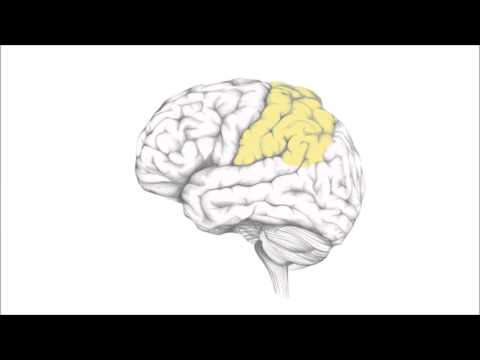
have a toughie braid this section is
called the parietal lobe and the
parietal lobe is responsible for spatial
awareness so your ability to play Tetris
right taking
make rope chain fit into something to
pack the back of the car Japan minute
carry-on suitcase you gotta pay the
extra baggage fees right any of that
ability to mentally rotate something and
do something with it
the front of the brain is referred to as
the frontal lobe I to take care of the
race forehead like this is your fruit of
why this part of my name is the part
that is like the CEO or it’s the
conductor of the orchestra it is
basically telling the other part of the
brain what to do when to do it and what
order to do it it plans
it pays attention it zooms out it is
responsible for saying don’t do that
stop looking at this to finish the math
homework if you got that pencil
maybe it’s directing and hewing behavior
that’s occurring in the back of the
brain either follows or the part of the
brain that you don’t want damage any
part of the brain but you really don’t
want to damage the follows because the
frontal lobes are what the conveyancer
and so let’s think of the brain almost
looking for mistre where we have
different parts of the brain that jun
different things and so when you’re
reading your science test book we’ve
let’s take a corner section playing and
we’ve got the winds going and we’ve got
the piano playing we’ve got drums and
then when you’re doing math problems
you’ve got a whole different set of
instruments that are coming online
together to perform a certain function
and so the scruff of the brain is the
one that is coordinating all of that
activity if you are toning out
my ass is the front friend range that is
responsible for that I am this is the
part of the brain also it doesn’t finish
developing until your late 20s all right
28 29 30 so we used to believe that
you’re born with a certain level of
intelligence that intelligence was
pretty much fixed like you’re one that
way that’s what you got you know just
could I we just invest with what you
have all right that’s what I believed
when I took the SATs when I took the
PSAT but now through all of the research
from the fields of neuroscience colors
that’s what we learned as if
intelligence is not fixed the brain
actually changes as you grow and it
changes as a result an experience so I
can literally every single experience
that happens in your life changes the
internal architecture of the brain I
mean that’s pretty cool right so even
when you leave this talk your brain is
going to look a little bit different on
the inside than it did before you walk
down the door after Netflix near harm
right it’s going to be different at the
end of that all right Oh after you go
all sweet like it’s going to be
different all right brain changes from
every single experience for good or for
now and the cool thing about that as
intelligence does not fit because you’re
born with certain genetic coding but
then experience is what develops the
internet works of the brain so if you’re
not reading spelling like I wasn’t great
in spelling and I had
of opportunity to get the right type of
intervention and the right type of help
when I was out there then I could have
actually strengthened that part of our
brain when we look at the brain think of
it as this Orchestra of activity all
right so when you’re getting ready for
your final symphony and you’re thinking
about okay I gotta get ready to study
for these tests think of the brain as
having this Orchestra that is playing in
different regions so my question when I
went to Harvard that I really wanted to
know the Institute was whether it is
that memory box okay like where is it
physically I’m saying like no I want to
know it is it here is it here is it here
and like what we do to put stuff in
there by you can you compute that at all
put all the information in then then you
have your final you can retrieve it when
you take your test turns out there’s not
one spot remember there’s not a box in
which you know we get into all right
memory is actually distributed
throughout the brain so you have
billions and billions right notes after
shunga right now if you’re kind of
curious on 86 billion if you’re an adult
and you’ve got all those brain cells in
there in those brain cells fire and
network together and so when a certain
group of this brain cells fire together
when you’re learning something like
adding fractions
they are very fragile you’ve created a
brand-new network for how to add
fractions I you think you get it you
understand
you get home you try to do your homework
and add fractions and guess what you
forgot how to do it
all right and that’s because the network
is really really fragile the brain is
designed in such a way that all of these
brain cells and we’re talking billions
of them the way in which they
communicate is that one cell gets
activated and it sends a signal all the
way down along axon and as it comes to
feed into the axon it spits literally
spits out neurotransmitters and as a
next cell actually there is a parking
spot for those neurotransmitters parks
in there and then takes it on that
activity and activates the next cell now
using a lot of really big words that I
did not just use that’s how nervous
conscious would explain learning okay
we’re one cell fires and then another
cell fires in response to the first cell
fire and so when you are learning
something you literally are making these
connections in the brain and that when
one fires the other one starts firing
him then one fires that fires again as
it ours a little bit faster that’s when
we know that learning has occurred the
interesting thing about the brain and
how these Souls have networked together
is that you have to require these cells
a certain number of times in order for
it to remain active in long-term memory
so we can actually move anything into a
box what we do is actually refire the
network that was created originally from
the experience so if you’re sitting in
class and the teacher is teaching on
something about World War two and you
have this real
yeah and you’re so into the bed right
and then it clicks really cool oh it
smells pretty too we all look at a boy
if I look at this way I look it over
here right you are so into the pen
teachers teaching a wonderful lesson
about World War two all right you leave
you try new homework you may not
remember anything that was actually
sellable or two because if you are not
paying attention during the learning
experience then it’s not actually going
to make a network all right what will
you remember the dip right here you have
a great network for the pin you’re going
to have memory and a taste part if you
licked it if a small part of you spill
it
lots of time talk with me you’re going
to have to be distributed across the
brain and wonderful lower about the pin
and so attention is going to dictate
what gets saved into memory and what
gets laid down the cool thing about this
is that when you sleep this information
that you’ve learned every day the
experiences or the networks that you’ve
made during the day guess what they get
me fired
over and over and over again during REM
sleep
that’s the rapid eye movement parsley so
that’s actually when you’re dreaming be
a wandering cycle every 90 minutes
all right so during that dreamy part
sleep your brain tonight if you get back
minutes of sleep it’s going to refire
those connections over and over and over
again and that is what is going
as those connections stronger and then
tomorrow 24 hours later we’re going to
know what remains active in working I
mean in your culture program so high as
we apply this to being a student all
right I’ll give you a few takeaway chips
there all right that I think are really
really important to know in terms of how
we can use this information from the
field of neuro education which is last
day and that’s the translation of
cognitive neuroscience into classroom
practice and so here your 3 top tips are
you ready
number one sleep all right you need
sleep
all right so fun to go out someone to
have a great time but sleep needs to
follow learning what you do right before
you go to sleep at night little implied
before you go to sleep at night is going
to get priority and being stored in them
right so you’re studying for your test
what I want you to do is study earlier
in the day pull out your notes review it
for 5 or 10 minutes before you go to bed
it will actually help store that
long-term right center figure would you
remember is that memory is distributed
all throughout the brain so students who
income what they’re learning physically
in the back because they have visual
imagery on the side because they talked
out loud while they were studying on the
top or motor movement is because they we
copied their meds they physically have
more places in the brain that represent
that
and they have more ability to recall it
later
and the third takeaway too is the way
something stays active and long-term
memory is you have to review it over and
over and over again it doesn’t have to
be direct repetition but you have to
refire that network so when teachers
tell you study a little bit each night
and then like number your does it right
reason and I don’t even know that they
know why I told you to do that but the
some tiffin reason is literally five
minutes of review one day not like 45
minutes which is five minutes it’s going
to refine those networks and while you
sleep it’s a coded into memory and then
when it comes down to setting and are
going to have to study as much at the
end so I encourage you to dive into this
field of neuro education if you are
interested start learning about how you
learn and how this can impact what you
do as a student and I want to encourage
you that intelligence changes and brain
changes as a result of experience so
there’s something that you’re not great
at doing and you really want to become
better at doing that you can’t and if
you take the different experiences that
are going to improve theirs every senior
brain literally next year at this time
you can have a marriage of a brain you have today so thank you very much