
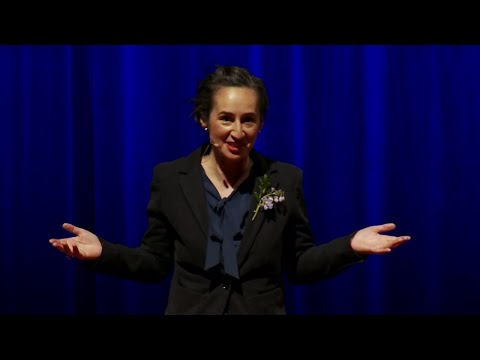
[Music]
[Applause]
smell was the first sense we had as
babies yes but I’m referring to
evolution the first sense we had when we
were still in the ocean was smell and
the little cluster of nerve cells that
translated molecules into scent evolved
to become our brain our senses all
evolved to experience the stuff we lived
alongside our nose is eyes tongue and
skin or developed to experience nature
we’re part of the natural world even if
you don’t enjoy nature we’re more likely
to smell smog than predators or fill
soft shoes than grit on bare feet and it
affects our emotions and our thoughts
it’s sensory overload and sensory
deprivation at the same time there have
done some things that other species can
sense that we can’t like the sense
that’s unique to blue whales which is
their ability to sense movement and
pressure from shoals of fish we don’t
sense everything not even the full
spectrum of colors reality is a sea of
subatomic waves that’s nothing like our
human experience our understanding of
the world is an edit that’s incomplete
and full of filters yet seems pretty
accurate our doors of perception open
the world to us and include around 30
subtle senses like our sense of balance
or how we know if someone’s behind us
combined with our five primary senses
sight smell hearing taste and touch our
unified understanding of the world is a
mixture of all our senses at once I
reach up balancing to pick an apple from
the tree
I smell the fragrant flesh then cut into
the fruit with my little gardening knife
the fruit this is juice once in my hands
as aromas rise
I taste apple smell the garden gaze into
space and my thoughts make smith apples
sunshine and the sound of bees or I stay
indoors and listen to music tap on a
computer stare at a screen and chug
coffee I design experiences to address
this disconnect and to bridge the gap
between art in our in our outer life to
do this I combine music and food and lay
out other mediums on top for music we
use our ears of course and also music is
visual from the look of a show to the
soundtrack to a movie and it’s tactile
we feel the bass and it moves us from
food we learn about taste and smell as
flavour is made from taste and scent of
course food is visual as Instagram shows
and it’s temperature and texture a
tactile and food has sound from the
clink of glasses to the crunch of chips
I’m gonna lead you on a sensory
experience at the end of this talk so
you totally get it
you’ll need the Bluefish you were given
on the way in and if you’re watching
remotely you can drink some water
instead it’ll work for this very simple
experience I love designing fabulous
experiences with a beautiful choir
stellar food neuroscience interactive
technology a purpose whimsy and
something wild from nature but you can
hack the things I love to do on a grand
scale and use the same techniques in
your daily life you can do this on a
zero budget the first here comes the
science bit concentrate okay we all know
about
dogs they saw they salivated since then
big pieces of the jigsaw fell into place
the human genome was mapped odor
detectors were identified and vision
came into focus
thoughts moved around our nervous system
as neurons were discovered in our
intestines yeah
brain cells in our guts there are
scientists researching perception from
every angle from Boston to Beijing to
find out how our senses interrelate and
integrate together
it’s called cross modality or multi
sensory perception it draws from a
neurological condition called
synesthesia which causes some people’s
senses to fuse together so they see
sounds or taste colors cross modality is
the science of how our senses interact
combine and trigger each other instead
of perceiving random stuff at the same
time like normal life cross modal data
allow us to align sensory content that
corresponds in surprising ways for
example if we smell taste and hear stuff
related to blue while seeing blue nature
is balanced most Monde environments are
a cacophony of sensory stimulants now we
can address this and create symphonies
of concordant sensory content that’s
considered and can restore a sense of
balance or turn up the volume and play
with the dissonant clash either way we
can make choices about how we feel
that’s the power of cross modality
let me explain with some examples that
work whatever your gender
no such thing as male or female brains
only brains so this stuff works equally
for everyone if you want to make food
taste sweeter make it in a curved shape
and if you want it to taste even sweeter
serve it on something pink heavy and
smooth add sweet fragrance like vanilla
to increase the scent think about the
texture and the sound it makes when you
bite into it and accentuate it so if
it’s crunchy subtly increase the crunch
by baking it longer finally play
background music that’s high in pitch
and recorded with violins that’s what a
psychologist called and Sylvie Krishna
discovered at Oxford University in
Charles’s cross-modal research lab she’s
hoping to use this information to help
elderly people enjoy eating more as our
sense of taste often fades with age
using violins she can boost sweetness
again using this research everyone can
enhance the simple pleasure of eating
and some can be profoundly helped by it
like people with diabetes or obesity
there’s a lot of potential for medical
advances based on cross modality and is
widely used by brands fast-food chains
already use sonic seasoning and
psychophysics influences everything from
airplanes to shampoo supermarkets pipe
the smell of bread into their bakeries
and now babies still smell of baby
powder and swimwear boutiques smell of
your favorite seaside memories yes and
have you ever noticed that coffee tastes
better when you stay in then when you
get it to go
truth be told some research may be
influenced by this
it must be tempting for a lab to pursue
ideas that could attract corporate
clients over less lucrative more
beneficial and benevolent stuff and it’s
tricky to weed out the pop science to
like the idea that our right brain
hemisphere is more creative than our
left brain which lost all scientific
credibility in the 1980s
yet still gets airtime or the tongue map
it’s a myth
let’s stay open to ideas worth spreading
to do this let’s be more perceptive
aware and increasingly discerning
sensory science isn’t static it’s
submerging and growing so I stay in the
loop as new research rolls outs
I read trusted sources and double-check
everything using my logic some stuff we
instinctively know if you ask most
Americans which color is the happiest
most say yellow and it’s right but
science goes beyond intuition by
analyzing the data that’s essential to
accurately transcend culture context and
form or to soften the dominance of a
sense that we take for granted for
example I designed dishes for my events
based on these scientific research
papers I read most days you do not have
to go as far as this but if you like
your coffee sweet get a red Marg and you
can use less sugar making choices about
our sensors can help us in a world
filled with challenges soothing
perceptions can raise them
see in a happiness and our ability to
cope as we adapt our senses we adapt our
reality in every way
let’s make choices about our senses as
such as ice our senses become steadier
our mind becomes less chaotic and more
vibrant our decisions better with less
anxiety and more clarity a smoother ride
with more pleasure as we learn we can
help others learn too so soft care
becomes Community Care with a loop
built-in that helps everyone’s
well-being feels good to be kind and we
get to practice our sensory skills too
it’s the next step like the airplane
routine step 1 put on your oxygen mask
look after yourself
step 2 is look after others and it feeds
back into step 1
the most amazing superpower we have is
to consciously consider concepts that’s
what makes us human and sharing
knowledge feels wonderful I use the
power of our senses to connect us and
produce lasting change from each
ephemeral moment I use the key to unlock
beautiful memorable emotional
experiences that’s what I do because I
do what I do to move people our senses
allow us to connect and I elevate
sensory science by combining it with
research from Professor dannis poly a
neuroscientist at NYU who studies beauty
professor poly believes beauty is at the
heart of our most important decisions
that’s why he researches what is
see his lab proved beauty is made from
pleasure mixed with thoughts beauty
isn’t just aesthetics i enhance it with
ideas and sublimate this into emotions
all beauty is deepened with insights
intentions and belief take the Statue of
Liberty the green patina of the copper
is lovely but the true beauty of this
statue lies in the concepts of Liberty a
freedom let me show you with a sensory
experience set to music I composed and
recorded where the Symphony Orchestra
for the color blue and for the ocean
please put the Bluefish in your mouth
allow it to melt slowly and enjoy the
blue taste and the blue scent as it
melts blue is the color of planet ocean
if you think this is planet earth that’s
because we’re land dwelling creatures so
our perspective is skewed water in
shades create feelings of well-being
because this planet is covered with
water with a few try bits that jut out
of the waves which is where we live
we’re made of salty water from the blood
in our veins to tears in our eyes the
steam we exhale becomes clouds which
becomes rains which becomes oceans most
of the oxygen we breathe is made in the
ocean not the rainforest although that’s
obviously important but around 80% of
all oxygen comes from the ocean 97% of
all life on this planet is still in the
ocean for this reason blue creates a
sense of peace and a feeling of home
see the ocean colors softening us
smudging our edges
[Music]
like a beach
allow an emotion to see
[Music]
now reach out to your neighbors
[Music]
around their wrists like this
[Music]
and you’re gonna force to resist
so starts to freak their offices
this is good
[Music]
[Music]
United and beauty
[Music]
shrimp
[Music]
[Music]
[Music]
no water no life now let go of your
hands but let’s keep our connection
thank you
[Applause]
[Music]
[Applause]
smell was the first sense we had as
babies yes but I’m referring to
evolution the first sense we had when we
were still in the ocean was smell and
the little cluster of nerve cells that
translated molecules into scent evolved
to become our brain our senses all
evolved to experience the stuff we lived
alongside our nose is eyes tongue and
skin or developed to experience nature
we’re part of the natural world even if
you don’t enjoy nature we’re more likely
to smell smog than predators or fill
soft shoes than grit on bare feet and it
affects our emotions and our thoughts
it’s sensory overload and sensory
deprivation at the same time there have
done some things that other species can
sense that we can’t like the sense
that’s unique to blue whales which is
their ability to sense movement and
pressure from shoals of fish we don’t
sense everything not even the full
spectrum of colors reality is a sea of
subatomic waves that’s nothing like our
human experience our understanding of
the world is an edit that’s incomplete
and full of filters yet seems pretty
accurate our doors of perception open
the world to us and include around 30
subtle senses like our sense of balance
or how we know if someone’s behind us
combined with our five primary senses
sight smell hearing taste and touch our
unified understanding of the world is a
mixture of all our senses at once I
reach up balancing to pick an apple from
the tree
I smell the fragrant flesh then cut into
the fruit with my little gardening knife
the fruit this is juice once in my hands
as aromas rise
I taste apple smell the garden gaze into
space and my thoughts make smith apples
sunshine and the sound of bees or I stay
indoors and listen to music tap on a
computer stare at a screen and chug
coffee I design experiences to address
this disconnect and to bridge the gap
between art in our in our outer life to
do this I combine music and food and lay
out other mediums on top for music we
use our ears of course and also music is
visual from the look of a show to the
soundtrack to a movie and it’s tactile
we feel the bass and it moves us from
food we learn about taste and smell as
flavour is made from taste and scent of
course food is visual as Instagram shows
and it’s temperature and texture a
tactile and food has sound from the
clink of glasses to the crunch of chips
I’m gonna lead you on a sensory
experience at the end of this talk so
you totally get it
you’ll need the Bluefish you were given
on the way in and if you’re watching
remotely you can drink some water
instead it’ll work for this very simple
experience I love designing fabulous
experiences with a beautiful choir
stellar food neuroscience interactive
technology a purpose whimsy and
something wild from nature but you can
hack the things I love to do on a grand
scale and use the same techniques in
your daily life you can do this on a
zero budget the first here comes the
science bit concentrate okay we all know
about
dogs they saw they salivated since then
big pieces of the jigsaw fell into place
the human genome was mapped odor
detectors were identified and vision
came into focus
thoughts moved around our nervous system
as neurons were discovered in our
intestines yeah
brain cells in our guts there are
scientists researching perception from
every angle from Boston to Beijing to
find out how our senses interrelate and
integrate together
it’s called cross modality or multi
sensory perception it draws from a
neurological condition called
synesthesia which causes some people’s
senses to fuse together so they see
sounds or taste colors cross modality is
the science of how our senses interact
combine and trigger each other instead
of perceiving random stuff at the same
time like normal life cross modal data
allow us to align sensory content that
corresponds in surprising ways for
example if we smell taste and hear stuff
related to blue while seeing blue nature
is balanced most Monde environments are
a cacophony of sensory stimulants now we
can address this and create symphonies
of concordant sensory content that’s
considered and can restore a sense of
balance or turn up the volume and play
with the dissonant clash either way we
can make choices about how we feel
that’s the power of cross modality
let me explain with some examples that
work whatever your gender
no such thing as male or female brains
only brains so this stuff works equally
for everyone if you want to make food
taste sweeter make it in a curved shape
and if you want it to taste even sweeter
serve it on something pink heavy and
smooth add sweet fragrance like vanilla
to increase the scent think about the
texture and the sound it makes when you
bite into it and accentuate it so if
it’s crunchy subtly increase the crunch
by baking it longer finally play
background music that’s high in pitch
and recorded with violins that’s what a
psychologist called and Sylvie Krishna
discovered at Oxford University in
Charles’s cross-modal research lab she’s
hoping to use this information to help
elderly people enjoy eating more as our
sense of taste often fades with age
using violins she can boost sweetness
again using this research everyone can
enhance the simple pleasure of eating
and some can be profoundly helped by it
like people with diabetes or obesity
there’s a lot of potential for medical
advances based on cross modality and is
widely used by brands fast-food chains
already use sonic seasoning and
psychophysics influences everything from
airplanes to shampoo supermarkets pipe
the smell of bread into their bakeries
and now babies still smell of baby
powder and swimwear boutiques smell of
your favorite seaside memories yes and
have you ever noticed that coffee tastes
better when you stay in then when you
get it to go
truth be told some research may be
influenced by this
it must be tempting for a lab to pursue
ideas that could attract corporate
clients over less lucrative more
beneficial and benevolent stuff and it’s
tricky to weed out the pop science to
like the idea that our right brain
hemisphere is more creative than our
left brain which lost all scientific
credibility in the 1980s
yet still gets airtime or the tongue map
it’s a myth
let’s stay open to ideas worth spreading
to do this let’s be more perceptive
aware and increasingly discerning
sensory science isn’t static it’s
submerging and growing so I stay in the
loop as new research rolls outs
I read trusted sources and double-check
everything using my logic some stuff we
instinctively know if you ask most
Americans which color is the happiest
most say yellow and it’s right but
science goes beyond intuition by
analyzing the data that’s essential to
accurately transcend culture context and
form or to soften the dominance of a
sense that we take for granted for
example I designed dishes for my events
based on these scientific research
papers I read most days you do not have
to go as far as this but if you like
your coffee sweet get a red Marg and you
can use less sugar making choices about
our sensors can help us in a world
filled with challenges soothing
perceptions can raise them
see in a happiness and our ability to
cope as we adapt our senses we adapt our
reality in every way
let’s make choices about our senses as
such as ice our senses become steadier
our mind becomes less chaotic and more
vibrant our decisions better with less
anxiety and more clarity a smoother ride
with more pleasure as we learn we can
help others learn too so soft care
becomes Community Care with a loop
built-in that helps everyone’s
well-being feels good to be kind and we
get to practice our sensory skills too
it’s the next step like the airplane
routine step 1 put on your oxygen mask
look after yourself
step 2 is look after others and it feeds
back into step 1
the most amazing superpower we have is
to consciously consider concepts that’s
what makes us human and sharing
knowledge feels wonderful I use the
power of our senses to connect us and
produce lasting change from each
ephemeral moment I use the key to unlock
beautiful memorable emotional
experiences that’s what I do because I
do what I do to move people our senses
allow us to connect and I elevate
sensory science by combining it with
research from Professor dannis poly a
neuroscientist at NYU who studies beauty
professor poly believes beauty is at the
heart of our most important decisions
that’s why he researches what is
see his lab proved beauty is made from
pleasure mixed with thoughts beauty
isn’t just aesthetics i enhance it with
ideas and sublimate this into emotions
all beauty is deepened with insights
intentions and belief take the Statue of
Liberty the green patina of the copper
is lovely but the true beauty of this
statue lies in the concepts of Liberty a
freedom let me show you with a sensory
experience set to music I composed and
recorded where the Symphony Orchestra
for the color blue and for the ocean
please put the Bluefish in your mouth
allow it to melt slowly and enjoy the
blue taste and the blue scent as it
melts blue is the color of planet ocean
if you think this is planet earth that’s
because we’re land dwelling creatures so
our perspective is skewed water in
shades create feelings of well-being
because this planet is covered with
water with a few try bits that jut out
of the waves which is where we live
we’re made of salty water from the blood
in our veins to tears in our eyes the
steam we exhale becomes clouds which
becomes rains which becomes oceans most
of the oxygen we breathe is made in the
ocean not the rainforest although that’s
obviously important but around 80% of
all oxygen comes from the ocean 97% of
all life on this planet is still in the
ocean for this reason blue creates a
sense of peace and a feeling of home
see the ocean colors softening us
smudging our edges
[Music]
like a beach
allow an emotion to see
[Music]
now reach out to your neighbors
[Music]
around their wrists like this
[Music]
and you’re gonna force to resist
so starts to freak their offices
this is good
[Music]
[Music]
United and beauty
[Music]
shrimp
[Music]
[Music]
[Music]
no water no life now let go of your
hands but let’s keep our connection
thank you
[Applause]
[Music]
Please follow and like us: