
[Music]
good afternoon I would contend that the
the greatest invention of our species is
not fire it’s not the wheel is not the
microprocessor it’s not the X Factor
it’s our ability to organize our ability
to join together in groups ranging from
two people to two million people to
achieve things that individuals could
never possibly achieve in their wildest
imagination if you just look around
where we are now
everything was produced by an
organization the actual physical
building the concept of Ted LSE this
beautiful carpet that I’m standing on
all of it was produced by an
organization and you can think of an
organization as a human system rather
than a structure and layers and spans
and organization and those human systems
are absolutely essential for our society
all wealth is produced by human systems
as you get closer to my age and further
away from your age you begin to worry
about your pension 98% of pensions are
produced by the value created by
organizations the even the people in the
room you were in a way produced by
organizations most of you will have had
a helping hand from a human system that
we call a hospital or a mid care system
when you were born but we understand
amazingly little about these human
systems we know that some of them
produce astounding outcomes where
literally the man on the moon but we
also know that four-fifths of them go
bust within a five-year period so what’s
the difference what’s the secret sauce
that some organizations have got that
allowed them to escape the boundaries of
the gravitational force of loarre
operations and other organizations fail
to kind of bottle that secret source so
over the last half decade I’ve been
leading a research project
that’s trying to answer that question I
wouldn’t claim we’ve got a complete
answer to it but I think we’re much
closer now than we were just a few years
ago we called the body of work
accelerating performance and it we would
try and translate the question what
differentiates the winners from the
also-ran
it produced a book I’d like you to buy
the book I’m desperately short of the
money clean it makes a wonderful
Christmas present birthdays are large
extended families should I go back to
the book of your hood and you probably
heard enough about the book right so let
me canter you through the research that
we did super quick and then come to
conclusions for you first strategy is
dead
I don’t bother getting to your strategy
lesson so that they’re a complete waste
of time strategy doesn’t matter anymore
this chart in front of you is showing
the comparative impact of aiming at
different profit pools over the last
several decades and in 1975 when I was
sitting where you are I the companies in
the world then were winning through
strategy they were aiming at different
profit pools either Geographic or
product profit pools what’s happened
over the last 40 or 50 years and you see
it reflected in the cost of capital now
decline into almost nothing is that
companies don’t win through strategy
anymore companies it whilst this has
been happening this has also been
happening companies win through
execution so the easiest way to think
about this is if you imagine a big table
along here we lay the strategy
statements of the top 25 banks in the
world over there we lay the strategy
statements at the bottom 25 banks in the
world it would be reasonable to have two
hypotheses one is the top 25 banks will
have different strategies from each
other the second is the top 25 will
certainly have different strategies from
the bottom 25 that’s why they’re the top
neither of those are true the strategies
of the top 25 banks are almost identical
the strategies of the bottom 25 banks
are almost identical and the strategies
of the 50 together are almost identical
they are all retreating from casino
banking they’re all refocusing on a core
franchise retail banking or wealth
management they’re all moving many many
thousands of staff are sure to take
advantage of labor arbitrage
opportunities they’re all digitizing
anything that can move the difference
between the winners and the losers is
not strategy it’s the pace of execution
it’s reducing time to value by the
winners moving more quickly than the
slow organizations and the losers so
what enables some companies to move much
quicker than other companies and not
just companies religious organizations
spiritual organizations charitable state
organizations we depend on all of them
so that was our research question what
enables some to move quicker than others
we looked at the the FT 500 so the 500
biggest companies in the world and we
managed to get permission to study 239
of them over the course of four years
and we applied four criteria the first
is that we were looking for companies
that were in the top quintile so the top
20% for organic revenue growth in both 3
years and 7 years when you do that you
knock out a bunch of those companies
second rule of 20 that we applied is not
only do they have to be quickly growing
but most of that growth needed to occur
from organic truths so not buying your
way to growth that threw out another
bunch of large companies the third was
that we were looking for companies were
the majority of the economic success was
not created by dependence on their home
state so that would knock out very large
companies like Saudi Aramco were 96
percent of their revenue comes from
their home state and then finally as
companies grow their profitability tends
to decline but we not have any companies
where as they grew organically their
profitability fell off a cliff so we
stopped any company where their
profitability declined by more than 20
percent as they grew quickly when you
apply those four rules to the 500
biggest
canoes in the world you get left with
only 23 companies there are only 23
companies of the biggest 500 today that
are growing in the top quintile that are
doing it organically
the profits are not declining too much
and they’re not dependent on their home
state we call those 23 companies as
super accelerators and probably blue
dots is not going to help you with what
they are so I’ll give you the names
they’d rather irritatingly to me these
are in alphabetical order Apple is
number one I kind of wish it wasn’t but
nothing against Apple but rather
predictable you see Google on there it’s
number three alphabet is the parent
company with Google you see a couple of
other things one is you only see one
European company only Shire char is a UK
domiciled pharmaceuticals company the
rest are all Asian and US Asia is no
longer emerging Asia is well and truly
here we see a very healthy chunk of
these 23 from Asia in the u.s. you see
some of the West Coast technology
darlings but you also see rather
traditional companies like Donahoe is a
industrial conglomerate these are the
companies that have cracked the code so
then our question was what the hell do
they do that the rest don’t do and can
we in some way bottle it if I listen to
Charles this morning so we we went off
we studied them in a great deal of depth
and we found that there were four
underlying capabilities that drove that
level of growth first is perhaps not
surprisingly those companies are better
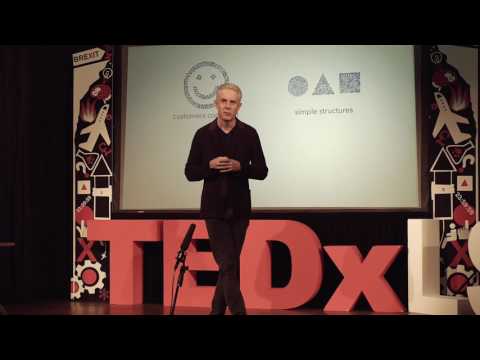
at putting their customer first so just
a very tiny snapshot of the data we
asked not then we also asked them but we
asked their customers do these companies
deeply understand your needs on a zero
to seven scale the answer for these 23
companies the average answer was 6.2 we
asked the bottom quintile of growing
companies we ask their customers do
those companies really understand what
you want
on a zero to seven scale the average
answer was 0.9 good companies understand
their customers better and their
customers know that they understand them
better
second simplicity the statistically most
important driver of economic success for
any company that we found simplicity one
measure of that is we looked at how many
products do the companies have and what
percentage of those products drive 80
percent of their value creation now
you’re all familiar with the the Pareto
optimality the 80/20 rule so it doesn’t
quite apply in this case the average
number of products that drive 80 percent
of the value in the turn and 39
companies that we looked at was 1007 one
thousand seven products the average
number of products in the super
accelerators that drive 80 percent of
the value is nine successful companies
are simple unsuccessful ones have excess
complexity number three space to
innovate now the inverse of this is fear
so organizations struggle to innovate
when when the environment is created in
which if you try something and you fail
you’re in trouble so we have in our
worker what we call the fear index which
is what’s the level of concern and
anxiety in these companies about doing
something that’s brave the level of
concern and anxiety in the bottom
quintile growth companies is 11 times
higher than in the super accelerators
successful companies create an
environment of experimentation fun and
freedom not command control discipline
rigidity final one they’re agile so the
test here is can your company move ideas
are
and itself quicker than the market and
I’ll just give you one horrible example
the slowest Organization we found in
this regard was the National Health
Service it’s a bit of a problem
especially as you approach migrate age
so if you have a stroke the best way of
stopping you die post stroke it’s called
a venous thromboembolism it’s a
particular procedure to stop the the
artery that’s burst getting worse all
clinical opinion in the UK is that that
procedure works the average time it took
for that procedure to be innovated and
spread across half of the NHS was 9
years took 9 years in that nine years
fourteen thousand seven hundred people
died that could have been saved through
that procedure if you take the super
accelerators and you ask the same
question how long does it take for a
good idea to spread across half of the
organization so the worst we found is
nine years the best we found was 37 days
the difference between a bad
organization and a good organization is
speed of ideas adoption so those four
things are absolutely critical to create
organizations that will win and we know
that organizations that win produce
enormous benefits it’s a full society
so still left us with a few other
questions one is how the hell do you do
those things how do you make those four
things come true so we with your student
many of your students from LSE you like
data after I would show you the plumbing
chart here so what we’ve done here is
we’ve taken those four things we’ve
blown them out into 13 things and then
we’ve correlated them with rates of
organic revenue growth so the red circle
in the inside is companies that are
shrinking by more than 8% a year the
greener companies that are growing by
more than a percent a year and the other
colors are in between the data is what’s
called parametric which is as you as you
grow more the likelihood of you doing
these 13 things more increases with each
stage of growth it’s perfect data what
it tells us is if organizations want to
be successful they have to be able to do
these 13 things
that’s fine how-do-you-do these 13
things so we found four patterns of
success we call them recipes you could
call them archetypes that they’re four
ways of that we found of organizations
being successful and they fall into the
four categories that I describe here so
on the upper line oh these charts I can
get to it before the graphics gets here
on it on the upper left we call it
customer intimate these are
organizations that know their customer
that are almost and the customer knows
themselves bottom left is what we call
talent magnet so in McKinsey or a
Goldman Sachs would be a talent magnet
organization their DNA their competitive
secret sauce is winning by being better
at managing the talent equation of
course they care about their customers
they’re not abusive to their customers
but that’s not their secret sauce bottom
right these this is the execution play
these are organizations that win the
game of inches by out competing their
competitors a little bit better every
day someone like a Tartar would be a
wonderful example of that three hundred
and sixty thousand people they’ve grown
from seven billion seventeen billion in
the course of five years just by being a
little bit better every day and then
upper right portfolio investor someone
like a Blackrock Blackrock of the
world’s largest investment management
company that as over Friday that had
three point two trillion under
management they move resources to
opportunities better than anyone else
I’ve ever seen what the data tells us is
you can’t be good at all for what the
data actually tells us is you better be
good at one of them if you’re not in the
top quintile for one of those four
patterns your chances of not being an
independent company so I’ve gone bust or
a being bought or have been downsized
and outside the the FT 500 your chances
are no longer being independent go up by
six hundred percent over two years you
have to be good at one of those four
things many companies are not in the
middle are a few threshold actions we
found no company that was in the top
quintile
/ – all the rest of the companies that
was not also good at these things I
won’t talk you through them all but one
of them is use purpose as your fuel
emphasize the purpose of your
institution the purpose of an
institution is not to create shareholder
value the purpose of an institution is
to fulfill a customer need and thereby
create shareholder value so there’s a
set of things you have to be good at at
a minimum in the center and then you
have to choose which of the other
recipes will create competitive
advantage for you let me just give you a
intuitive feel for what those recipes
are by giving you for example so Cigna
is the best company I’ve ever seen in
terms of really understanding their
customers so consumers that the biggest
global healthcare giant at the moment
they deeply understand what their
customers want of course they go to
execution of course they move resources
about but they’re all about the consumer
if you turn to the second recipe the the
portfolio investor Donahoe I mentioned
earlier they’re in industrial
conglomerate they’ve got over 140
businesses they don’t have a budget
process they move capital talent and
ideas to opportunities seamlessly third
one
moving from portfolio investor to
execution engine HDFC the global but
Indian domiciled bank if you pre
populate your details on the web and you
call up HFD C for a loan the average
time that they can tell you whether you
are going to get that loan or not is 8.4
seconds 8.4 seconds every time it takes
Barclays 17 days so bit of a gap I would
say I haven’t calculated what 17 days /
8.4 seconds is yet last one I can’t
really do a presentation like this
without mentioning Google a good friend
of mine Matt who runs a Google in Europe
you can read the quote in Google it’s
not about following commanding control
hierarchical structures it’s about
breaking free of those structures and
creating an environment in which very
gifted people can achieve a great deal
so those are the four recipes
it still leaves you with a question we
know that execution wins we know that
choosing recipe matters but how do you
choose a recipe what we found across all
the communities we looked at 239 there
were only six companies that were good
at two recipes
tellingly all six of those companies
were super accelerators so the lesson
seems to be choose one recipe but if
you’re a super accelerator you can
probably just about get away with
choosing two recipes though we of the
239 companies that we measured 41 of
them aspired to be good at all four
recipes we measured them 18 months ago
of the 41 companies 37 no longer exist
the pace of change in the competitive
environment is rather quick so all of
that still leaves you with one more
level of question why are some people
get it doing this and others not and we
were really interested in personal
skills competencies and I’d invite you
as largely young people in the audience
thinking about your career how do you
stack up against these four things we
actually looked at 1,800 different
competencies across four and a bit
thousand people in 239 companies and we
found that most skills don’t
differentiate you have to be able to
read a balance sheet doesn’t matter
whether in a high-growth company or low
growth company you have to be read a
balance sheet you have to be able to
make presentation and deal with it when
your slides don’t work you have to a to
set objectives resource fluidity so
resourceful ability is the ability of
the organization and the ability of
individuals to apply resources to
opportunities so in an organization
Water Resources there are many capital
talent and ideas opportunities are
products markets and customers in an
ideal world we have zero transaction
costs and complete complete fluidity
because we can move those resources to
those opportunities
the most successful people we found were
very adept at doing that the least
successful people people we found manage
to get their resources stuck in islands
where they’re not able to apply it to
the best opportunity the second one is
the one we can’t see at which I call
riffle intelligence so ripple
intelligence is the ability to be on the
the dance floor and the balcony at the
same time is the ability to join the
dots the ability to see around corners
you could call it strategic thinking
it’s the ability to not only run the
race but look where you’re running at
the same time if you have that or can
develop that you stand a much better
chance of being successful in business
we go to the third one
dissolving paradox this is probably the
most difficult to get your head around
so as you become seen you will all
become senior unsure in your lives as
you become senior the answer to every
question becomes yes so do one people
often say to me : do you want to provide
a very low-cost service to your
customers or do you want terrific
customer service the answer is yes I do
all right do you want to have your
people passionately empowered every day
or do you want them to have discipline
and control because you work in a
regulated environment yes I do I want
all of those things when you just think
of those as alternatives where you can
find a trade off that’s fine but you
won’t be in the high-growth companies
the leaders in high-growth companies
find a way to transcend those simple
trade-offs and find a way of unifying
that paradox into a new way of looking
at things the fourth I call liquid
leadership that someone define this for
me the other day and I love their
definition the definition of a liquid
leader is someone that as they walk into
the room it lights up rather than as
they walk out of the room it lights up
so
I like that I’ve met quite a few people
where it tends to be dark as they enter
the room so our data we kind of expected
it to tell us that the days of vertical
command and control leadership are over
it didn’t it told us that command that
control and discipline are just as
important as they ever were but that now
needs to be augmented by leadership that
creates followership leadership that
creates an environment in which people
want to follow that individual one very
simple measure of what we did is we
asked all those people I mentioned
earlier do you aspire to be like your
boss in the high-growth companies the
top quintile companies on a zero to
seven scale the answer to that was 6.2
in the low growth companies so this is a
bottom 20% of the world’s biggest
companies in terms of organic revenue
growth do you aspire to be like your
boss competing with 6.2 at the top end
0.36 I don’t know why they even wanted
to be like that boss at all but a tiny
amount the leaders in low growth
companies have created an environment in
which people do not want to follow them
so let me bring it together into the
bottom line so I’ve thrown a lot of
numbers at you let me just define it as
the individual level team level and
organization level so for the
individuals I’ve been talking to you
about this spectrum that the difference
between the most effective and the least
effective quintiles of people that we
measured was economic performance of
400% the highly effective leaders
produced four times as much EBIT are
free free cash flow and rocchi
each year as the less effective leaders
it’s not ten or twenty percent or you
know on a good day they’re a bit better
it’s four hundred percent difference
so that’s individuals but it you know
individuals generally work in teams so
how did teams generate a better return
we looked at 3,200 teams they obviously
four create a normal distribution curve
the difference in economic performance
between the top of that distribution
curve than the bottom of the disarray
curved its economic performance of 22.8%
just to give you a feel for that a large
telecoms company in Europe took this
thinking it said okay we’ve got about 70
teams that run our business if we took
the bottom half and made them as good as
the top half how much more money does
that produce for us for them it was 7
billion pounds now they’ve captured
about 4 billion of that southern Berlin
they haven’t managed to get it all but
four billion quid is not bad and it’s
driven at 19 percent rise in their share
price final one and this is the most
intuitively obvious I think for
everybody which is okay if you do all of
this stuff what difference does it make
to the share price we take $100 and you
were to apply invest that hundred
dollars in the FT 500 companies minus
the 23 super accelerators seven years
ago that hundred dollars would be worth
today two hundred eleven dollars and six
cents he invest that same hundred
dollars in the super accelerators so the
same amount of money into the super
accelerator Heward today have 436
dollars the difference between the less
successful organizations and no
successful organizations it’s roughly a
doubling of shareholder value it’s all
possible it’s all to play for the
difference between organizations being
unsuccessful and organizations being
very successful it’s fundamental to
peace in our society um the the degree
of wealth generation for families and
individuals and the degree of political
stability that we have in the
organizations in our countries my wish
for you is that you take a little bit of
this thinking and a whole lot of other
people’s thinking and create
organizations that are able to fulfill
their potential thanks for listening
appreciate
you
Please follow and like us: