
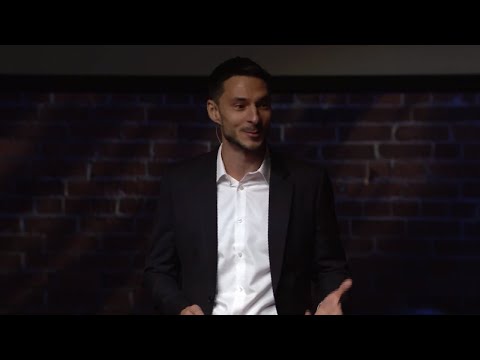
right after college I got hired to work
as a software developer I was excited to
be starting my first real job but it was
also pretty nervous because I had
absolutely no coding skills I was
expected to learn on the job I was
prepared for that to be intellectually
difficult however I wasn’t prepared for
it to be so emotionally difficult for
the first time in my life I was
consistently underperforming I mean like
really underperforming and after a while
I started to be afraid to ask questions
because when I did my co-worker would
get visibly annoyed and she’d actually
roll her eyes at me so after months and
months of this I started to doubt
whether I could ever become a competent
coder I started to feel anxious and
ashamed every time I sat down on my dust
to code so naturally I did everything I
could to avoid coding I clocked out as
early as I could I came in took extra
long bathroom breaks just to be away
from my desk in other words because of
my anxieties about coding I spent less
and less time actually learning how to
code and more and more of my time for
crass donating or hiding out in the
bathroom
so you know after months and months of
this I really became you know I became
really you know upset and eventually I
quit and but then after I quit and I
started a new job at a different office
something really surprising happened in
this new workplace the work felt a lot
more collaborative I never once felt
stigmatized for not all right not
already knowing how to do something and
in a matter of weeks
Kody went for being a source of shame
and anxiety that I had avoided to being
a source of pride and fulfillment that I
sought out I was no longer clocking out
early on taking extra long bathroom
breaks instead I was glued to my desk
and taking extra work home with me
somehow in this new environment I had
been transformed as a learner from
someone who had fearfully avoided
challenges into someone who fearlessly
embraced challenges now I don’t think my
story is unique or even rare to the
contrary research shows that the
environments in which we study and work
can have a profound impact on the way we
approach learning on the one hand they
can make us fearfully avoid learning
challenges well on the other hand they
can help us fearlessly embrace learning
challenges now researchers have long
known about this but the implications of
this research are becoming ever more
important because learning is becoming
ever more central to professional
survival for example over the last
thirty years the share of jobs across
the US economy that requires
post-secondary training has more than
doubled and most economists expect the
importance of learning but only continue
to grow as time as more and more jobs or
automated out of existence while many
others are changed beyond recognition so
this begs the question are we preparing
our young people for this future are our
schools inspiring them to fearlessly
embrace learning on an unprecedented
scale as clearly they will need to do
well the data don’t look terribly
promising according to Gallup where’s
three-quarters of grade school students
start out being engaged with school by
the time students reach 10th grade 2/3
of them have become disengaged
two-thirds of them that’s that’s 2.5
million tenth graders who are turning
away from learning why are so many young
people turning away from learning and
what do we need to do differently to
help them embrace learning instead well
over the last nine years other than a
member of a growing community of
researchers and educators who are
committed to answering this question we
think it’s essential to figure out how
we need to reshape our schools in order
to make sure that young people become
fearless learners who embrace learning
and are prepared to go into learning
filled careers that challenge and
invigorate them what we’re learning
though is that all too often our
well-intentioned actions as parents or
as educators have just the opposite
consequence all too often we do things
delete students to be afraid of
challenging themselves instead of
helping them fearlessly embrace a
challenge I’d like to tell you quickly
about a study that showed just how this
can happen
it’s a now-famous study from 1998
conducted by Claudia Mueller and Carol
Dweck
in their study the researchers asked 128
fifth graders to complete some logic
problems and after the first round the
problems they asked all the students are
they they congratulated all the students
on a job well done
they praised them for their performance
but they praised them in an importantly
different ways so they praised some
students for their effort they said wow
you did really well you must have worked
hard on those problems they praised
other students for their intelligence
they said wow you did really well you
must be smart to those problems and then
the researchers gave all the students an
option about while they’re in a
subsequent round of problems they would
rather do some more challenging problems
or some easier problems well the kids
who had been praised for their effort
object for the harder problems 92% of
the time they weren’t afraid to
challenge themselves those who’ve been
praised for their intelligence only
opted for the harder problems 33% of the
time they prefer to avoid the challenge
and it’s because for them those
challenging problems were frightening
they carried a risk after all if doing
well on the easy problems had meant that
they were smart well then what are they
struggled what do they got more of the
hard problems wrong
well then presumably that would mean oh
they’re dumb in this way this seemingly
benign this well-intentioned compliment
injected fear into an otherwise fawn
learning situation it made the students
afraid to challenge themselves instead
of helping them fearlessly embrace a
challenge now when I first learned about
this research it really struck a chord
because I recognized that similar fears
had gotten in the way of my own learning
the fears of looking domme had to cut me
from taking certain hard classes in high
school in college that they had also
kept me from asking questions which
without a doubt would have accelerated
my learning and as I reflected on this
it started to dawn on me that there was
a tragedy playing out in schools all
across the world but students millions
of students were turning away from
learning not because they were lazy not
because they were on interested but
rather because of fears because they
were learning in environments that made
them afraid to challenge themselves
well this seemed like a really tragic
waste of human potential to me and I
felt really compelled to do something
about it but it wasn’t sure what so I
packed my bags in Chicago where I lived
at the time and I had it for Stanford
University at Stanford I worked with
Carol Dweck and Greg Walton and working
with the two of them I learned a great
deal about the factors and empower
students to fearlessly embrace learning
as well as about the fears that get in
the way of learning and the more I
learned the more troubled I became that
this these profound psychological
insights that I was learning as a
graduate student were all too often
locked away in academic journals outside
the reach of the parents and educators
who most needed to know them who most
needed to apply them so he found that a
new Center at Stanford called PERTs the
project for education research at scales
and approach we work we work to bridge
this gap to help educators learn and
apply these psychological insights so
that they can create learning
environments that inspire fearless
learning rather than fear of learning
now we do this in a number of different
ways I’m just going to tell you about
two first we hope educators dispel the
harmful myth that intelligence is
something fixed about us that it’s
something like eye color and we’re doing
that because countless studies show that
students are more likely to challenge
themselves and more likely to learn a
lot and do well in school once they
understand that their intelligence is
actually something they can grow once
they have what researchers call a growth
mindset and with support from
philanthropists and from government
agencies we’re helping thousands of
schools all across the world learn and
apply that these ideas so that they can
foster a growth mindset among their
students we’re also helping teachers
cultivate secure relationships with in
between their students relationships
that help their students feel that
they’re a valued member of an academic
community feel like they belong this is
critically important because these
relationships form the foundation for
fearless learning learning is an
inherently vulnerable act it’s full of
mistakes and struggles and missteps and
it’s really hard to be vulnerable to put
yourself out there
in front of people who you don’t trust
and for the people who roll their eyes
at your mistakes now I’ll be the first
to admit that it’s a lot of work it’d be
really hard to make an environment in
which all students feel like they belong
which all students feel like they can
grow we’re not convinced it’s worth the
effort because no student should live in
fear of learning I also known it’s
possible because I’ve seen firsthand the
kind of magic that happens when teachers
do the successfully when they create
environments and which students can
really learn fearlessly I was like to
tell you about one educator that does
this really Wow
her name is Muriel trades and she’s a
high school math teacher in San
Francisco after each test and Muriel’s
9th grade math class she asked for a
volunteer to go up to the front of the
room and share a mistake they had made
on the previous test with all of their
classmates I imagined your high school
math teacher asking for a volunteer to
go up to the front of the room and talk
about a mistake they had made when I
imagined that I see a roomful of
students trying to look as small as
possible
invisible ideally less their teacher
call on them but in Mario’s class going
up in the overhead is an opportunity
that students fight over they are not
afraid to struggle in front of their
peers and is because Muriel has done two
important things first Reese created an
environment of trust and collaboration
between our students and second trees
help their students internalize the
critical lesson that you learn far more
by confronting your mistakes than you do
by hiding from them in this way Muriel
is training our students to be fearless
learners who can embrace the challenges
that tomorrow will bring we need many
more students to be trained at a similar
way because in the coming years
unprecedented numbers of us will need to
learn throughout our careers that can
only happen if we help each other
transcend the anxieties that keep us
from learning if you reshape our schools
and our workplaces so they inspire
fearless learning rather than fear of
learning now one of my mentors worked at
a school that worked really hard to
create a space where all students feel
like they belong and feel like they can
grow he asked a new student there how is
this school different in this school you
were in last year
the student told him everything is
different here and my old school I felt
dumb people told me I was stupid and I
believe that here I know I can be smart
if I try I know I’m not done
clearly this school had a profound
impact on him and if you’d like to think
about what you can do to have a similar
impact I urge you to start by thinking
about the people in your home in your
workplace in your school and ask
yourself how can you make a space that
makes each of them feel like they belong
feel like they can grow how can you
inspire them to fearlessly embrace
learning thank you
[Applause]
Please follow and like us: