
I grew up in Chicago we report my
parents they each immigrated from
Eastern Europe and they met in Chicago
and they had to make a living family
members who had come before them had
gotten into the hand laundry and dry
cleaning business so that’s what they
did
they opened a small hand laundry and dry
cleaning shop on the west side of
Chicago we lived in the back of the
store in order to make ends meet that
allowed me to see and hear much the
customers they were poor
by and large african-americans and
Latinos
some of them had a job those who worked
had low-paying jobs they got paid those
who got paid on a Friday and we needed
to have a good Saturday in the store in
order to take in enough money to pay the
bills related to the business and how
that Saturday went determined how we ate
the following week whether there was a
quarter leftover in those days for a
movie and so my mother who had abilities
as a seamstress she could sew decided to
do alterations because there was no
overhead on that whatever she made in
shortening somebody’s trousers or
repairing a seam that was money for
which we didn’t need to pay a bill and
she treasured the time that she had
to create that revenue now here’s what I
saw over and over again my father would
take a garment in for cleaning or
washing and notice that the pocket was
repped something was torn and in a very
tentative way he’d come over to my
mother
and he’d say in Yiddish because we spoke
Yiddish nah-neh him up here sew him up
and I could script the rest of it
because my mother would say back to him
Eric but Sultan meaning he’s gonna pay
to which my father would say again I
could script this airs that saris and
air air hot nish can guilt he’s in
tatters he has no money compassion
yes empathy I saw that but I also saw
the other side you got to get paid so
they didn’t realize they were teaching
me this and I didn’t realize I was
learning it at the time but there was
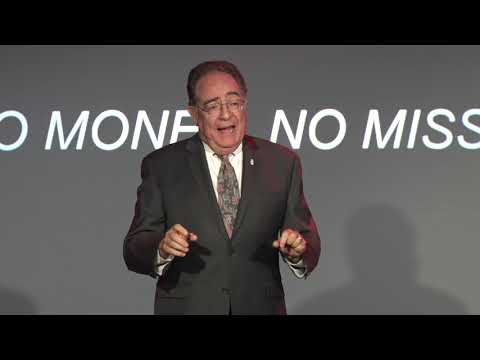
the lesson no money
no mission and now today as a president
and happily as a physician who still
sees patients I understand
no money no mission in my case as a
physician I care for children with
gastrointestinal diseases most of them
come from the community near our
academic Medical Center roughly
three-quarters of them are on Medicaid
each time I or one of my colleagues sees
a patient on Medicaid we lose money
that’s a national phenomenon Medicaid
generally pays a third or more
less for a visit then for the visits of
those who are fortunately quote well
insured and you know that old expression
you can’t make that up on volume now
fortunately I work in a large group
practice with multiple sites so there
are many patients in the other sites
that tend to help make up the loss but
most physicians and other providers
across the country don’t have that
luxury they can’t do it in fact it’s
estimated that over 40% of physicians
around the country limit the number of
patients supported by Medicaid that they
see or don’t see them at all no money no
mission now you probably think that I’m
going to follow this by making a plea
for money more money overall that would
be great
but I want you to consider another
thought in terms of dealing with this
no money no mission issue I’ll tell you
a story when I was a professor of
pediatrics in another academic medical
center I became interested in providing
home care for children associated with
our academic mission in other words
there are children who need follow-up
care which can be done at home at less
expense than in the hospital or
sometimes care that can be done at home
in lieu of the hospital potential for
savings so my colleagues who did
intensive care in that Center and the
under chronologist came to me one day
and
said maybe you can help we have an
eight-year-old child with diabetes and
Shera currently presents to the hospital
and requires very expensive intensive
care unit care because she’s out of
control diabetes out of control is a
very serious issue and she’d come back
we’re currently with her diabetes out of
control physicians often have cute
explanations for things we don’t
understand and in those days we used to
call it brittle diabetes
she was Riddle so we sent a homecare
nurse to her apartment and here’s what
the nurse reported when she came back
the mother was drawing up the insulin in
a dark kitchen in fact the whole
apartment was dark the electric had been
turned off long ago because she couldn’t
pay the bill we found ways to pay the
bill no more brittle diabetes apart from
the money no more suffering in the
intensive care unit there’s money to be
had I’ll tell you another story related
to my experience in home care and to my
interest in children with feeding
disorders what does that mean two to
three year old kids who are highly food
selective they only eat white round food
or the corners off saltines these are
true experiences or they’ve had
long-standing esophagitis pain on
swallowing so they learn not to eat and
you can help those children and their
caregivers by keeping them in a special
setting in a hospital i setting for
eight or ten weeks and working with them
painstakingly each
bite but then you just can’t send them
home and tell the parent to simply
follow what she’s been taught there
needs to be some aftercare well that
would be done through the home care
program where we’d send out a nurse on a
regular basis to each of these homes to
follow up now my home care offices were
right across the road from a wonderful
childcare center so I had an idea I
thought you know if we could get eight
of those kids aggregated in a childcare
center which would have benefits for
them anyway and one nurse who might come
and take care of their needs of the
childcare center and they could sit
around a table for lunch when
three-year-olds sit around the table for
lunch they eat very well together they
reinforce each other and as far as the
numbers were concerned when I penciled
it out if the agency responsible for
supporting their home care would pay for
the childcare tuition and the nurse for
eight kids over the course of a year you
could save a hundred thousand dollars so
I presented that and here’s what I heard
back we don’t pay for childcare and by
the way if these children can be in a
childcare center they’re not homebound
and you know if we could think about how
we could expand what healthcare is we
could save a lot of money if we could
find a way to understand that paying for
an electric bill is healthcare that
paying for childcare is healthcare
that paying for keeping the lead out of
a child by D letting the house after
they’ve been led poisoned is health care
if paying for an uber to take somebody
to a visit rather than to call the
ambulance maybe there would be some
money left over and with that money we
take care of the no money no mission
issue we find a way to be innovative
creative broader minded so that we can
address the needs of the people who are
very bound to the mission the people who
may people up the people who sew people
up so that we can all be better kept in
good repair thank you [Applause]
Please follow and like us: