
bright light Wow and I thought I’d start
off with a little story
actually this appealed to me so a chap
was lying on his back in a field
watching the clouds passing by enjoying
the shapes they were making and he’s
feeling very much at one with nature and
with God and he thought I’m going to
embrace the spiritual moment here though
I’ve got so he started speaking to God
and he said to God the fantastic world
you’ve built his fans how he said it’s
amazing he said and the whole concept of
how huge it is and and how long
everything lasts for is amazing to me
said in how long is a million years
and God said well in my frame of
reference it’s about a minute he said
wow he said and how much is a million
pounds he said in my frame of reference
about penny
you said God could I have a penny god
says sure in a minute so my name is
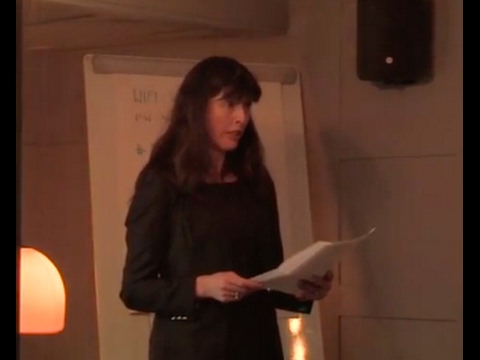
Bridget Cameron I’m the chief exec of
Alpine which is an interim management
company and I was originally asked to
speak at lease by the lovely Erica here
about seven months ago and you think
after all this time I’d have a lovely
punchy pithy story to tell you but it’s
such an esoteric subject it took me a
little while to kind of think about
where I begin with it so I thought I’d
try and keep it as personal to me as I
can and talk to you a bit about some of
the some of the things I’ve done that
are time-related and hope that it is
interesting at the very least so
possibly a quick in in overview about my
background I’m lucky enough to do
something that I absolutely love I fell
into it completely by accident which is
a separate funny story I’ll tell you
individually if you want to know
afterwards about 30 years ago I’ve spent
in the first 15 years of my life doing
recruitment in private sector and after
the first sort of 10 years or so I got
involved in helping companies that
weren’t performing them very well to go
in and do turnarounds or to start up
businesses for other people under
existing ventures and then about 15
years ago for reasons that I’ll go into
later I decided it was time to do my own
thing and I work now predominantly in
the public sector and the
reason that really appeals to me is it
gives me the opportunity to see and to
and to offer some help in a very small
way into how public sector organizations
support the needs of communities so
today
time we can’t touch it we can’t smell it
we can’t feel it
we can’t taste it and yet in today’s
modern world we crave it it’s intangible
there’s never enough of it we can’t
change it we have a finite amount of it
and yet we waste so much of it and we
can’t create more of it or can we you
can be on it out of it bound by it your
plans are subject to it and one is
always running out of it you spend it
but you can’t get a refund on it and
often we end up being time poor it costs
nothing and yet it’s the single most
valuable thing that we have but we
rarely include it as a factor in our
plans apart from expressing regret that
there isn’t enough of it it waits for no
man or woman and yes it’s freely
available to those who make them make
the changes necessary to access it but
we don’t use it as our most valuable
resource in my opinion is one of our
greatest incentives 13 years ago when I
founded Alpine I took the opportunity to
become utterly selfish about just one
thing in my life my time prompted by the
fact that my then got this is scary
nine-year-old daughter was growing up
extremely fast and if I didn’t do
something then to make time to spend
with her I’d regret it so I decided then
that the following six changes would be
made number one I would determine my own
personal priorities and work around them
so things like school days sports days
appointments etc etc family birthdays I
would make sure that I was there for
those I would make my daughter breakfast
and walk her to school I’d never done it
I was the person that dropped her off at
the child minders at 5 in the morning
and saw her again at 10 o’clock at night
it was an amazing huge thing for me to
do I’d work from home off
my days and I’d be there to collect her
from school that meant instead of her
watching her slightly vacant looking
mother hanging around the house at a
weekend trying not to think too much
about Monday I was there to pick her up
from from school on Friday and we go off
and we do something together
I make adequate time for me to have and
to enjoy hobbies I would make time for
me to think really properly think and I
would not allow anything to interfere
with the things that were most important
to me so my family and my friends I made
time for them I didn’t let anything get
in the way of that
none of this resulted in a drop in my
performance at work this will sound
really cliched but if anything it
enhanced my performance because I was
actually true I am truly in the moment
when I’m working I’m not resenting it
I’ve allocated time to it and it sounds
bizarre to say that I’m allocating time
to work but that was a decision I made
then and I’m still living that so I
don’t resent it interfering in anything
else I found freedom being able to work
around what’s important and it’s
resurrected in me a passion for what I
do that I hadn’t even realized was
lacking don’t get the idea that I work
as a hobby I still work 40 plus hours a
week but I work it in a time that suits
me obviously my daughter’s no longer at
school so I filled that space with work
bad me but I am mindful about the type
of when I need time so if I find myself
working three late nights a week I won’t
feel too bad about taking a you know
late start on a Friday or a long weekend
I’m pretty good at spotting when I need
time for me and making that time
throughout civilization time has
preoccupied a lot of people and curious
minds from Aristotle to Einstein for the
Greek physicist Aristotle I’ve got too
many S’s in one sentence bear with me
for the Greek physicist Aristotle time
is now and of the present it was linked
to change in movement in short he
believes there is change because there
is time and without time there is no
change I think of this as time as flow
time is emerging as one of the most
critical issues of today’s workplace if
we want to make the most use of our
employees skills talents and aptitudes
we need to be open to time and to change
but to minimize the uncertainty that
this brings for our staff for instance
employers are wising up to the fact
there is no longer necessary for them to
be able to see their staff arriving at
8:00 in the morning and sitting at their
deaths until 6:00 in the evening they’re
increasingly recognizing that flexible
working is a viable method of keeping
costs low and staff engagement and
retention high flexible working is more
widely available and there’s better
recognition of the need for a good
work-life balance if employees are to
remain engaged and motivated but
unfortunately a practice does not always
match this recognition in unequal time
2014 sociologist Gustav and Clausen
documented that what employers perceived
as flexibility staff experiences a
growing crisis of unequal unpredictable
and uncontrollable hours across many
sectors and I don’t mean just low pay
retail type jobs
this means post four fordist work
patterns with zero hour contracts and
when applied rigidly this means that
staff are sent home early without pay
are asked to stay late or work weekends
at short notice
and might be berated or dismissed for
sickness as a select Commons committee
discussed recently in sports direct this
led to a female member of staff giving
birth to her child in the toilets
because she was so afraid and
economically desperate to ask for time
off for lit fear of losing her job now
that may have given great flexibility to
the employer but it shows a fixation
with time and not how people can be
supported to use it wisely I enable my
staff to have the freedom to choose how
they work we agree outcomes and
deliverables and as long as these are
achieved and that customer satisfaction
remains high and that they contribute
to the team ethos how they do it is not
micromanaged or time-bound by me alpine
we value our staff and we’re innovative
about how we demonstrate this
recruitment induction and training are
always the highest costs for any
organization attrition rates that Alpina
virtually zero our only resignation in
thirteen years was two years ago there
are a number of reasons for this but
staff have the flexibility to do
important personal things without having
to worry about taking time off for trips
to the dentist the doctor the vet but
pediatrician whatever it may be and in
return I get time from them when it’s
needed even if they’re on holiday and
it’s given freely it’s a two-way street
and they tell me that I suppose I have
to that they’re happy to work for a
company there has such flexibility and
the reality that they are the reality in
the understanding that they have
personal lives away from ec1 this is me
using time as a resource now it works of
course because I’m the leader of the
organization I genuinely believe in and
I live the values of a genuine work-life
balance and I understand that to get the
best from my people I have to give them
the most valuable resource I can and
that by treating them as adults I get
real engagement they understand the need
for change when it happens in Alpine and
I get active participation dr. Kimble
Ramsay of Angela Ruskin University did
some buy a new tracking of change
management during austerity in 2011
trends showed a focus on cost cutting
and restructure in 2013 it was culture
change and in 2015 it was again cost
based she concludes that since the
recession which is a period requiring
greater flexibility but also greater
trust managers have chosen a path of
form over function and process over
people but this is further diminish the
organization’s relationship with their
staff let’s go back to Aristotle’s
linkage of time and change one of the
biggest most catastrophic mistakes a
manager can make
is not prioritizing and taking the time
to consult and communicate with staff
during the change process but change can
be unsettling it often invoked an
emotional rather than a rational
response sometimes resistance and
sometimes downright denial all of this
takes up time poor communication results
in very much reduced performance and
engagement this can happen with whole
organization culture change or the
introduction of a new way of working
such as digital technology digital is
often seen as a panacea for saving time
and money and some great successes have
been achieved by this such as bookings
and payments but only when they’re
designed with and for people to include
to improve their online customer journey
and their whole customer experience the
result of some digital time savers have
been more varied when looking at complex
people based services and processes such
as keeping a vulnerable child or older
person safe here solutions offered have
been product productivity software to
map process to map app to activity
intimate tasks but it pays very little
attention to the emotions and the
behaviors of the people experiencing
that process or in designing a better
outcome for them one impressive example
of a time-saving outcome for people is
the introduction of pharmacy robotics in
the Whittington Hospital in London
technology here is used to measure
dispense and distribute patient
medicines to the right wards which
reduces error and saves time on process
but it’s how that time is used that’s
important so nurses can now spend more
contact time with patients because data
shows that such direct patient care
interaction speeds up rakov recovery
drives down cost and has resulted in
higher patient and staff satisfaction
levels this means less time in hospital
for the patient less burnout for the
nurses and a lower bill for the NHS this
shows a strategic understanding of time
as an asset so effective digital public
services that save time save money and
build digital
30 demand the Unison of both social and
technical aspects to deliver something
that people can use value and benefit
from recognizing the importance of time
as an asset Frances booth points out
that sometimes it helps to be a bit more
selfish and say no because learning when
and how to say no is a way of valuing
and managing our time when we say no to
one one thing we are in effect saying
yes to something else so we’re
prioritizing and we’re valuing our time
the digital world we live in because
sometimes pressure us into making rapid
responses pausing before responding
immediately will always take less time
than it does to backtrack in her book
digital distraction booth also
encourages timeout such as turning off
email and social media links for a while
because this clearly signals no two
people contacting you as and when they
please and it’s a very simple way of
getting control over your time I said at
the beginning of this talk that my
approach was to be utterly selfish about
my time so on a personal level I don’t
make plans for more than two weekends a
month I insist on an hour alone of an
evening for a cup of tea or a hot bar
and a hot bath and if not a cup of tea
something stronger depending what kind
of day I’ve had and it gives me time to
think about whatever I need to and I
highly recommend bartha’s
decision-makers are fabulous I tried to
restrict my late evenings at work to no
more than two a week with varying
success and I devote time to the things
that I enjoy doing and I give them equal
precedence to work this keeps me sane
although some may argue that I believe
it’s the essence of getting the most
from time and achieving a healthy
work-life balance I’m going to leave you
with a quote from the great Albert
Einstein the only reason for time is
that everything doesn’t happen at once
thank you very much
it’s been a pleasure [Applause]