
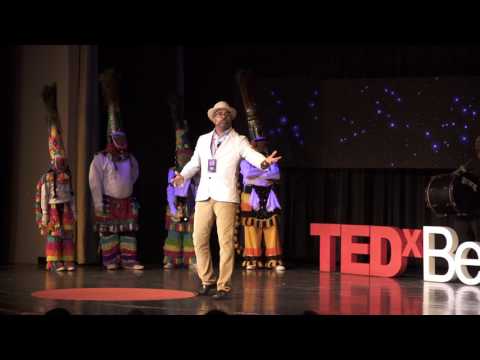
well good afternoon everyone I’m sure
you’re enjoying yourself today first of
all I like to just say I consider this a
privilege a privilege to share with you
today a passion of mine about our
Bermuda Gombe culture first of all I
have to set some objectives my first
objective is to tell you teach you
educate you a bit more about the Bermuda
Gombe culture my second object Jack
objective is if I do an excellent job or
my first objective then you would know a
bit more about the Bermuda ganbei
culture and hopefully you will gain a
deeper understanding and appreciation
for what we do would you guys like to go
on a cultural journey all right
help me out here I want everyone in this
room to close your eyes a brief moment
empty any thoughts that might distract
you I’m gonna take you on a cultural
journey and it’s called listen to the
drums calling listen listen
this sound is coming from the continent
of Africa this sound is a drumbeat that
is played for ceremonial purposes it’s
steep in tradition and culture this
sound is from Mother Earth listen I hear
another sound did you hear listen to the
drums calling you this sound you hear
it’s a Native American song we call it a
straight song you will hear this type of
drumming and singing at powwows at
social gatherings what you hear is
thousands and thousands of years of
traditions and culture these are
storytelling from the drummer or singer
to the people ladies and gentlemen you
have just heard two distinct sounds a
long time ago these two cultures cross
paths and the pass that they cross was
not intentional it was actually forced
it was forced do
the sleeve trees and from this we have
an infusion of culture and a new sound a
new sound has been born the bermuda
Gumby vanilla Gumby this is your very
own culture
[Music]
I want to take you back in history I
want to tell you a story this story is a
very true story that happened in your
very own island of Bermuda this story
begins in 1831 January 10th to be exact
this was a story based on two runaway
slaves the names of these slaves was IX
a mentor it is said that the two slaves
heard the calling of these drums in the
distance and left their plantations when
the slave owners discovered that they
were missing he frantically looked and
looked and looked but could not find
them until one day he placed an ad in
the local Gazette hoping that someone
would find and see his slaves but as the
story says the slaves were never found
I want to get to the heart of the
Bermuda Gombe the Bermuda Gombe is made
up of two elements basically dancers and
drummers let us look at the dancers
there are basically three fundamental
dance steps that the Gombe is performed
rather you see them on the street during
the public holidays rather you see them
in a commercial environment such as
playing or performing at a hotel the
first one is called fast dance or
freedom dance and you can imagine the
reason why it’s called freedom dance is
because
the sleeves were finally told that they
are free men the excitement the energy
the power that they demonstrated through
their dance the second form of dance is
called Junkanoo this is where we have
our Caribbean influence if any of you
have visited the Caribbean islands like
Jamaica or even the Bahamas you may have
heard of the Junkanoo the third form of
dance is masquerading this is a very
spiritual dance
let us talk a bit more about the drums
just like in Africa the talking drum
which is played to send messages the
bermuda Gombe drum also sends messages
sort of like a Morse code if you will
the snare drums talk to one another
sometimes the snare drum talks to the
dancer there’s always a oneness a born a
communication between drummer and dancer
let us talk about the tools or the
weapons of choice that these young
warriors bear in their hand these are
weapons or tools used for everyday life
or to defend their tribe let us take a
look at the regalia notice I say the
word regalia and not costume regalia at
significance pride in what they’re doing
the most significant part of the regalia
ladies and gentlemen
the headdress because of its peacock
feathers it represents pride of who they
are proud to be a Gombe they are proud
of their ancestry let’s look at the Cape
that it’s adorned on their back yes it
may look pretty by the untrained eye but
there are significance even in the Cape
the cake represents royalty royalty from
the African tribe and royalty from the
Native American tribe let us take a look
at some of the plenary things that you
see in the Cape like the mirus now the
gum base tradition says the mirrors are
there because if the evil spirits saw
the reflection in the mirror they will
run away leaving the dancer to perform
its cultural dance in 2002 there was a
reconnection some of you may have heard
there was a reconnection of Native
American coming to Bermuda to find their
relatives Wow it was discovered that
certain surnames
such as – virtual lamb and a few
others were actually tied to Native
Americans that lived on the eastern
seaboard such as the Pequot tribes the
Wampanoag tribes well I’m here to tell
you that my family on the minus side as
well as the Bradshaw clan it’s tied to
Pequod tradition culture and ancestry so
you can see why it is so dear to me it
is important that we pass this tradition
on to our young ones so that we can
always
Bermuda gumbies for our future
generation ladies and gentlemen I want
to give you a demonstration of the three
forms of dance the first one is going to
be fast dance you can easily identify
this because of its speed
[Music]
[Music]
well done well then fast dance I hope
you noticed that with his fast footwork
the snare drummer his temple was very
fast and every step of his foot was a
shot on the rim shot so as you can see
the drum and the dancer are in unison
the next form of dance is going to be
Junkanoo
[Music]
[Music]
[Applause]
the last form of dance is masquerading
it’s a lot slower in tempo and it’s more
spiritual so it’s less footwork but more
torso body movement
[Music]
[Music]
[Applause]
ladies and gentlemen over time the
slaves were introduced to Christianity
believe it or not there are two Bible
stories that are depicted in the Gombe
dance one of it is Daniel in the lion’s
den and the other one is David and
Goliath and we’re going to show you
David and Goliath and that’s when you
have a smaller dancer dancing our gangs
a bigger dancer
[Music]
[Music]
[Applause]
[Music]
[Applause]
as you can see the small dancer
represented David and the big dancer
represent Goliath and David danced over
his body in victory ladies and gentlemen
I hope this very short presentation of
several several years of culture and
tradition just what you’ve seen today
you would have deepen your appreciation
of the revealer Gombe dancers thank you
for having me
[Applause]
Please follow and like us: