
Translator: Sue McGregor Reviewer: Darina Stoyanova
Good afternoon folks.
As my wonderful introduction said,
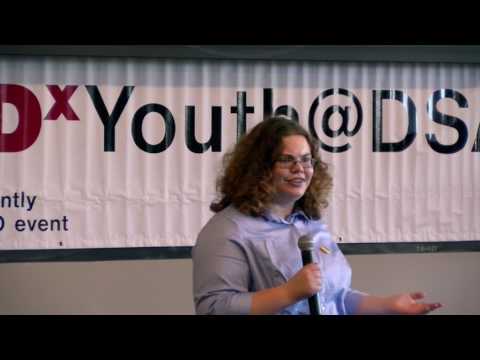
I’m Katie Urban, and
today we’re going to go into a little journey
into the unkowns aspects of LGBT+ representation in film
Now, I know what you might be thinking.
“Katie, are you really qualified
to come up here and stand and talk about this sort of stuff?”
Well I might not be an expert,
but I assure you, I believe I’m qualified.
This is because I’m going be going to be (name of school) for a degree in film
So my interest in film knows no bounds.
And as my introduction also stated
I have a part in the LGBT+ community here at STEM.
I personally identify as pansexual
which, for those of you who do not know,
means that I’d be attracted to a man or woman
or someone who identifies as non-binary.
I also use the the label bisexual, which, depending on who you ask,
does mean the same thing.
Now, you also might be thinking,
“Katie, what is wrong with the LGBT+ representation?
Why would anyone have to speak about it?”
And I agree with you there.
Why is it wrong or fraught?
Now if I were to ask you
to think of one or two gay characters in a movie
or a TV show, I’m sure a lot of you would be able to answer me
with one, two, or maybe even more names.
But, the representation of the LGBT+ community has these days
is alright, but either it’s lacking or it is flawed.
And this is because directors
are too afraid to put LGBT+ characters in main roles.
This even goes for directors who are
making movies based on queer events.
Take Roland Emmerich for example.
In 2015 he made a movie based on a
little-know event called the “Stonewall”.
Now for those of you who don’t know what
“Stonewall” is, it’s not a little event that happens, just the ……
(laughter)
Stonewall was the turning point in the LGBT+ modern-day rights movement.
During the 1960s,
bars across the country and cities were being raided by police
if they ever served gay patons.
People were arrested during these bar raids.
The bars who served the gay patrons could possibly be shut down.
It’s was honestly just a very scary mess.
Until one fateful day in 1969, New York.
A little queer gathering-place called the Stonewall Inn
was being raided and the gay patrons of that bar said,
“Enough!”
and they fought back.
Now, if you were to go and watch
the Stonewall movie created by Roland Emmerich
You would not see a story that is commonly accepted as true.
Now, although a lot of people don’t really know
who exactly started the Stonewal Riots in 1969,
it is commonly accepted that 2 transgender women,
Marsha P. Johnson and Sylvia Rivera
were the ones who threw the first brick that started the whole shindig,
that created what we now know as the modern-day LGBT+ rights movement.
And like I said, if you were to sit down and watch
Roland Emmerich’s 2015 “Stonewall” movie you would not see this.
You would see the story of a young white gay man named Danny.
Danny runs away from home and finds himself
in New York city 1969.
The story goes on, following Danny and his friends
up until the fateful night of Stonewall where Danny throws the first brick.
Danny, a fictional gay white man.
Sylvia Revera and Marsha P. Johnson are nowhere in this film.
And, when Roland was asked about why he made up a main character,
instead of using two perfectly good main characters
He said, and I am paraphrasing here, this:
“Danny is very straight acting.
He’s a very easy in for straight audiences. They feel for him.”
Basically, Roland Emmerich was saying that
having two black transgender women would be too gay.
Danny had to be straight-acting because, of course,
straight people can’t identify with or sympathize with gay people.
That would be ridiculous, right?
Well, it goes against everything that Stonewall was actually about.
The movie is an absolutely absurd joke.
Because Stonewall was not just about rights,
it was also about having the ability to act gay instead of straight.
Now, just to sort of move a little bit into the next topic here
that we will also be discussing but it does relate back to this,
and you’ll see what I mean in a bit.
Ladies, as I mentioned earlier,
I use the labels “pansexual” and “bisexual” to define myself.
Labels are a huge part of everyday life.
Some people decide to use labels. Some people don’t.
And there are lots of labels out there:
Homosexual, heterosexual, non-binary, man, woman, transgender.
There are so many labels out there
to fit all different types of people we have in the world.
Now, it’s okay if you don’t use labels and it’s fine if you do.
Everyone’s different. So you might be thinking,
“Shouldn’t that be the same for fictional characters?”
Well I would say, in a perfect world, “Yes!”
Characters should have just as much of a right
to use or not use labels as we do.
But, our world, and especially the world of Hollywood, is not perfect.
Take something that happened to me over the summer.
A friend, and friend of a friend and I were sitting down
and talking about nothing really, until I brought up the point of Deadpool.
Now for those of you who do not know what Deadpool is,
it’s a Fox original movie based on a fast-talking mercenary
who had a rogue experiment done on him that made him accelerated at healing
and left him with a thirst for revenge.
Now, as any of the films then do,
there were several articles that were pubished that had the director,
and the actor who plays Deadpool, Ryan Reynolds,
publicly announce that the character of Deadpool was going to be pansexual.
This would make Deadpool one of the first openly pansexual characters
on the silver screen.
And so I brought this point up to my friend, and my friend’s friend
that I really thought Deadpool was pretty progressive in LGBT+ representation
and my friend’s friend looked at me straight in the eye, frowned,
and cocked his head a little bit to the side and said, “What do you mean?
Deadpool’s not gay. He has a female love interest
and he doesn’t even kiss a man on the screen.”
And “Whoa!” I was blown away by this. (laughter)
I was, like, “Wow!” That’s pretty forward, and I didn’t understand
why he was saying this to me. Didn’t he get it?
But then it dawned on me.
It wasn’t his fault that he didn’t know that Deadpool was pansexual.
In fact if anyone didn’t know Deadpool wasn’t pansexual, in the audience,
I wouldn’t blame you either
Because, and here’s where it really gets down to using labels
versus not using labels.
If you had not read the articles, you would never have known.
Nowhere in the film has Deadpool ever expressed himself or otherwise
as pansexual.
He’s never labeled as an LGBT+ member.
And, in our socienty today, if you have a female love interest, and you are a man,
you are assumed to be straight.
In the world we live in today, a lot of people have
the phrase, “straight until proven otherwise.”
And then, if you are interested in the same sex you are labeled as “homosexual”.
There’s no ground for middle-of-the-spectrum people such as myself.
And this is really sad, and it also relates back to Roland Emmerich.
Roland Emmerich decided that having a character who was too gay
wouldn’t be a good idea,
because obviously straight audiences can’t empathize
with people who aren’t the same as them.
Yet LGBT+ people are constantly empathizing and understanding and sympathizing
with straight people who are everywhere on the silver screen.
Plus, and the one thing I have to say to all directors out there is
it’s 2016. A lot of people are becoming less and less scared
of the “scary” LGBT+ community being represented more and more,
and it’s ridiculous to think that just because someone’s gay.
no one’s going to go and see that movie.
I feel that directors should have more faith in their audiences
because it’s ridiculous to think that no one’s going to be able to empathize
with such and such character for such and such a reason.
Representation is important for everyone and we’re in a better society today
that can deal with these representations and help people realize who they are.
I thank you today for letting me come up here and talk to you all,
and I hope that in the future we can continue to spread more light
and shine more light onto the “scary” aspects of LGBT+.
Thank you.
(applause)
Good afternoon folks.
As my wonderful introduction said,
I’m Katie Urban, and
today we’re going to go into a little journey
into the unkowns aspects of LGBT+ representation in film
Now, I know what you might be thinking.
“Katie, are you really qualified
to come up here and stand and talk about this sort of stuff?”
Well I might not be an expert,
but I assure you, I believe I’m qualified.
This is because I’m going be going to be (name of school) for a degree in film
So my interest in film knows no bounds.
And as my introduction also stated
I have a part in the LGBT+ community here at STEM.
I personally identify as pansexual
which, for those of you who do not know,
means that I’d be attracted to a man or woman
or someone who identifies as non-binary.
I also use the the label bisexual, which, depending on who you ask,
does mean the same thing.
Now, you also might be thinking,
“Katie, what is wrong with the LGBT+ representation?
Why would anyone have to speak about it?”
And I agree with you there.
Why is it wrong or fraught?
Now if I were to ask you
to think of one or two gay characters in a movie
or a TV show, I’m sure a lot of you would be able to answer me
with one, two, or maybe even more names.
But, the representation of the LGBT+ community has these days
is alright, but either it’s lacking or it is flawed.
And this is because directors
are too afraid to put LGBT+ characters in main roles.
This even goes for directors who are
making movies based on queer events.
Take Roland Emmerich for example.
In 2015 he made a movie based on a
little-know event called the “Stonewall”.
Now for those of you who don’t know what
“Stonewall” is, it’s not a little event that happens, just the ……
(laughter)
Stonewall was the turning point in the LGBT+ modern-day rights movement.
During the 1960s,
bars across the country and cities were being raided by police
if they ever served gay patons.
People were arrested during these bar raids.
The bars who served the gay patrons could possibly be shut down.
It’s was honestly just a very scary mess.
Until one fateful day in 1969, New York.
A little queer gathering-place called the Stonewall Inn
was being raided and the gay patrons of that bar said,
“Enough!”
and they fought back.
Now, if you were to go and watch
the Stonewall movie created by Roland Emmerich
You would not see a story that is commonly accepted as true.
Now, although a lot of people don’t really know
who exactly started the Stonewal Riots in 1969,
it is commonly accepted that 2 transgender women,
Marsha P. Johnson and Sylvia Rivera
were the ones who threw the first brick that started the whole shindig,
that created what we now know as the modern-day LGBT+ rights movement.
And like I said, if you were to sit down and watch
Roland Emmerich’s 2015 “Stonewall” movie you would not see this.
You would see the story of a young white gay man named Danny.
Danny runs away from home and finds himself
in New York city 1969.
The story goes on, following Danny and his friends
up until the fateful night of Stonewall where Danny throws the first brick.
Danny, a fictional gay white man.
Sylvia Revera and Marsha P. Johnson are nowhere in this film.
And, when Roland was asked about why he made up a main character,
instead of using two perfectly good main characters
He said, and I am paraphrasing here, this:
“Danny is very straight acting.
He’s a very easy in for straight audiences. They feel for him.”
Basically, Roland Emmerich was saying that
having two black transgender women would be too gay.
Danny had to be straight-acting because, of course,
straight people can’t identify with or sympathize with gay people.
That would be ridiculous, right?
Well, it goes against everything that Stonewall was actually about.
The movie is an absolutely absurd joke.
Because Stonewall was not just about rights,
it was also about having the ability to act gay instead of straight.
Now, just to sort of move a little bit into the next topic here
that we will also be discussing but it does relate back to this,
and you’ll see what I mean in a bit.
Ladies, as I mentioned earlier,
I use the labels “pansexual” and “bisexual” to define myself.
Labels are a huge part of everyday life.
Some people decide to use labels. Some people don’t.
And there are lots of labels out there:
Homosexual, heterosexual, non-binary, man, woman, transgender.
There are so many labels out there
to fit all different types of people we have in the world.
Now, it’s okay if you don’t use labels and it’s fine if you do.
Everyone’s different. So you might be thinking,
“Shouldn’t that be the same for fictional characters?”
Well I would say, in a perfect world, “Yes!”
Characters should have just as much of a right
to use or not use labels as we do.
But, our world, and especially the world of Hollywood, is not perfect.
Take something that happened to me over the summer.
A friend, and friend of a friend and I were sitting down
and talking about nothing really, until I brought up the point of Deadpool.
Now for those of you who do not know what Deadpool is,
it’s a Fox original movie based on a fast-talking mercenary
who had a rogue experiment done on him that made him accelerated at healing
and left him with a thirst for revenge.
Now, as any of the films then do,
there were several articles that were pubished that had the director,
and the actor who plays Deadpool, Ryan Reynolds,
publicly announce that the character of Deadpool was going to be pansexual.
This would make Deadpool one of the first openly pansexual characters
on the silver screen.
And so I brought this point up to my friend, and my friend’s friend
that I really thought Deadpool was pretty progressive in LGBT+ representation
and my friend’s friend looked at me straight in the eye, frowned,
and cocked his head a little bit to the side and said, “What do you mean?
Deadpool’s not gay. He has a female love interest
and he doesn’t even kiss a man on the screen.”
And “Whoa!” I was blown away by this. (laughter)
I was, like, “Wow!” That’s pretty forward, and I didn’t understand
why he was saying this to me. Didn’t he get it?
But then it dawned on me.
It wasn’t his fault that he didn’t know that Deadpool was pansexual.
In fact if anyone didn’t know Deadpool wasn’t pansexual, in the audience,
I wouldn’t blame you either
Because, and here’s where it really gets down to using labels
versus not using labels.
If you had not read the articles, you would never have known.
Nowhere in the film has Deadpool ever expressed himself or otherwise
as pansexual.
He’s never labeled as an LGBT+ member.
And, in our socienty today, if you have a female love interest, and you are a man,
you are assumed to be straight.
In the world we live in today, a lot of people have
the phrase, “straight until proven otherwise.”
And then, if you are interested in the same sex you are labeled as “homosexual”.
There’s no ground for middle-of-the-spectrum people such as myself.
And this is really sad, and it also relates back to Roland Emmerich.
Roland Emmerich decided that having a character who was too gay
wouldn’t be a good idea,
because obviously straight audiences can’t empathize
with people who aren’t the same as them.
Yet LGBT+ people are constantly empathizing and understanding and sympathizing
with straight people who are everywhere on the silver screen.
Plus, and the one thing I have to say to all directors out there is
it’s 2016. A lot of people are becoming less and less scared
of the “scary” LGBT+ community being represented more and more,
and it’s ridiculous to think that just because someone’s gay.
no one’s going to go and see that movie.
I feel that directors should have more faith in their audiences
because it’s ridiculous to think that no one’s going to be able to empathize
with such and such character for such and such a reason.
Representation is important for everyone and we’re in a better society today
that can deal with these representations and help people realize who they are.
I thank you today for letting me come up here and talk to you all,
and I hope that in the future we can continue to spread more light
and shine more light onto the “scary” aspects of LGBT+.
Thank you.
(applause)
Please follow and like us: