
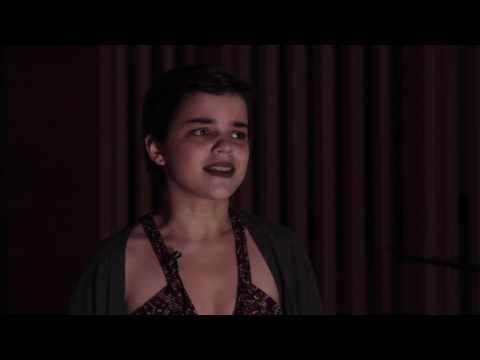
so first off let me introduce myself my
name is Annika barber I’m 16 I go to
school in fort langley I’m panromantic
and i’m pansexual yeah yep that’s kind
of strange right like have you ever
heard anybody introduce themselves like
that exactly but have you ever stopped
to think about why we think that’s
strange why is it when I introduce
myself the first three things I say our
standard and the last two are weird you
know why is it that when I stick these
from the minute we can comprehend the
messages the media sends us until the
day that we can’t we’re told that labels
for ourselves are unacceptable their
attention seeking we should just drop
the self-identify errs and be ourselves
namely the ourselves other people want
us to be this idea is fed to us through
the media through TV books film and
tabloids it’s given to us through the
speech of people who aren’t in the LGBT
community and the people who are LGBT
people who are ultimately comfortable in
their identity who turn around and
project their experience on to other
people now this isn’t necessarily their
faults and the reason why I’ll get into
in a minute but this isn’t played up to
be a huge issue if you’re not educated
on or even aware of said issue you might
not think the concept of anti label
culture is a thing much less a problem
but to see it’s prevalent all you got to
do is look at the representation of
LGBTQ people in the media look at the
representation of lesbians always either
butch or lipstick on one end of the
spectrum or the other always either
man-hating or in need of the right man
to fix her or look at the representation
of gay men
flamboyant Percy’s of straight girls its
destructive self-hating home wreckers or
ultra masculine with boatloads of
internalized homophobia so in turn men
who remotely fit these stereotypes are
afraid to be themselves less
perpetuating a TV stereotype or seeming
gay and then transgender characters
deceitful deceptive ultimately hateful
and bisexual characters the small amount
that there is anyways who think labels
are for soup cans or who never engage
emotionally but just sexually with the
same gender for the viewers pleasure
quote unquote so it’s created a culture
of labels being a hush-hush touchy
subject within the LGBT community and it
affects everybody even I catch myself
thinking why would they need to call
themselves that they wouldn’t blah blah
suffice so it’s it’s something that LGBT
people internalize it’s expected of us
to live up to the standards set by
people outside of our community to be
the perfect queers that never talk about
it who don’t confuse other people with
our labels or our terminology is it I
mean the GAR we all people don’t we all
bleed red see when you’ve been fed an
ideology for your entire life when
what’s been taught to you is all you
know you turn around and you feed it to
other people so the idea that labeling
ourselves is inherently scary and
ostracizing is so deeply ingrained into
our society and into the way that we
function that we as LGBTQ people end up
sharing an ideology that hurts us so the
premise of this is to talk about how
labels themselves can be empowering and
because we’re taught the opposite I feel
it’s necessary to address the rainbow
elephant in the room so to speak
so yes forcing a label on to someone who
doesn’t want one is awful and we see
that happen in the media as well for
sure but the point is is that um people
don’t realize that the reverse happens
and that it’s equally as bad and often
when we think that the media is forcing
label on to someone who’s rejecting them
we’re actually stripping them of their
sense of self of their label example we
diminish the bisexuality of Angelina
Jolie Portia de Rossi Channing Tatum
Freddie Mercury lady gaga drew Barrymore
Amy Winehouse we boiled down female
athletes and their wives Christian
Stewart and her girlfriend down to gal
pals we imply that female relationships
only ever exist within the realm of
friendship never romance so forcing the
label-free idea on to people who
positively identify with one is harmful
and it’s alienating I’ve read about the
suicides of trans gender teenagers who
had and still have their sense of worth
boiled down to tomboy flamboyant it’s a
culture that kills and I’ve heard from
other people as well as felt at myself
that coming out is one of the hardest
things I’ve had to do because the
backlash against how they label
themselves is monumental and I’ve heard
from people who are afraid to come out
because they fear that backlash are they
fear that nobody nobody will believe
them or that nobody will understand and
then I’ve heard from people who just
feel alone who don’t know where on earth
they stand who feel different and ugly
and want to push down the confusions
that they feel to fit in despite this
people still say what’s the point of
labels people still say why not just be
you
and they say that and I hear why are you
interested in having words to understand
and describe your experiences why are
you interested in identifying with
others why are you interested in feeling
anything other than different and alone
my point here and I’m just going to be
straight up other people’s identities
are none of your business and yours is
not of theirs so if fluid is how you
want to describe yourself if labels
aren’t your style then so be it that’s
you but if i want for labels five or six
if I want all separate labels for gender
sexual orientation romantic attraction
then I’m going to have them and there’s
nobody that can stop me because it’s
myself and it makes me feel like I
matter so actually that brings me to my
next point which is the split attraction
model basically the splitter traction
model says that sexual and romantic
orientation / attraction isn’t
inherently mutual so because of that you
might hear people call themselves by
romantic asexual or panromantic
heterosexual or a romantic homosexual so
then the question that’s brought up is
why should you make sex a part of your
identity like why does anybody need to
know who you want to go to bed with
right well i mean first off i say why is
anybody’s identity your business in the
first place but but really when did when
did sex become an eight ly dirty when
did intimacy and attraction especially
between LGBTQ people become taboo right
it’s like I’m in high school we’re all
in high school and I’m around sex jokes
and hormone driven teenagers all day and
you’re telling me that calling myself
pansexual is the thing that makes me
dirty okay like that’s what turns people
off of labels that’s what pushes
to be GQ people further into the closet
having an identity isn’t dirty being
attracted to the same gender or to
multiple genders that doesn’t make you
dirty sex dozen decimate your value so
if you’re watching this in some form and
you’re struggling with some part of your
identity or finding yourself just just
listen to me anti label culture doesn’t
have to make your journey negative
actually let me elaborate on that when
you’re aware of the existence of anti
label culture it doesn’t have to have
the power to make your journey and
finding yourself negative your identity
is determined by you and your self only
people’s perceptions of you and how you
label yourself that doesn’t undermine
your worse indecisiveness doubts and
confusions in yourself don’t undermine
your worth your worth is caged in by
every aspect of your personality and
your identity that makes you who you are
nobody can touch that and it’s easier
said than done I realize that facing
criticism from seemingly everybody even
those within your own community they can
wear on you identifying as pansexual was
one of the hands down one of the hardest
things I’ve had to do because people
like to steer the still like to sneer
that’s the special snowflake version of
bisexual and still being completely
comfortable in Who I am the criticism
so coming to terms with who I am gave me
a tied to the LGBTQ community that I
didn’t have previously finding a label
that describes who i am and encapsulate
how i feel made me feel like I wasn’t
displaced right I wasn’t alone I wasn’t
different you know coal from the TV show
the Fosters puts it like this I
understand not wanting to check a box
but there’s power and labels to my label
is what got me through and sometimes it
can make you feel not so alone and then
in Star Trek beyond lieutenant Uhura
says there’s strength in unity and there
is there is strength in community
there’s a strength found when you’re
able to connect to people like yourself
when previously you thought yourself
so you can say I’m putting myself in a
box all you want you can say we’re all
putting ourselves in boxes but for me
finding a label with more like climbing
out of the box so pansexuality isn’t my
shackles but it’s the key that unlocks
them and I know so many other people
if you kept the same label for years or
if you change it every day if you’re set
on one or if you’re still looking if you
call yourself bisexual or pan romantic
or straight or gay or lesbian if you’re
transgender or non-binary or a gender by
gender gender fluid the LGBTQ community
was built on the backs of queer trans
woman sex worker drag queens of color
that’s a whole lot of labels and they
built our community so I’d say they’re
valid now through this whole speech
through my 16 minutes or so of talking
if you still hold the idea of what’s the
point of labels and why not just be you
well there’s really not much more I can
say but I’d just like to say be
accepting accept others people’s choices
and just let people be happy you
Be First to Comment