
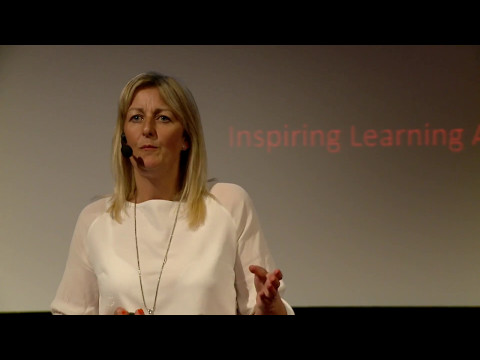
about inspiring learning inspiring
children to be lifelong learners how we
do that is debated at length and there
are shells full of books that telling
you how to do it this way a
recommendation for another way but it’s
not possible to take all those
suggestions on board we have to make a
decision and what I’m here to talk about
is share one school story about how
we’ve inspired learning for our children
I began my career in the classroom and
it was my sole aim as a teacher to
design and maintain a culture of
learning an environment where my
children could thrive and although I had
external pressure use this curriculum
I’d like you to use this planning format
assess at this point report in this way
I still knew that I wanted that
environment for my children to stimulate
them a place where they could be
challenged where they could collaborate
more as children they could grow yet
every school every classroom is
different it’s led by different
principals there are different
governor’s local authorities national
government all staring into this
learning environment that we are
responsible for and we can try and
enforce one way one pedagogy one
planning format but ultimately teachers
are responsible for maintaining that
clear environment so that those children
can grow so when I moved to principal
head teacher I realized I was now
ultimately responsible for ensuring that
over 300 children succeeded succeeding
in a school that had learning at its
heart as a principal you’re bombarded
all the time because of the standards
that you’re not meeting you’re
constricted by the budgets you read
about the dropout and teachers and it’s
easy to become defensive and I could
understand why principals do but we
can’t we have a moral obligation and
it’s our responsibility and our role to
make sure those schools are the very
very best they can be and for that we
need three things
direction decision and courage direction
to say look this is where we’re going
everybody and this is why we’re going in
that direction decision to choose from
all these things that you’re offered do
this one do this this will solve this
problem this applaud this glut gap and
the courage as a principal to turn
around and say you know what this will
make a difference not of that vulnerable
group not in that subject not in that
test not in that week not in that month
not in that year but this will make a
difference to these children in their
future this is the thing that will send
them out into a world which will throw
at them complex conflicts this is the
thing that will give them the resilience
and the power to be the best learners
the best citizens they can be it will
give them the strength to love
themselves and one another so what makes
that learning school well I don’t know
whether you have pick-and-mix things
here way the children can go and buy
sweets well as a head teacher in the
first few years I felt like that all
these things being offered try this try
this try this try this and I didn’t know
what to do and then all of a sudden I
met a man called James Nottingham and he
introduced me to philosophy for children
and it was like finding a golden ticket
this was the thing that was going to
change everything so now as a school
we’ve introduced
philosophy for children and the learning
pit and it has enabled our teachers to
understand their children’s
understanding of concepts it’s enabled
them to use challenge as a way to
develop their metacognition to deepen
their thinking – for them to become more
resilient more well-rounded students and
what it created in our school was an
ethos and eat up an ethos of not only
compliant thinkers but critical thinkers
and we created a new ethos for the
school it’s called our persist model P
we expect our children to be poised we
expected them to come ready to learn
equipped with all the things physically
and mentally that they needed to access
their learning respectful not only of
themselves and the building that they
worked in but the education that they
are engaged in socially skilled so that
they could work with anybody no matter
what their relationships involved they
were all offered the same education how
much they got involved in that was up to
them so we encourage them to be involved
struggling because if we don’t struggle
we’ve given up and apathy becomes our
downfall t thinking thinking at every
opportunity and that’s what we needed to
do so one day I was leaving an assembly
unpossessed an element of possessed and
the model that we had and I realized
that I was talking to the children just
the children I expected these children
to come and engage I wanted them to be
equipped but how was I equipping the
teachers that sat around the room I
expected the staff to come in but I
wasn’t equipping them with what they
needed I weren’t giving I wasn’t giving
them the opportunity
is to struggle and to think for
themselves and more than anything I
needed my teachers to be role models
role models of learning role models of
mental well-being tenacity creative
thinking collaboration energy resilience
I wanted my teachers to be professional
people who drove the school improvement
plan because they believed in what they
learnt so we came up with a plan to
introduce action research to introduce
coaching for learning and to increase
our parental involvement action research
so that whatever we introduce we knew
had the greatest impact on learning
coaching for learning because together
we could problem-solve in an honest
environment and parental involvement
because as we know parents are with the
children probably more than primary
school so we needed to equip them to
help us on the learning journey so
action research it was probably the
toughest thing I had to do mainly
because it comes against two blockers
the biggest blockers in schools
infrastructure time and money though I
had to put my money where my mouth was I
had to invest time invest in money so I
set about creating a small library I did
my own research in and how action
research might work in schools created a
pro-forma had a go myself to model to
the stuff and introduced it that’s when
I met my next blocker I don’t read it
was like a dentist telling me that you
don’t need to brush your teeth this was
a teacher saying I don’t read but what
that was with that was an emotional
reaction to someone who’d never been
expected to develop her own learning had
never been given the opportunities and
had never been trusted and respected so
we had a discussion we’ve got two
choices here we can either develop
energy
Haitian where people out there tell us
what to do with these children who they
don’t know who they don’t understand or
we can look into what works with our
children and we can drive the school
agenda from here so that’s what we do
every week two teachers are released and
together they identify a common theme
they go and find respected research they
usually cross-reference their idea to
the visible learning meta analysis to
make sure it’s worth doing because often
it isn’t often it has a negative effect
so they changed their tack they discuss
what they’ve read they create a plan
they go off and implement it and then
throughout the year they come back and
they evaluate the impact with our
children in our school with them
delivering it so they take it from the
book into the classes now I tell them
you’re released for two hours you stop
at the end of the two hours because I
didn’t want them to feel that it was
something extra something more to do
another job it was about their
professional development but guess what
they go away and they’re inspired and
they’re reading more because they feel
professional again so that’s what
happened we have the support staff doing
coaching for learning was the second
thing and I started a different way this
time I’ve got a picture up there because
often when we’re solving people’s
problems we use the sat-nav approach
because it’s quicker we tell them look
you’ve got this problem just do this
what we do is we distill them in their
own problem-solving we deprive them of
that joy of that Eureka moment coaching
for learning gives them that back so I
looked into the coaching skills I met
with the support staff on a regular
basis we learned how to coach one
another they did it with their own
they went off and talked about the
impact quickly they were using it in
their own personal circumstances but
then I began to see it in the classroom
intelligence Ted of the support staff
telling the children how to solve a
problem they were using the coaching
questions to draw out of them and then
they came to me and said you we need to
introduce this with the teachers in the
rest of the school so we’ve done that so
now on action research is going on a
member the senior leadership team will
Bob in and say well what have you found
out so far and what do you think that
means what have you tried in the past
what do you think you could do in the
future why do you think so and so was
behaving in that way so they use their
skills to attack the action research our
staff meetings have completely changed
because I’ve got the most wonderful team
of teachers who sit there and would have
tried anything I offered to them or
suggested but I just wondered how
critical they were of what we were
offering so now we introduce something
they go away they try it in their
classrooms in their own way and in a few
weeks later they come back and in their
coaching pairs they discuss the impact
that didn’t work or I did this it was
amazing try this have you tried this and
they coach each other our governors now
use coaching conversations so instead of
the teachers the governor’s just
listening to my version this is how it
is the governor’s coach various
stakeholders so they’ll listen to the
children the Sen group they n qts the
the teachers who have been there a while
and it’s changed our culture so that we
are more honest with one another and we
collaborate together the third one was
parental involvement and in a culturally
diverse community it was really
important to get them on board so we
tried a range of things we have stay in
place yet sessions we run workshops to
tell them about events going on we have
Family Literacy we have
we have a PTA so I was quietly confident
when I looked at this in my own action
research that it would have a really
positive effect on learning so I went to
John Hattie’s visible learning diagram
to see what the desired effect was and
it was above the hinge point of 0.4 so
it has a positive effect it’s actually
0.49 so there was justification for our
open-door policy but what stood out for
me was not the scale not the fact that
it was in the zone of desired effect but
the text that sat by that dash board
that actually parents have a greater
impact if you use the language of
learning so we went back and changed our
action plan to improve the language of
learning not only for our families but
for ourselves so how do we equip them
now how do we equip our parents and our
staff well our workshops no longer talk
about the latest calculation policy we
talk about how you can develop a growth
mindset by using process praise we’ve
taught them about ask model we’ve taught
them how to persevere we’ve used the
work of guy Claxton and educating Ruby
and told them to improve curiosity
confidence communication in every lesson
now you have a learning objective so we
may be finding the area of compound
quadrilaterals
that’s a academic objective that are
asked objective we are looking for
commitment to a task so the children
know it’s not just about knowledge it’s
about the attitude and skills so is it
all good enough as principals we need to
constantly reflect on how we would feel
not only as a pupil in our school but as
a parent and a teacher as principals we
have a moral responsibility to everybody
in our buildings to make sure that we’re
listened to we’re given opportunities to
learn we’re taught how to
our developed wisdom should be driving
our school agenda only then can we say
that we have created a true culture of
learning around our child children thank
you very much
[Applause] [Music]