
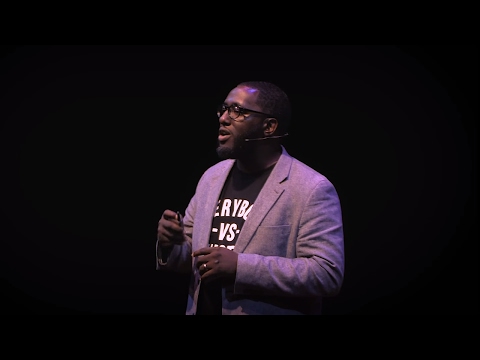
what happens at the intersection of
hip-hop culture and architecture I’ve
dedicated my entire academic and
professional careers to exploring this
intersection before we look at hip-hop
being combined with architecture I think
it’s important that we explore how black
culture has transformed other art
movements throughout time I call this
before-and-after hip-hop here’s the
Eames chair before hip-hop here’s the
Eames chair after hip-hop here’s one of
Lisa before hip-hop and here’s one of
Lisa after hip-hop where an artist took
hip-hop artists and painted them in the
same light and medium that’s Mona Lisa
here’s MBA shorts before hip-hop which
is nothing but a mistake waiting to
happen
and here’s basketball shorts after
hip-hop here’s headphones before hip-hop
and we made those headphones into beats
here’s a record player before hip-hop
which we turned into an industry
here’s timberland boots before hip hop a
boot that is worn by contractors people
want construction sites who needed to
protect their toes and here’s boots
after hip hop I don’t even need to
change the image timberland boots became
so synonymous with hip hop it was a
fashion statement for our feet and to
have dirty Tim’s was blasphemy the
moment we got a scuff or any piece of
dirt the timberlands were no longer
usable and that’s just on the surface
about how black black culture is
transformative let’s take a second to
Swiss architect Le Corbusier were
heavily influenced by black culture
they called themselves Negro fille acts
which was their way of describing their
infatuation with black culture I’m sure
many of you have heard of jay-z’s Black
Album but how many of you have heard of
Pablo Picasso’s black period during this
period of Negro failure Pablo Picasso
was heavily influenced by African tribe
war he would study and create sketches
of tribal masks and in his most famous
piece the young ladies of Avignon he
incorporated those sketches and so two
of the young ladies faces this piece
would become the most famous piece that
Picasso would ever paint and it will
become the first piece of cubism African
art changed the way that Picasso saw the
world and how he saw himself on a left
there’s a self-portrait Picasso made
after the blue period and on the right
is his self-portrait after the black
period where he painted himself with
features that you typically would
attribute to Africans they’re stronger
facial features in the large nose
Picasso was heavily changed by African
tribal art and he would deny that
influence for a long time well what else
do you expect from a man who’s famous
for saying good artists copy and great
artists steal will we not know Picasso
or cubism if not for his introduction to
black culture architect look abou ca was
literally in love with black culture he
had an intimate relationship with the
most famous Harlem Renaissance artist
Josephine Baker during that relationship
he developed an appreciation for black
music specifically jazz where he said
Negro music has touched America because
it is the melody of the soul
joint with the rhythm of the machine the
music of the error of construction
innovative if+ the body and heart it
plus USA and it floods the world jazz
it’s more advanced than the architecture
and if architecture was at the point
reached by jazz it would be an
incredible spectacle
kibou za noticed that jazz artists can
come together without a plan and create
something that had never been heard
before because they have mastered the
tools of their craft which allowed them
to come together in harmony in such a
spontaneous way and create beautiful
music he wondered if architects would
ever master are tools that allow people
to come together and create architecture
that had never been seen before he will
go on to coined the term Art Deco which
is an art and architecture movement that
was heavily influenced by the Harlem
Renaissance what we not know Art Deco if
not for caboose EA’s introduction to
black culture
if caboose Jaeger fantasize about this
merger of black music and architecture
and Pablo Picasso can transcend all the
artists that were around him at that
time by incorporating African tribal art
why can’t we constituents of hip-hop
culture black people bring our culture
into new arenas to create something that
is totally new and unseen before and
that’s what hip-hop architecture is
hip-hop architecture is a critique of
modernism it’s a critique of the style
of architecture that birthed the culture
like a bougie a had a plan he had a plan
to liberate the working-class citizens
of Paris and in his book the city of
tomorrow and his planning
kibou za described the new modern town
planning initiative that will transcend
everything that was out at the time he
wanted to liberate the working-class by
providing them with amongst other things
these five items I’m going to highlight
he wanted to provide translucent prisms
of glass these would be the buildings
that will give people immediate access
to employment and they would sit within
vast lawns which would surround the
residents who are under the shade of
trees with clean air and no noise his
scheme would go on to be deemed towers
in a park it’s nothing but utopia the
perfect world Paris was unsure of the
social implications of this architecture
and programming
what will the social implications be
upon the inhabitants of the spaces and
because of that his plan was heavily
criticised preventing it from ever being
anything more than an idea for Paris but
there came a man who would use his plan
Robert Moses Robert Moses was a builder
in New York and s/he was building the
Cross Bronx Expressway he will look to
the caboose EA’s plan to not displace
residents who were in the way of his
construction but I call his
implementation of caboose EAS plan the
worst remix or sample in history during
a construction across Bronx Expressway
he did not use any of the elements or
amenities that caboose e8 deemed
necessary for such an architecture to be
successful those translucent prisms of
glass and bass lawns will become
concrete jungles the prisms of glass
will become when not in this brick
towers this typology will become the
typology that defined low-income housing
across the nation 1520 Sedgwick Avenue
is officially recognized by New York as
the birthplace of hip-hop 1520 Sedgwick
Avenue was built at the suggestion of
Robert Moses and it’s based on lekha
buzias plan that he created for the
center of pairs now this is of
officially recognized that the
birthplace of hip-hop but if you talk to
any hip hoppers you can have an
interesting conversation about whether
that’s true or not
hip hop architecture brings design
accountability let kibou za was a great
architect but its architecture
disproportionately affected people of
color hip-hop brings accountability to
caboose the air I often call him the
forefather of hip-hop culture
now don’t get it twisted this is not a
compliment it’s a criticism it tells us
that his architecture it’s beyond bricks
and mortar and that its architecture is
the incubator of culture and it allows
us to define the processes the planning
the policies that made the hood what it
is and stop people from using the
cultural behaviors of people of color to
describe why the hood exists I call
hip-hop postmodern hip-hop its
modernism’s post-occupancy report
hip-hop was born from modernism it lived
in modernism and if anybody is going to
give a post occupancy report it’s going
to be hip-hop song after song it’s
filled with counterpoints and commentary
about modern architecture hip-hop is the
voice of the voiceless it is the voice
of the un– consultant end users of
public housing and modernism and if we
can listen to the music we can
understand just how unsuccessful this
architecture was and we can understand
the end justices that are faced by
people of color who live in communities
based on modernism remember those five
points are brought up earlier such as
the translucent prisms of glass and the
vast lawns Snoop Dogg and his song life
in the projects it ain’t no trees the
grass ain’t green and when I say it’s
all bad you know what I mean
Grandmaster Flash took it a step further
no prisms of glass here
he said broken glass everywhere people
pissing on the stairs you know they just
don’t care can’t take the smell can’t
take the noise got no money to move out
I guess I got no choice rats in the
front room roaches in the back junkies
in the alley with a baseball bat I try
to get away but I couldn’t get far
because a man would at Ultra repossess
my car and what he’s talking about here
again is that architecture is beyond
bricks and mortar architecture has an
effect on the people who inhabited he
will go on in that course the course of
the most famous hip hop song ever
created he will go on to say don’t push
me cause I’m close to the edge
I’m trying yet not to lose my head it’s
like a jungle sometimes and make me
wonder how I keep from going under and
what he’s talking about here is the
psyche the psychological impact that
this architecture was having and this
chorus is in harmony with a critique of
kibou CAS plan that he received in Paris
back in the 1920s this criticism said
poor creatures
what will they become in the midst of
all this dreadful speed this
organization this terrible uniformity
they were talking about the inhabitants
of that architecture what will happen
said here’s enough to discuss one
forever with standardization and to make
one long for this order I deem this
predicted eveness criticism a prediction
of hip-hop culture almost 50 years
before hip-hop culture was born in the
Bronx and if you look at lyrics you can
also see how psychology played a part in
creating the hood shock G said I’m in a
rage oh yeah why is that G because other
races they say we act like rats in a
cage I tried to argue but check it every
night in the news we proved them stuck
us right and I got the blues
what was he talking about when he said
they say we act like rats in the cage he
was talking about sociologist JB Calhoun
who studied rats and mice in
concentrations of high-density with
controlled resources he will put these
rats and towers and he noticed that the
rats changed drastically he said that
they were no longer rats because of how
much they changed and people started to
parallel his subjects to humans and said
that if we continue to develop cities in
a manner in which we’re doing it
violence is an inevitable part of the
inhabitants of these towers America
ignored those warnings and still created
this architecture that JB Calhoun warned
us about so it’s no surprise that you
get songs such as this from whoops
wu-tang featuring Street was Street
Chronicle wise words by the abomino hi
honorable rap quotable phenomenal
seniority kid I speak for the minority
yet oh poverty the housing
authority this is what’s starting to
happen and hip-hop and rap lyrics
they’re noticing that the environment is
having an effect and if we can’t listen
to hip-hop and change the way that we
design our cities hip-hop is starting to
encourage a new era of designers a new
era of urban planners who can come and
remedy the injustice is faced by the
people of color at the hands of
modernism
now I said be boys and girls listen up
you could be anything in a world and god
we trust’
an architect doctor may be an actress
but nothing comes easy it takes much
practice so nas is encouraging people to
become architects to build our own
communities and when we do that we can
have design justice Tiffany brown is
from Detroit she grew up in the housing
projects in Detroit
she would go on to get a masters degree
in architecture in an MBA she would come
back and demolish the very architecture
the very housing projects from which she
was born this is justice this is what
happens when we can create opportunities
for more minorities to become architects
designers and planners when you combine
hip-hop culture in architecture you get
the cypher
this is the new process that brings many
people together where ideas can float
the design cypher was a process I
created when designing a universal
hip-hop Museum in the Bronx when we
brought together architects urban
planners scholars students community
members politicians and hip-hop pioneers
to create the architecture to create
ideas for the universal hip-hop museum
that will be in their community here’s
some of the designers and architects and
a hack um these are my friends these are
hip-hop architects these are individuals
I’ve grown up with individuals who have
grown up on hip-hop culture we also had
the legendary artist Kurtis Blow the
Sugar Hill Gang
if you don’t know hip-hop the hippie to
the hippie to the hip hip hop that’s
them we also have Roxanne Shantae one of
the first female MCS to join us and now
people from the community hip hop
artists who were born of modernism born
from architects hands we’re now
controlling the hands of the architects
they were the architects they were
designing their own experiences which
will allow people to come and learn
about hip-hop we joined with a sponsor
Autodesk Tinkercad who came and provided
a training for the hip hop artists and
community members allowing them to not
only write down words and draw sketches
but create their own 3d models and print
them out by the end of the third day
they were holding their architecture in
their hand my goal as I go around
delivering this message to colleges and
universities it’s a combat is
to combat the low number which is 3% 3%
of all Architects in America are
african-american it is my hope that this
narrative will provide the catalyst
needed to increase that number and I
will create an army of hip-hop
architects who will look to remedy the
injustice is faced by people of color at
the hands of modernism thank you [Applause]