
[Music]
[Music]
[Music]
Sonia tell me what’s really good
so human beings above all else rely on
their vision when I say that I mean that
more than any of the five senses do we
look to it for survival and for
understanding about the world what if
each of us created relationships and
made connections using taste or touch
what have we formed lasting and bonding
relationships and connections with other
people using smell or hearing how
different would the world look today but
instead we we rely on our vision a
friend in the designer Amy Chen once
asked me err but what makes you unique
she had her own project that she was
working on and instantly I told her
nobody sees the world like I do that’s
not to say that I’m super special or
anything but to say that each of you
sees the world in the way that you see
it that’s the whole point we reach
unique in that way well the way that I
see the world is that it’s a little bit
broken I’d say that so many of our
problems are based off the fact that we
are too too interested in in relying on
self interests making decisions creating
policies around what benefits me and
only me well in my world a lot of these
things could work it could function I
see a world with so much untapped
potential and sort of what Davis was
saying this comes back to the idea of
empathy in the world that I see if
people maybe took a chance to step into
one another’s shoes instead of taking
that hundred for yourself you keep 50
and give 50 to somebody else something I
would do not because I’m a saint but
because by giving somebody else 50 they
might be able to contribute back to
society in a way that you never could
even have imagined you might find that
you enjoy exactly what it is that they
had been able to bring to the table but
you would never have known that had you
only kept your hundred and so all this
is to say that if we rely on our vision
the most in terms of how we understand
the world in terms of what we see
influences so much of how we be
a v’ how we react towards one another
why would I then not operate in the
world of visuals if I’m so invested in
changing how people behave influencing
how people think about one another well
as a photographer I thought that that
might be the best place to start so I’ll
show you some of the projects that I’m
currently working on send nudes
intriguing title now as young millennial
obviously there’s so many people who we
have smartphones these days people send
nudes to each other all the time but
this project is more about the body and
our identities this project looks at who
we are and how this fits ourselves into
a larger part of the society
essentially my thesis is getting at this
is my visual study singer thesis by the
way my thesis is getting out the fact
that Who I am is irrevocably tied to
what I look like I’ll let you pause on
that that might seem a little strange
singing as so many people want to tell
you that you live in a post-racial post
identity Society it’s just not true
have you seen the news so many people
are treated differently based off what
they look like but let me get into this
a little bit further so it’s not just
obvious facts coming at you I’ll talk
about the body and why my photographs
are getting at these three parts first
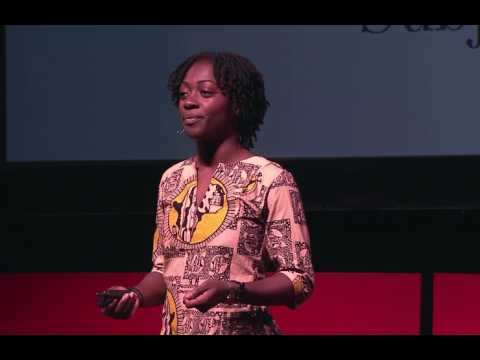
we have our physical body what you see
here before you I have dark brown skin
very dark black hair
I’m 5-1 pretty short and wearing heels
though switch it up but that’s my
physical body almost like a second skin
and a layer that I’ve come to be
convinced cannot be removed from you is
your socialized body the fact that I’m
wearing African print from West Africa
where my family’s from the fact that
I’ve twisted my hair for the purposes of
this talk and for life in general but
all of these things fact my eyebrows are
done are contribute to our socialized
bodies our socialize bodies are what are
in constant communication with the world
around us and that’s important to note
because when you walk up to somebody the
first thing that you see influences all
the ideas and assumptions that we place
on top of that and lastly it’s your
subjective body who you are as subject
I’m Arab and kuma I have
lived experiences what I’m trying to say
with all of three of these things is
this triangulation soon turns into a
cycle if your lived experiences are
based off of how your body communicates
with the world around you well your
communication with the world around you
your subjective or your socialized body
is built up 100% on what you look like
your physical form so if all that is to
be true then Who I am my subject has
lived experiences it’s 100% tied to what
I look like I get at this fact in my
project by asking four simple questions
first what part of your body do you
value the most think about it
well Eden talks about his blue eyes and
how he looks amazing all the time hehe
and when when it comes to being
aesthetically pleasing as a white gay
male he has no problems getting into
clubs or bars in Paris Oran in New York
he knows this and he recognizes his
privilege based off of the way that he
looks his facial features my second
question what is the first thing that
people say they notice about you whether
upon first meeting you or constantly
well my friend Kino talks about the fact
that he has both bowlegged legs and
supinated feet and it causes him to walk
with almost like a grouchy old man gait
and for him he’s noticed that a lot of
people have told him this and I’ve also
followed up with you know you seemed
really grouchy and like mean when I
first saw you I never would have
approached you you know Hina recognizes
the fact that his gait the way that he
walks has influenced a lot of how people
think about him but that’s not who he is
people would have never taken the time
perhaps to know that he is in love with
being just such a caring individual he
has so many happy thoughts he wants to
be a part of art and culture he
appreciates those things he’s hilarious
he has a big arms with which he loves to
give hugs
you know people wouldn’t take the time
to know that about him without having
first done past their assumptions their
ideas of what he looked like
which leads me to my third question of
this thing that people say they notice
about you constantly
has it ever influenced the opportunities
that you’ve been afforded do you think
well kayla talks about her hair how much
she loves it she loves doing it she
loves the process of you know
washing it rebooting in her products and
making it back to how it it should be
how it should feel but when she goes out
into the world she puts a big bun on her
head and a lot of people recognize a
silhouette of Kayla’s big bun on top of
her head she does this because she
understands that should she leave her
hair out naturally and walk around
people would judge her very differently
people might not take her nearly as
seriously and she acknowledges that fact
she takes an extra step to make sure
that you all are more comfortable with
what she looks like that bun is for
society to judge and she notes that
without it a lot of the different things
that she goes into different meetings
different spaces would be very
interactive be quite different without
her tying up her hair in a more
controlled manner and lastly do you
believe that humans as we were
physically constructed were done so
equally created equally well Jordan
talks about the fact that this idea of
equality in general this concept of
inequality is an idea that we put on
ourselves because in her mind there
should be no reason why in this day and
age anyone should be limited prohibited
or banned from doing anything or living
a life that they want to live solely
based off what they look like she brings
in ideas about the blind and how for
many of them what if what if we allowed
the blind to build a city on their own
how differently would that look we as a
society or so are so concerned with
bringing in people with disabilities
into the ways in which we think they
want to be back into society but let’s
give them the reins to do what they want
let’s let them take that 50 and
contribute back to society how
differently would that look this is just
one of the projects I’m working on as
part of my thesis but I also had the
opportunity of going to Cuba this past
month with a photography class and while
I was there I was actually shocked I’ve
been there before in 2015 I was shocked
by how much the tourism industry had
pervaded and sort of seeped into the
everyday everyday culture of Havana I
realized that I didn’t have the energy
or the want to put a camera on
somebody’s face because I realized that
I had to acknowledge my own identity in
this space I am NOT a Cuban I’m a
tourist
how can i as a photographer acknowledge
that fact and still be a documentary
photographer still capture the line the
color the texture the culture of Havana
of Cuba as a space that was once so
magical to me
I felt like the kid who had gone to
Disneyland and peeked behind the curtain
and saw all the dusty cogs moving the
second time around it took me a week and
I struggled with it but eventually I
started to realize that perhaps I could
place myself as subject in a number of
different images maybe I could capture
that line texture and color without me
being in them necessarily or without
somebody else being in them but by
showing that perhaps I am touching this
space let me show how expansive my reach
as a tourist can go and so 355 images
later these are just a few I captured a
van in a very unconventional way and I
hope that this shows that I am not just
trying to understand myself as I am
singular in this space I’m understanding
how my body interacts with others how my
body is not a body unless it is
interacting with others and so I say
this for everyone to take a moment take
a pause and understand that we cannot
solely just understand who we are but
who we are on the grand scheme of things
if we want to use our eyes to really
understand the world we can’t go around
blind thank you
[Applause]
[Music]
[Music]
Sonia tell me what’s really good
so human beings above all else rely on
their vision when I say that I mean that
more than any of the five senses do we
look to it for survival and for
understanding about the world what if
each of us created relationships and
made connections using taste or touch
what have we formed lasting and bonding
relationships and connections with other
people using smell or hearing how
different would the world look today but
instead we we rely on our vision a
friend in the designer Amy Chen once
asked me err but what makes you unique
she had her own project that she was
working on and instantly I told her
nobody sees the world like I do that’s
not to say that I’m super special or
anything but to say that each of you
sees the world in the way that you see
it that’s the whole point we reach
unique in that way well the way that I
see the world is that it’s a little bit
broken I’d say that so many of our
problems are based off the fact that we
are too too interested in in relying on
self interests making decisions creating
policies around what benefits me and
only me well in my world a lot of these
things could work it could function I
see a world with so much untapped
potential and sort of what Davis was
saying this comes back to the idea of
empathy in the world that I see if
people maybe took a chance to step into
one another’s shoes instead of taking
that hundred for yourself you keep 50
and give 50 to somebody else something I
would do not because I’m a saint but
because by giving somebody else 50 they
might be able to contribute back to
society in a way that you never could
even have imagined you might find that
you enjoy exactly what it is that they
had been able to bring to the table but
you would never have known that had you
only kept your hundred and so all this
is to say that if we rely on our vision
the most in terms of how we understand
the world in terms of what we see
influences so much of how we be
a v’ how we react towards one another
why would I then not operate in the
world of visuals if I’m so invested in
changing how people behave influencing
how people think about one another well
as a photographer I thought that that
might be the best place to start so I’ll
show you some of the projects that I’m
currently working on send nudes
intriguing title now as young millennial
obviously there’s so many people who we
have smartphones these days people send
nudes to each other all the time but
this project is more about the body and
our identities this project looks at who
we are and how this fits ourselves into
a larger part of the society
essentially my thesis is getting at this
is my visual study singer thesis by the
way my thesis is getting out the fact
that Who I am is irrevocably tied to
what I look like I’ll let you pause on
that that might seem a little strange
singing as so many people want to tell
you that you live in a post-racial post
identity Society it’s just not true
have you seen the news so many people
are treated differently based off what
they look like but let me get into this
a little bit further so it’s not just
obvious facts coming at you I’ll talk
about the body and why my photographs
are getting at these three parts first
we have our physical body what you see
here before you I have dark brown skin
very dark black hair
I’m 5-1 pretty short and wearing heels
though switch it up but that’s my
physical body almost like a second skin
and a layer that I’ve come to be
convinced cannot be removed from you is
your socialized body the fact that I’m
wearing African print from West Africa
where my family’s from the fact that
I’ve twisted my hair for the purposes of
this talk and for life in general but
all of these things fact my eyebrows are
done are contribute to our socialized
bodies our socialize bodies are what are
in constant communication with the world
around us and that’s important to note
because when you walk up to somebody the
first thing that you see influences all
the ideas and assumptions that we place
on top of that and lastly it’s your
subjective body who you are as subject
I’m Arab and kuma I have
lived experiences what I’m trying to say
with all of three of these things is
this triangulation soon turns into a
cycle if your lived experiences are
based off of how your body communicates
with the world around you well your
communication with the world around you
your subjective or your socialized body
is built up 100% on what you look like
your physical form so if all that is to
be true then Who I am my subject has
lived experiences it’s 100% tied to what
I look like I get at this fact in my
project by asking four simple questions
first what part of your body do you
value the most think about it
well Eden talks about his blue eyes and
how he looks amazing all the time hehe
and when when it comes to being
aesthetically pleasing as a white gay
male he has no problems getting into
clubs or bars in Paris Oran in New York
he knows this and he recognizes his
privilege based off of the way that he
looks his facial features my second
question what is the first thing that
people say they notice about you whether
upon first meeting you or constantly
well my friend Kino talks about the fact
that he has both bowlegged legs and
supinated feet and it causes him to walk
with almost like a grouchy old man gait
and for him he’s noticed that a lot of
people have told him this and I’ve also
followed up with you know you seemed
really grouchy and like mean when I
first saw you I never would have
approached you you know Hina recognizes
the fact that his gait the way that he
walks has influenced a lot of how people
think about him but that’s not who he is
people would have never taken the time
perhaps to know that he is in love with
being just such a caring individual he
has so many happy thoughts he wants to
be a part of art and culture he
appreciates those things he’s hilarious
he has a big arms with which he loves to
give hugs
you know people wouldn’t take the time
to know that about him without having
first done past their assumptions their
ideas of what he looked like
which leads me to my third question of
this thing that people say they notice
about you constantly
has it ever influenced the opportunities
that you’ve been afforded do you think
well kayla talks about her hair how much
she loves it she loves doing it she
loves the process of you know
washing it rebooting in her products and
making it back to how it it should be
how it should feel but when she goes out
into the world she puts a big bun on her
head and a lot of people recognize a
silhouette of Kayla’s big bun on top of
her head she does this because she
understands that should she leave her
hair out naturally and walk around
people would judge her very differently
people might not take her nearly as
seriously and she acknowledges that fact
she takes an extra step to make sure
that you all are more comfortable with
what she looks like that bun is for
society to judge and she notes that
without it a lot of the different things
that she goes into different meetings
different spaces would be very
interactive be quite different without
her tying up her hair in a more
controlled manner and lastly do you
believe that humans as we were
physically constructed were done so
equally created equally well Jordan
talks about the fact that this idea of
equality in general this concept of
inequality is an idea that we put on
ourselves because in her mind there
should be no reason why in this day and
age anyone should be limited prohibited
or banned from doing anything or living
a life that they want to live solely
based off what they look like she brings
in ideas about the blind and how for
many of them what if what if we allowed
the blind to build a city on their own
how differently would that look we as a
society or so are so concerned with
bringing in people with disabilities
into the ways in which we think they
want to be back into society but let’s
give them the reins to do what they want
let’s let them take that 50 and
contribute back to society how
differently would that look this is just
one of the projects I’m working on as
part of my thesis but I also had the
opportunity of going to Cuba this past
month with a photography class and while
I was there I was actually shocked I’ve
been there before in 2015 I was shocked
by how much the tourism industry had
pervaded and sort of seeped into the
everyday everyday culture of Havana I
realized that I didn’t have the energy
or the want to put a camera on
somebody’s face because I realized that
I had to acknowledge my own identity in
this space I am NOT a Cuban I’m a
tourist
how can i as a photographer acknowledge
that fact and still be a documentary
photographer still capture the line the
color the texture the culture of Havana
of Cuba as a space that was once so
magical to me
I felt like the kid who had gone to
Disneyland and peeked behind the curtain
and saw all the dusty cogs moving the
second time around it took me a week and
I struggled with it but eventually I
started to realize that perhaps I could
place myself as subject in a number of
different images maybe I could capture
that line texture and color without me
being in them necessarily or without
somebody else being in them but by
showing that perhaps I am touching this
space let me show how expansive my reach
as a tourist can go and so 355 images
later these are just a few I captured a
van in a very unconventional way and I
hope that this shows that I am not just
trying to understand myself as I am
singular in this space I’m understanding
how my body interacts with others how my
body is not a body unless it is
interacting with others and so I say
this for everyone to take a moment take
a pause and understand that we cannot
solely just understand who we are but
who we are on the grand scheme of things
if we want to use our eyes to really
understand the world we can’t go around
blind thank you
[Applause]
Please follow and like us: