
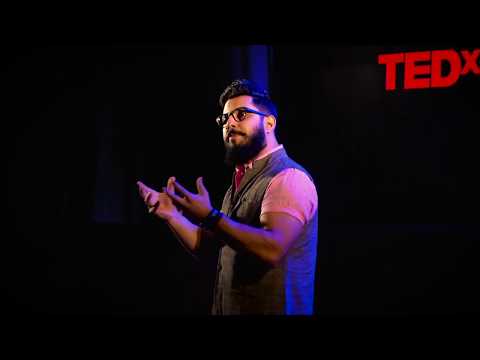
so as up Big Show was mentioning I’m a
social entrepreneur but I do believe in
recognizing and introducing myself as a
problem solver
now today and in the current millennia
that we are living in the most important
problem that I would like to pitch in
front of you today is how might we feed
the growing population that is going to
reach 9 billion by 2050 today’s current
population global population is at 7.2
billion reaching 9 billion seems like
feeding a lot of mouths and a lot of
people and in today’s world more than
80% of the food production is at the
owners of small-scale farmers now for
those of you who do not know who these
small-scale farmers are their typical
profile is farm farmers that have
farmlands and land holdings less than
one to two hectares which is around a
small land holding where they would be
cropping no more than two or three
different crops and that would be
responsible for self-consumption and
also for selling it to the market so
that that is able to reach the urban
spaces and also go to the consumers and
feed them but in today’s world 80% of
the 450 million farming population are
small farmers now these small farmers
are able to produce enough to feed
themselves and feed their own particular
region but the problem that we are
facing at this current juncture and in
the subsequent years is that the size of
the land holdings will not increase land
will always land up shrinking the second
and the most pertinent thread to
human existence that we are facing right
now is climate change
now climate change fluctuating weather
pattern seasonal variations are being
faced by the farmers and the rural
hinterlands of addition to the communes
of Cambodia to the villages in the in
Haiti in Western Hemisphere now how
climate change is adding on to the food
stress and water stress problems and how
these are interrelated the gravity of
those problems is going to increase in
the near future and as we move ahead
another important thing that we have
found out is as per research from an
agriculture data intelligence
organization the world is going to fall
short of 214 trillion calories that is a
lot of nutrient insecurity that we are
moving towards and that is going to
happen in the next 10 years within 2027
the world is going to fall short of 214
trillion calories well within a timeline
when the population is surging towards
reaching 9 billion now again the
question is how might we land up feeding
the surging global population would
innovations in the urban environment in
the form of vertical farming hydroponics
aquaponics industrial farming be
sufficient in feeding the growing
population the answer is an inevitable
no all these different innovative forms
of farming industrial farming aside will
be able to complement and supplement
what the small farmers would be able to
produce but it is of Primal importance
that the small farmers are taken into
consideration as the new
to help feed not only themselves but
also the growing population now we’ve
talked about the farmers and how they
have supposed to increase the capacity
in order to make sure they can feed the
growing population we’ve talked about
climate change and it’s existential
threat to not only humanity but to
induce food and water crisis we’ve
understood that there is a looming
nutrient deficiency in less than a
decade but what we are also missing is
we have the technological solutions and
the state-of-the-art advancements that
we are making through digital platforms
through software applications through
Hardware through artificial intelligence
through machine learning and also the
current breakthrough in blockchain
technology now all of these
state-of-the-art technologies are
shedding a positive and optimistic light
on this inundated future where we might
not be able to feed the growing global
population the advances in these
technological frameworks is important
for these small farmers and I would come
to the reason why these technologies
play a pertinent role in helping the
small farmers help the growing
population be food and nutrition secure
now when we talk about a small farmer
we’re talking about a farmer in the
rural hinterlands of India or in the
deepest pockets of sub-saharan Africa or
in the foothills of the Andes Mountains
in South America these are the farmers
that rely upon their own behavior
intergenerational transition of
knowledge peer to peer learning as well
as
whatever accessibility to informal
knowledge products and credit they get
to now this is where technology can play
a befitting role in changing the entire
paradigm of how these interactions and
transactions are done every small farmer
needs only three important things to
make a successful decision on producing
that crop on availing the finance to
grow that crop and to sell that crop in
the markets so we are talking about
knowledge we’re talking about markets
and we are talking about finance but
what we are missing is that these three
important buckets can be provided to
these small farmers using data-driven
decision making using the breakthrough
technologies of digital platforms of
machine learning of artificial
intelligence in helping these farmers
come up to speed so that tomorrow the
small farmer of today is able to grasp
that what do I need to grow how much do
I need to grow so that I’m able to
sustain not only my soil but also the
production that I need to eat and sell
in the markets what is the value that is
available for my produce in the market
and what is the time at which I should
be ready to harvest that produce all of
this is intelligence if we can have
intelligence in the form of all of us
getting to know when our next driver is
going to pick us up from our location
why is it that we cannot provide the
small farmers the necessary information
that gives
the knowledge that when is this truck
going to arrive to pick up my vegetables
to take it to the nearest coal storage
and when the produce goes into the coal
storage why come the buyer get to know
that I will pick it up once I’m ready to
pay for that produce I understand that
agriculture and food is a complicated
market so was technology when it started
but technology today has simplified
lives has become a field level of a game
changer and is now responsible for
exponential growth but exponential
growth at the mercy of small farmers the
first line of entrepreneurs the first
line of individuals responsible to feed
the growing population cannot keep them
in dark technology is a game leveler it
cannot exclude the biggest strata of the
population that is responsible for
feeding the world and if it is not given
its due respect has led to ku it has led
to civil disobedience it has led to
government’s falling down now looking at
the technology and putting it towards a
small farmer we saw a grim future from
the perspective of climate change from
the perspective of food insecurity and
the looming nutrition and security but
the great news is that this technology
please a categorical role in bridging
the gap which should not be widened
further between the farmer and the rest
of the world the 2.2 billion people that
are directly dependent on their
livelihoods are able to give themselves
the benefit their households the
investments
that they need to climb up the ladder
and become the next middle-income group
now these are the small farmers that in
today’s world have to go from point to
point getting to know where is it that I
would be able to make the best of my
time
best utilization of my capacity to
produce an optimal amount so that I’m
able to sell it in the market in order
to feed my family invest in my
children’s education have some
contingent cash for health care
investments and so on and so forth
throughout the globe from Southeast Asia
to the Western Hemisphere each and every
small farmer invests categorically in
three items food education health care
now increasing the capacity and the
possibility of every small farmer to be
able to grow sufficiently and
sustainably creates a butterfly effect
of them investing more in sending their
kids to school in getting in becoming
part to this bigger formal economy now
this is what is the little butterfly
effect that I am referring to one small
investment that counterbalances
technology with sustainable growth of
small farmers leads to their
participation in the greater economy
they would be able to transact more send
more kids to the schooling system and
will be a part of the formal financial
and financial services system and
thereby becoming part of the more global
outlook and growth that we are all
looking towards now the technology is a
pivotal aspect where we would be able to
help these farmers not only grow
but also be able to sustain the
intelligence that allows these farmers
being in there half a hectare of famelon
through a smartphone be able to know
that the next cropping season is when I
will be able to grow rice maize grains
or vegetable crop and in order to grow
each one of these crops the smart device
with them allows them to identify
whether the environmental conditions are
conducive whether the soil health is
appropriate and whether the input
availability of the products is
absolutely there for them to grow any
kind of cropping produce they choose
once the production is ready the smart
device allows itself to curate
specifically alerting this farmer when
and how to take care of certain
existential and extrinsic events that
might hamper the productivity of the
crop and once the production is
successfully ready the smart device
again recommends this farmer whether to
harvest all in once or to do it in
phases understanding that if the farmer
has to do it in phases there needs to be
a warehouse or a cold storage or any
other brick-and-mortar infrastructure
for the farmer to be able to store the
produce and if the farmer does not have
access to any of these brick-and-mortar
infrastructure the buyer is given a
quotation to buy the produce from the
farm now this is precisely what a
data-driven intelligence and smartness
is all about it’s simple it allows to
interact the world with the farmer and
it also does not exclude the farmer from
the knowledge the farmer has acquired
since generations the only thing which
the farmer today understand
is that there is a seasonal variation
there has been a change in weather how
might we be able to solve what we need
to plant in order to help us give the
right production that is where the
technology comes in because the seasonal
variation and the sporadic weather
patterns has got climate change to blame
we cannot reverse climate change but we
can use technology to make small farmers
more aware more intelligent and more
prune to understand how to mitigate all
of the risks associated with the small
farmer now in conclusion I’d like to
bring forth and understanding that the
small farmers are the stewards of nature
and have been long responsible to feed
the growing population we are at an
inflection point where ignoring them
will have disastrous effects it might
even be an abomination for human
survival but including them and making
them partake in contributing
significantly to not only their growth
but to the growth of the socio economic
structure of the global world will allow
for a longer-term sustained ins and
might help us work in a collaborative
and inclusive manner with the farmers at
the center to break away from the
existential food and nutrition crisis
thank you everybody
[Applause]
Please follow and like us: