
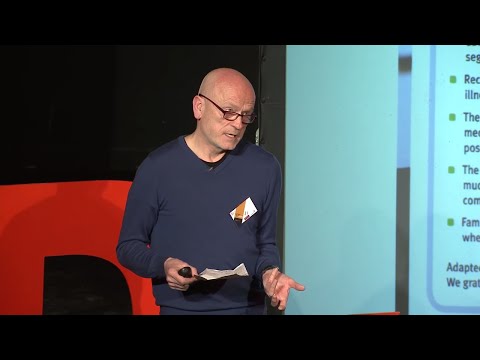
hello I’m going to be talking to you
about two themes which ostensible seem a
long way apart one is the future of
education in this country and in
particular the future of higher
education and the future and a vision
for universities just like this one and
the second thing I’m going to be talking
about is the future of distress and by
distress I some of you may call that
mental illness I prefer mental distress
I’m going to be talking about how we as
a country address mental health I think
you probably agree with me that both of
those themes have faced their challenges
in recent times i think that the ways
forward to address both education higher
education and mental health are linked
so that’s the link and i’m going to try
and persuade you that there is a link
i’m going to start with the quotation
given by the great poet and little red
poet john masefield almost 70 years ago
not exactly on the edge of tomorrow and
at an event that an important ceremony
at my university and Masefield describes
what a university should be now I don’t
fully agree with mace filled with what
he says here but there are ideas here
that are important I’ve underlined them
and the theme that I think Masefield is
in part addressing in this piece is the
way in which it is critical for
universities to be porous entities not
to be sealed off from the worlds in
which they sit not to be sealed off from
their neighborhoods from their
communities and from there from their
cities and let’s just look at the first
few lines we’re not going to read all
this out of maize fields of text there
are few earthly things more splendid
than a university he begins in these
days of broken frontiers and collapsing
values when the dams are down and the
floods are made
King misery when every future looks
somewhat grim and every ancient foothold
has become something of a quagmire
wherever a university stands it stands
and shines what a vision 1946 1946 just
think about what was going on then the
challenges and uncertainties of that
time and let’s think too about the
challenges and uncertainties that we
live in right now universities I think
are undergoing a crisis of identity in
part and i want to lay out a vision for
higher education abroad idealistic
utopian some would say old-fashioned
vision for what universities are and
should be a vision which goes against
the grain which is not reactive which
doesn’t just roll over and respond to
market pressures which refuses to finish
our thoughts with the conclusion that
students are consumers I want to kind of
trace out a bigger more generous and
more important vision and what I want to
say drawing on the likes of Ernest Boyer
and John Dewey is that we need to
articulate an idea that education not
just education in universities education
is a way of living it is a way of being
and universities can articulate that
vision if we choose to we certainly need
in my view to inhabit that vision in
this view drawing on thinkers like Boyer
but actually going back to the ancient
Greeks education is not just a way of
obtaining the necessary knowledge and
qualifications to get yourself a job
education is
vital critical resource for social
progress and reform indeed education is
critical in these thinkers minds to the
nourishing of democratic free societies
democracy here is conceived as the good
life as a means by which citizens strive
for the good of their fellow citizens
and I want to think about citizenship
here in a global sense and the Academy
has something dedicated to the renewal
of society so in this view education yes
is about the acquiring of subject
knowledge absolutely critical it is
about individual good it is about social
mobility as crystal so beautifully
articulated and it is also about
learning what citizenship is its
learning to value and have a stake in
communities and society it’s
understanding the vital role for a
healthy democracy of being able to
critically engage with ideas and
contemporary issues above all for me
it’s about partnership teams and
communities ultimately education
scholarship is about the transformation
of the world an attempt to transform
reality to make life better for
ourselves and crucially for others to
work for change now practically in
universities what does this mean well it
poses challenges to us those of us who
teach like me who are educators it poses
challenges to those who manage
institutions like this
in their mission statement in terms of
teaching we need to be working with our
students collaboratively forming
communities of learning holding the
script the skills of inquiry and
critical reflection and for me above all
we need to provide opportunities for
students to learn alongside with and
from communities and organizations
outside the walls of the Academy and an
example of this which is a project that
I oversee in Sheffield is called engage
learning and a couple of quick slides so
our engage learning modules and courses
as it says they combine traditional
academic work with opportunities to
student for students to learn with and
from external partners real-world
challenges and experiences outside the
university with these learning
activities usually focused on issues of
of public concern in Sheffield many of
our engaged learning projects focus on
issues of inequality social
marginalization and exclusion and I see
this kind of work as intimately
connected to ideas concerning
citizenship and social responsibility
and I’m really delighted to know that
under rates leadership this university
is developing ideas for similar work
I’ve worked in this area myself a great
deal and I’ll mention some of what I’ve
done later on these are some of the
kinds of projects that we work with on
students like them we work with young
people in in in schools who are
struggling to read we work in dementia
education mental health with refugees
and asylum-seekers
and all of this activity is predicated
not on the notion that universities
might dispense their beneficence to be
knighted communities far from 0 in my
view knowledge is multiplied located it
doesn’t just live in places like this
it’s out there too in communities all
kinds of knowledge different kinds of
knowledge and to equip our students for
the worlds in which they will work for
the worlds in which they will take their
places hopefully active concerned
citizens it’s vital for us to provide
access not just to our libraries but
also to that citizen knowledge okay
that’s the bit about universities and
now mental health now I don’t know how
many of you know that there are such
things in this country as recovery
colleges but there are there’s quite a
lot most of them are owned by NHS trusts
with responsibility for mental illness
learning disabilities and the like it’s
a movement that’s been going probably
for about 10 years now and it’s
predicated on a notion that instead of
being service users people are students
they sign up to a recovery college and
they might take courses in for instance
learning to manage my bipolar disorder
how to stay active when my depression is
bad how to manage hostile voices in my
head how to manage on a budget if you’re
on disability benefits those kind of
courses if you look at the prospectuses
on the whole that’s what they they will
provide now recovery colleges emerged
from the recovery movement and the
principles of recovery were formulated
by mental hell
activists they weren’t formulated by
clinicians or academics though former
formulated in the 60s and 70s by mental
health activists in the States people
living with mental illness who decided
that instead of spending the rest of
their lives hoping that one day the
symptoms would go away people would
start building the lives that they
wanted to have right now I think these
principles are great but as with so many
good energetic ideas their
implementation has become somewhat stale
some of that energy seems to have been
chewed up as initial activity gets
passed through corporate sibs and as I
said the courses that recovery colleges
offer these days are often very focused
on symptom reduction on coping there
isn’t so much of that energy to have a
life now rather than whenever I get
better and look the problem with this is
that it locks people in two narratives
in which they’re defined by what they
can’t do rather than book by what they
can and it’s not an easy place to get
out of when you’re kind of locked into
this story and you’re so used to
defining yourself in terms of difficulty
lack dysfunction when you’re very unused
to speaking about what you love what you
hope for what you think about the
politics of the day how you might
contribute how you might mount a
campaign what you care about it’s a very
very different it’s a very very
different focus so
what would it be like I wonder if we
brought some of that energy from those
ideas about radical pedagogy critical
educational ideas into the recovery
college movement well this is something
we’re trying to do in Sheffield at the
moment so I have lots of different hats
I’m also a director of a mental health
charity as well as working for the NHS
and we’re beginning to try and do this
so watch this space what about if we
actually help people to enlarge their
imagination to develop their critical
skills what about if we drew on the
expertise that people already have the
expertise of living with a mental
illness but also their expertise in
whatever their life has led to at this
moment what about if our educational
offers were about empowerment and
participation and citizenship and the
strength and strengthening of
criticality the discovery of hope and
talent and community what if that was
what was going on in recovery colleges
and what if they were open to everybody
you don’t actually have to have a
diagnosis of mental illness what if you
were unemployed or lonely or old and
isolated what about opening up recovery
colleges and where my University’s fit
within this well I think universities do
have a place and in fact university is
already are beginning to make moves in
this direction certainly mine has I’d
like to see a course for undergraduates
let’s say it’s on the tragedies of
Shakespeare in which for the first six
weeks of the teaching term I know
nothing about Shakespeare but let’s just
pretend I do that I teach them about the
tragedies of Shakespeare and how to
teach the tragic
is a Shakespeare and then the students
put on a course in a recovery college
open and free to anybody who wants to
come and find out about the tragedies of
Shakespeare well something very like
that actually happening in Sheffield now
run by a colleague of mine and it’s been
going now for about two years I think
our universities are full of untapped
potential every year in sheffield in
leeds all these generally young and
energetic people energetic people arrive
wanting to learn wanting to develop
personally and this would be an
opportunity to add to those we already
offer these are pictures from some of
the student projects that i’ve been
involved with and you can see their
students working alongside citizens in
the classroom and a lot of those
projects come under the banner of the
story in sheffield initiative you can
google it and and find out more about it
storing chevy that actually has always
worked primarily with people with
long-term mental health issues and we
have many many different projects in
which students take a leading role
working alongside citizens from the
community learning from citizens and
also assisting citizens and with in
university settings or community
settings a relatively new project we’ve
started it’s called the narrative
masterclass where people with mental
health difficulties teach medical
students who want to be psychiatrists
about living with a mental health
condition and this is an amazing project
I cannot oversee it but it’s entirely
designed and run by people are not
connected with the university and have
long-term experience of mental health
conditions and that’s a picture from one
of them and you can go go on the website
and find out find out more about it and
one last example i’d like to mention of
the kind of work that’s going on is very
near here at York’s and john university
there converge program again you can
have a look at that Nick row the
director of the converge program at
York’s and john is a remarkable
individual who’s doing amazing things
there and so I’ll just finish by saying
that I’m really interested in the agenda
I’ve been laying out to you and we’re
beginning to try and build it in
Sheffield over the next two or three
years and hopefully you’ll see something
emerge I’m interested in the issue of
issues I’ve been talking to you about
because I’m an educator I’m a teacher I
work in mental health I oversee the
engaged learning project I’m really
interested in what inequality does to a
society and northern universities like
Leeds and Sheffield comparatively
speaking our centers of great affluent
compared to some of the areas around
them I’m also interested because I
believe it or not I’m now in my 50s late
fifties actually I know that’s probably
a shock to a lot of you ah but Natalie
for over 40 years with serious mental
illness myself I’m a professor with with
Nell a levels and only a couple of GCSEs
and between the ages of 16 and 35 I was
usually so psychiatrically disabled that
I I couldn’t work I was in and out of
hospitals homeless and what was it that
helped me start to build my life after
what had been in a period of well great
and considerable difficulty and I
wouldn’t want to put it down to one
thing but probably a very significant
thing was signing on to an access course
at the University of Sheffield and for
two nights a week i think it was i I
turn up and and learn about social
science and history and maths and
goodness knows what else with a mixed
group of people a right ragbag we were
and somehow through that I discovered
that I did have something to offer the
world that I was able to form meaningful
relationships with people that had
talent and such as it is but had
something
um and I enjoyed it too I enjoyed
learning learning is a wonderful
wonderful thing suddenly the world began
to open up before me and I wouldn’t want
to put myself up as any sort of example
I’ve had a lot of advantages in life
with which others haven’t and things are
very very difficult at the moment for
people with mental health problems I
wouldn’t want to put my own recovery
such as it is because I still live with
mental illness today down to just
education one of the things that
probably helped me before that was I’ve
got a secure place to live I can see the
lady at the back waving things are hard
now but I think probably one of the
reasons that I’m energetically invested
in this agenda is as much to do with my
own story as my reading of the academic literature so thanks for listening