
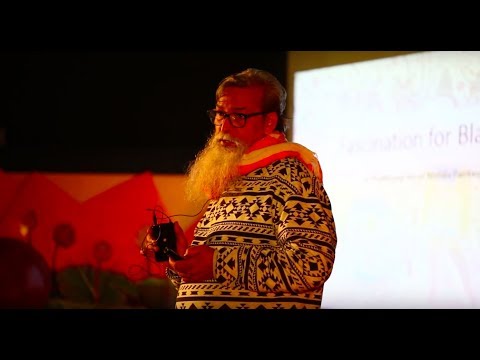
I want to tell you about little uppity
Nicola painting belongs to Mithila a
region in Bihar it is situated on the
border of India and Nepal and there are
two natural calamities that let
discovering and emergence of his art
w/g Archer a British officer discovered
it first in 1934 and in 1966 the region
was badly hit by a severe draught then
poeple Jayakar the chairman of
handicrafts board decided to send our
designer from Bombay Bhaskar Kulkarni to
go to villages and tell the woman to
transfer these images on paper for a
living and that’s how the commercial
existence of this art began and and then
the woman played an important role as a
representative of this cultural
aesthetics it is the woman who practiced
this art from the beginning because it
is the their festivals and ceremonies
throughout a year so there is your
diagram or rituals throughout the year
so it is the woman who are allowed to
draw I can say diagrams ritualistic
diagrams or images on the floors and
back walls of the houses so it does how
it became it is known as would insert a
feminist expression and then lard is
known as Madhubani art because the
village was
Cudney visited are located around
Madhubani district that’s right it is
known as it is of two types one is the
light style and the other is the color
style the line styler is the one in
which the practice now uses just one
color that is black and the color style
is the one in which a practitioner uses
all primary colors such as black red
yellow pink and blue and green so and
they make these colors from from the
nature itself like bigger become big big
colors from leaves hers and plants and
barks of various plants so that’s how it
became you know a very vibrant colors
child now I want you tell you about what
do what do i do bill use this as a
vehicle of expression because they
wanted to they wanted to depict
mythology and and the story each gods
and goddesses and situations from
everyday life how it became a
fascination for me in my extended family
all my fans and my mother they used to
painting in the line style and for the
line style
there was only one color that was black
this I think very importantly that was
the only color they were using so I was
very young I was just 10 years old and
when I saw all of them using the black
color it became a major fascination for
me because I have never seen the DA eat
so much I mean such a prominence of
black color in my life before so and
then then there was a new environment
and then there was your big response
from the West every day you can have a
you know you can have a coronary in your
space in your courtyard they would come
appreciate your art by your art so it
was something new I have seen and then I
went to the road
to a sturdy finder’s because after 10
years I would literally seek off it I
wanted to see a bigger world of art and
art practice course so I went to do fine
art and it was a real breakthrough for
me because I really wanted to know what
RTT even then I did not know much there
because I was unprepared then I then I
came back to the village and they
decided what should I do
so you first listen then then I think it
was the only color which I knew so well
and so closely so I think I thought that
I saw returned to this color dye so I
should return to my roots and then I
decided to know what what this art means
to me why I am so fascinated with it
white so I took I wanted to work very
hard very rigorously I would paint I
would practice for almost eight hours a
day just to understand his lifestyle as
a medium which was very difficult to
understand and then I just wanted to run
to understand it very naturally
so the two internalized medium as a
means of express and was an important
thing for me and I was very young then
so I worked very hard for ten years and
then at the end of it I was I was in a
position to in the internalize it as a
medium to know it as your language and I
was quite able to create it the way I
like so from 2000 onwards I thought I
said painted this style as a
full-fledged artist and I did a 16 feet
long is strong depicting a story which I
have picked up from my mother in
childhood my mother was a good
storyteller and she has a story for
every day throughout the year she was a
very nice thing were also so I painted
that story that is strong then in 2002 a
diet
out in Gujarat and I had lived in
Gujarat and known that place very much
and I think loved that place very much I
was really moved by it because the
Gujarat right was something but like the
freedom struggle for me I had known in
such a scale before I would literally
would very much move and for four months
I read a lot because newspaper was the
only means or magazines all the leading
leading magazines like India Today or
outlook or all the leading magnets were
no only wills for me to information
about the riots so I gather all the
information then I did a lot lot of
draft then in April I started to paint
no to did add a subject because violence
is something I don’t know I still don’t
know I think there’s no need for
violence in the good human being life so
it was very difficult for me to paint it
to choose violent violence as a subject
so I did lots of jobs and then I spent
almost nine months after that to
describe the riot and it was a line
landmark worked in my career as an
artist and that was I was quite happy
that I did that and then I got I got an
opportunity to talk about my Park in the
United States so this color the black
became my major fascination just fast is
like passive because it was very
powerful and then lots of base to eat so
I thought I said you need it as a
language because I think I could say in
this language so I did a lot of I did
use a lot of colored flater but that I
think but black is something which is
very close to me I feel very very
naturally close to this color that I did
a lot of other series like I did with
the series I did Krishna series I did I
can say al moosari is monsoon series
Allah
of silly apollo interpolated and then
very recently i have done a book on
bypassing of colored black which I did
with Tara publications in Chennai and
then you go
this book is about what this color means
to me why this became a passion for me
and this also tells me tells about my
journey as an artist so with a nice
experience for me to do a book on
Colonel black and then for me my real
world is just a part of blank black ink
and I believe it contains all the magic
all the forms and everything that human
beings can render and imagine I think
art so the essence of life and art is
the celebration of life and you know it
is only an art that you find you find
the freedom and and I think stunning
classical vocalist says you hardly the
insistent articulation of who you are
and I fully I did it with her thank you
[Applause]
Please follow and like us: