
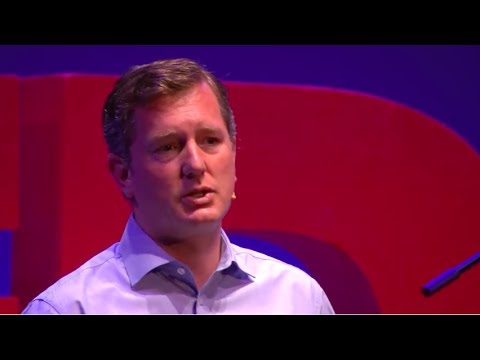
I’m a fortunate man I’m a husband to an
extraordinary wife I’m a dad to three
beautiful girls and for the last 25
years it’s been my extraordinary
privilege to serve as an officer in the
Metropolitan Police here in London this
city that is my home I joined the Met in
September 1992 this is me a training
school back then and in the time since
then
policing arguably has changed in all
sorts of ways certainly since the Met
was founded in 1829 but then of course
the world has changed and society has
changed and the communities that we live
and work in have changed technology has
changed crime has changed each of these
things is still happening and arguably a
gathering speed but when it comes to
policing and when it comes to the things
that really matter I’m not sure that
anything has really changed at all the
job is still to save lives to find the
lost to comfort the brokenhearted to
defend the vulnerable and to confront
the dangerous sometimes even to risk it
all whilst I’m here talking to you there
are men and women in blue out there
prepared to step into harm’s way in
defense of complete strangers they
always have been to me and always will
be the everyday heroes and heroines who
police our streets and today I’d like to
offer you an insight into their working
lives in the form of a short lesson in
forensic science
in particular I’d like to introduce you
to la cartes principal it’s most
definitely an idea worth sharing Edmond
Locard was a French forensic scientist
born in the nineteenth century who gave
his name to an idea that remains
fundamental to the way in which we
investigate crime in the 21st century la
cartes principle says very simply that
every contact leaves a trace every time
two objects come into contact with one
another an exchange happens picture the
following scene if you will a family
home in a quiet residential street a
thief
climbs over the back garden fence
leaving footprints in the flowerbed he
breaks a ground-floor window cutting
himself as he does so leaving drops of
blood on the sill as he climbs through
he catches his clothing leaving fibers
on the edges of the glass and once
inside he leaves his fingerprints over
all of the surfaces finally as he tries
to make his escape the registration
plate from his car is captured by his in
hidden CCTV camera okay so he’s not the
brightest of thieves
but I hope his small story offers just a
small insight into the genius that is
lockhart the police do their job well
and they get to the scene quickly they
find the footprints and the blood they
recover the fibers and the fingerprints
evidence of the suspect left at the
scene and they catch up with him quickly
enough to find mud from the flowerbed on
the bottom of his shoes and microscopic
fragments of glass all over his clothing
and because they’re having a
particularly good day in because it’s my
story they even find everything that
he’s stolen in the back of his car
evidence from the scene carried by him
it’s a powerful principle that explains
how a great many crimes get solved
traces of the scene carried by the
suspect traces on from the suspect left
at the scene because every contact
leaves a trace but if you think about it
a little more it seems to me that la
cartes principle has an application that
goes beyond simply the investigation of
crime it has an application for every
kind of human relationship and
interaction every time two people come
into contact with one another an
exchange takes place whether between
lifelong friends or passing strangers we
encourage we ignore we hold out a hand
or we withdraw it we walk toward so we
walk away with less or we curse we love
what we hate and every single contact
leaves a trace the way that we treat and
regard one another matters it really
matters and in an increasingly uncertain
and often frightening world it might
even be the thing that matters most of
all the painful privilege of policing is
to see all of life in all its fractured
pieces broken hearts and broken homes
broken lives and broken bones police
officers so often find themselves in the
hurting places going where most couldn’t
doing what most wouldn’t but it comes at
a cost that’s a picture of me after a
particularly painful night at work but
here’s the thing I’ve worked with
officers who’ve been injured much more
seriously than me I’ve worked with
officers who confronted gunman and
disarmed those wielding knives I’ve
worked with officers who’ve walked into
the midst of unimaginable horrors the
scenes of crimes and car crashes and
every place in between I’ve worked with
officers who have been first on scene
following terrorist atrocities and have
seen things in those places that defy
comprehension I’ve seen things and done
things myself that I wouldn’t wish on my
worst enemy
now I don’t see any of these things to
impress or to alarm I say them simply
because they’re true and it would be
impossible to do this job for any length
of time and to remain unaffected by it
perhaps I could tell you a little of my
own story to do that I need to go back
to April 2013 at the time I had the
privilege of being the police commander
for the borough of southwark in South
London I was responsible there for about
a thousand officers and staff and we
collectively had a residential and
business community of hundred
mm to protect it had some of the highest
levels of serious crime
anywhere in Britain almost every kind of
chaos almost everyday it was the best
and the most fulfilling job that I’ve
ever had but it was also the most
challenging and the demand of most
demanding six months into my time there
I broke it began with a deepening sense
of overwhelming exhaustion of the kind
that I just couldn’t shake off it
developed into a malevolent form of
anxiety that would wake me in the middle
of the night but leave me with no
understanding of the reasons why and
eventually came the depression now
depression is not the same as sadness in
fact sadness is to depression as a
puddle is to the Pacific it’s a thing of
raw horror and blind terror a
waterboarding of the mind and it smashed
me to the ground I was off work for
seven months more than four years later
I’m still recovering and initially at
least it robbed me stripped me of
everything that I had ever had
confidence in of my personal identity as
a husband as a dad as a man I just felt
like a failure it stripped me of my
professional identity as a police
officer as a borough commander as a
hostage negotiator as the man in the
arena in the space of a few short days I
went from running a borough to barely
being able to run a bath it was a crisis
of everything
and as I lay at home slowly and quietly
recovering I try to work out what the
hell had happened to me and in truth it
was a collision a combination of things
the first was just the simple wear and
tear of a policing life shift working
extended hours over prolonged periods of
time but more than anything else the
consequences of the repeated exposure to
extreme trauma as a society I don’t
think we’ve really properly begun to
understand the impact on our police
officers of the repeated exposure to
extreme trauma but alongside that
general wear and tear there are just
particular faces and places each of my
colleagues could tell you their own
stories the scenes and the screams that
sear themselves into your soul and
remain then there were the expectations
of the day job more and more and more
being demanded with less and less and
less to give all in an environment of
seemingly relentless criticism from the
media and from politicians in particular
and then of course there are things that
have nothing to do with policing but
everything to do with me we all have our
stories but it was the combination of
these things that left me in pieces the
good news though is that I’m a heck of a
lot better than I was and I just like to
leave you today with three practical
thoughts and three personal thoughts how
that’s been possible and it continues to
be possible first practically is to rest
we live in a world and in a society that
is moving far faster than is good for
any of us
I think it was Gandhi who said there’s
more to life than increasing its speed
but I’m not sure anyone was listening
out of necessity these days I am having
to slow down and to learn how to rest so
that’s the first thing the second thing
is medication one of the first things I
did when I got up this morning was to
take an antidepressant and there is
absolutely no shame in the fact they
don’t work for everybody but they work
for me and for a lot of others besides
and so I’ll take them for as long as I
need to and thirdly counseling I see a
wonderful counsellor I’ve seen her
throughout the last four years and she
helps me to untangle the mysteries of me
and put myself back together again
the reality is we all need someone to
talk to sometimes so those are the three
practical things and last of all three
personal things the first of those is
faith the religion that I’d grown up
with failed me but a small fragment of
faith remained I’ve begun to discover
something of the mystery of grace the
rumor that I’m loved beyond measure just
as I am secondly friends both at work
and at home who loved me and walked
alongside me until I was able to walk on
my own again and thirdly family
particularly my three girls and my
extraordinary wife is sitting over there
she’s called bear and she was the harbor
wall to whom I lashed my little boat and
she stayed strong and true I suppose it
really was love that saved me which is
possibly not the first thing you’d
expect to hear
officer say but in this increasingly
uncertain world what is it that we can
have confidence in maybe love is all we
need between friends and strangers
between lovers and foes between
neighborhoods and Nations the way that
we regard and treat one another matters
it really matters and every contact
leaves a trace
you
[Applause]
Please follow and like us: