
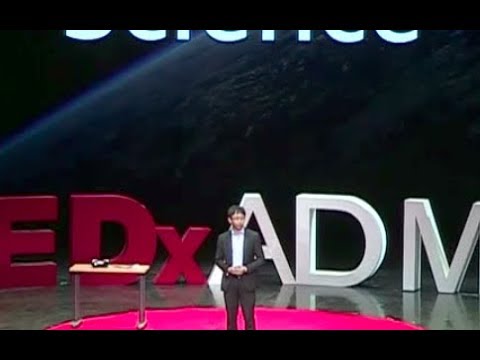
[Music]
good afternoon what did you want to be
when you were young a teacher a doctor a
lawyer me I wanted something simple I
want to be an astronaut but obviously
I’m sitting here on earth well at least
for now but what I wanted to be really
is a scientist an inventor someone who
came to eat things you see I had a
childhood year of growing up a
well-known scientist across the world
his accomplishments in robotics and
astrophysics it sparked me it shaped me
to become Who I am today
he’s Dexter boy inventor from the from
the cartoon show Dexter’s Laboratory
whatever Dexter wanted he just made it
inside this very own laboratory in his
room but sadly the opposite is true for
Filipino students only 13% of Philippine
schools have science and computer
laboratories leaving 19 million Filipino
students without access to hands-on
learning
compare this to standards of other
countries in England Computer Science
mandatory for ages 5 to 16 in China
children are exposed to coding well
before they reach preschool preschool
meanwhile it was reported in the
Philippines that 52% of our ID graduates
cannot even behind for programming work
without these facilities we are slowly
becoming a society without science we
have lawmakers who believe that condoms
cannot prevent STDs that GMOs are poison
and that vaccines cause autism
without hands-on learning to enforce
fundamental scientific principles in
children
they will believe anything and you know
what’s a million times worse than having
no science it is having wrong science
let me share with you a story of one
person I know for a very long time and
let’s just say he isn’t the smartest
person I’ve known in kindergarten he had
to repeat he had to apply for another
school he got rejected in grade school
he repeat a grade one and in high school
he failed most of his science subjects
but then something wonderful happened in
his lab classes he would finish his
experiments perfectly in the head of his
class back in the classroom he cannot
understand her understand the underlying
scientific principles and he can now
pass his exams and pass the subjects you
and he was younger a teacher once told
his parents that there was no hope for
this child now little did she know that
the same hopeless child would become one
of the Philippines first aerospace
engineers his name is Paulo and he’s
standing in front of you right now this
is the power of hands-on learning now I
want to share with you my unforgettable
learning experience do at the one you at
the one the Philippines first
microsatellite the development started
way back in December 2014 and ended just
a year after on March 23 of last year it
was launched into space and the month
after that was deployed from the
International Space Station currently it
is orbiting the earth and already taking
pictures of the Philippines as one of
the most disaster-prone countries in the
world the other one will help the
Philippines in disaster management
rehabilitation and planning before we
used to just buy images from other
countries this is a picture from the US
Landsat 8
now with the list with the same location
this is a picture taken by our very own
just beautiful they’re calling it the
world’s best internment in it for its
satellite scale now comparing this the
world’s very first image of Earth we can
say that the Philippines has definitely
kept up with technology in that we are
in no way left behind now how does it
work the satellite orbits around your
numerous times several times a day and
it rotates freely in space
but in order to capture valuable images
we need to be able to stabilize and
target it towards certain points of
interest in this case of course the
Philippines after it is not on we can
now take pictures and download them back
down to earth onboard the satellite we
have numerous components on board we
have the eyes of the satellite which are
the sensors these measure the direction
the speed and the location of the
satellite in space next we have a brain
the computer this calculates the
necessary adjustments we need to make in
order to control the satellite and
lastly we have the legs of the satellite
the motors these allow us to control and
to rotate satellite as we wish in space
now upon rotating in space the sensor
data are updated and this cycle is
continuously repeated during operation
today the satellite is fully functional
perfectly fine but looking back after
one year development in Japan I have
realized three challenges first first
are the costs the entire project costs a
whopping 1 billion pesos in order to be
funded that includes the launch the
materials and the training second is
space it is impossible to test the
actual operation before the actual
launch and so if the satellite will fail
it will fail
and lastly and most importantly there is
no aerospace education here in the
Philippines so if a student wishes to
pursue this type of aerospace
engineering he or she would have to go
abroad in order to pursue this
technology without addressing these
problems space exploration cannot be
sustainable and so I came up with the
ATO we are a virtual reality satellite
simulator now going back to the feedback
loop I showed earlier we replace the
entire space environment and several
components on board with a smartphone VR
app similarly we replace the 1 billion
pesos a flight with a 1000 peso micro
controller called an Arduino and then to
show you what it looks like I’m going to
demo in front of you right now so first
we just pick up the Arduino it’s quite
small it’s very far in the wall it’s
quite easy to learn we power it up just
like that and we take our smartphone
smartphone and we put it in our headset
just like that and you put it on
so this is what I can see in virtual
reality I can see the stars I can see
the earth and most importantly I can see
the ahta one and it’s full glory now by
entering the virtual reality environment
students can feel what it’s like to be
in space and by programming the Arduino
they can control their very own virtual
satellite easily in the for debrief with
the wanta we are everyone can learn
aerospace engineering of course
aerospace engineering is just one of the
many subjects that we can teach in
virtual reality
last year I founded her labs which
teaches science technology engineering
and math to students through virtual
reality here’s some of the apps that we
have been working on okay robotics is a
wonderful way of introducing programming
to children as they can easily see how
their code moves the robot unfortunately
robotics kits cost over $300 more than
students can afford and so with our
virtual Robo lab everything is provided
in front of the students everything all
for free making it more accessible and
affordable
next is chem lab it is very hard to
imagine chemistry concepts as they exist
at the molecular scale
this makes lab experimentation essential
in teaching chemistry to students I
myself had a challenge studying this
subject now with chem labs students can
now freely explore chemical reactions
you know without having to worry about
burns from fires and corrosion from
hazardous chemicals next
is road labs how do you teach discipline
the students you can’t you can teach
them what’s wrong and what’s right but
at the end of the day discipline is
experienced 50% of pornographic is
actually caused by the pedestrians and
not by the drivers and so with Road labs
we teach these children how to cross
roads properly by letting them cross the
roads properly and with this we hope to
solve you countless problems of traffic
congestion going back to the water vr
this is the my first very first virtual
reality app I may not have been an
astronaut but I felt what it’s like to
be in space I experienced what’s like me
in space in the same way even though
only a few of us actually had the
opportunity to build the other one I
believe that duardo on is the
achievement of every Filipino and that
every student should experience what we
experienced the otter vr was not made
all to educate but also to inspire
future aerospace engineers so by
programming virtual satellites today I
am hopeful that in the future these
students will grow up to build and
launch their own real satellites Albert
Einstein once said the only source of
knowledge is experience in the beginning
of my talk I asked you what you wanted
to be now the common answers are lawyers
doctors and teachers what if I told you
there are VR apps for that as well for
doctors there are surgical nurse
surgeries on virtual cadavers for
teachers they can teach virtual students
in order to practice their lesson plans
and for lawyers they can practice public
speaking in front of virtual audience
the best way to learn is to
– and these virtual reality apps help us
realize what what we will become –
between what we want to become to be as
an ending note I’d like to leave you
with a quote from a philosopher søren
kierkegaard life is not a problem to be
solved but a reality to be experienced
thank you
[Applause]
Please follow and like us: