
[Music]
[Music]
good morning you’ve already heard from
three really important regional thought
leaders this morning in amber and Chris
and Al you look at that window that’s
the marine ecosystem that they are
trying to preserve and protect it every
one of you this morning in our
conservation block are being asked to be
acolytes so let’s continue the
discussion with two ideas we’re
spreading Eden oyster help an oyster and
number two what can we learn from the
oyster in our own life
this is nature’s perfect example of our
theme this morning
resilience oysters from Maine to Florida
are all of the same kind it’s the
eastern oyster it’s also known as the
cross Estrella virginica if you’re a
scientifically inclined and there are
two kinds there is the wild oyster that
you see as you drive over the beautiful
bridges that are out there in the reefs
and as Al and Chris have been talking
about this morning
there is the farmed or grown oyster
oysters are wonderful things there
they’re full of vitamins they’re high in
protein they have zinc which is
great for your immune system they’re low
in calories but they have some problems
too
one of them is if you’re if you’re so
inclined they’re high in sodium so be
careful that’s something you should be
aware of the other thing is that for the
wild oysters which are exposed twice a
day at low tide in the hot months
there’s a nasty little bacteria called
the Vibrio that can infiltrate the
oyster and the meat and make you very
sick so that is why we’ve heard this
this tale through the years of don’t eat
oysters in the non our months we get
into September October November now
you’re starting to get into the cooler
months the oysters are safe
we have DHEC and DNR to tell us that
they’re good to eat but then came the
game change and the game change is
somebody figured out specifically a
scientist in Virginia how to take the
wild oyster which is known as a diploid
and create something called a triploid
the triploid is asexual it sits in that
beautiful stew of phytonutrients all day
long
because it grows in a basket and it’s
suspended in the water and it’s covered
the entire time so all of that wonderful
stew of phytonutrients and plankton and
so forth it’s coming in through its
little its little filters and it’s
pumping up to four gallons an hour one
noiser that’s why they’re called the
canary in the coalmine because if
they’re not happy if they’re sick then
that’s sick the problem we have folks
we don’t know what we don’t know when
you look at it that water it’s beautiful
it looks pristine but lurking in that
water are a lot of problems the last
statewide survey that was done of our
fresh and saltwater was 40 years ago the
last survey that was done regionally
came out in about 2000 and it was only
Broad Creek and the Oconee River and it
wasn’t good and that was 2000 so here we
are in 2017 and basically we still don’t
know what we don’t know we know that
there are some unintended consequences
that are taking place I’ll talk to you
about some of them we know there are
microplastics in the water we know that
there are personal pharmaceutical
products in the water just think because
of estrogen based personal
pharmaceutical products our finstock is
becoming more feminized if that
continues and you have a ratio of 65 or
75 percent women to 25 percent men well
it’s happy hour for the men but they
can’t keep up not only that but if that
trend does continue you could be paying
$40 a pound for grouper not a happy
prospect so I’ve always wondered I mean
really when you think about it who was
the amazing humanoid who decided to eat
an oyster who looked at this lumpy thing
and figured darn if I open that thing up
there’s gonna be something really
delicious in there it kind of looks
yucky but I’ll bet is full of proteins
and zinc it all that stuff I need is a
Paleolithic Indian look right here and
what you see our front teeth in a skull
that’s thousands of years old that have
been worn down for one reason the Neo
Paleolithic Indians in this area 4,000
years
go knew that oysters were good and they
ate so damn many of them they actually
wore down their front teeth there’s your
proof
so we’ve got wild versus farmed we’ve
got no more our months because they’re
being grown in the water and they’re not
susceptible to the Vibrio and our
legislature last year declared that
those that are single grown single
select farm-raised can be eaten 12
months a year but now we’re in two
moister Roe season and most of the
Oyster Roast oysters that you’re eating
are wild harvest raised and the wild
harvest raised oysters are the ones we
have to worry about now because whatever
is lurking out there in the water is
affecting them more specifically and it
requires some stewardship some serious
stewardship so we’ve started a project
if you will where fun which is a tourism
based initiative helps to fund an
organization which is going to start to
get a handle on what’s going on in our
waters what we don’t know about what we
don’t know what if the drinking water
you’re drinking wasn’t fit to drink now
we may do the research and find out it’s
ok I mean it’s it’s it’s not it’s not
great but it’s not Flint Michigan but we
may find out that there are a hundred
and thirty or 140 or 150 long-chain
compounds in the water because the water
treatment facilities aren’t set up to
filter personal pharmaceutical products
every time you eat an artificial
sweetener it’s designed not to stay in
your body you excrete it it goes to the
water treatment facility it goes through
the water treatment facility
into our near shore and inshore waters
we don’t really know at this point what
the impact of artificial sweeteners are
on the mighty mollusk and the finstock
so let’s get to what kind of lessons can
we learn from our friend the oyster well
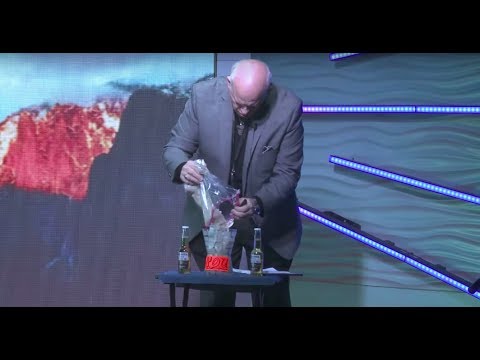
first of all you need to become filter
feeders – there’s lots of things that
you can do this is you this is the big
chunky stuff these are the things that
fill up your regular day this is faith
and family and friends
this is seeking shelter this is job
security or a career
it could be saving enough for retirement
travel and leisure the big stuff does
look pretty full
it looks pretty full this is the sand
that gets in the gears okay this is
relationships
Mars versus Venus this is wants versus
needs this is your help your families
helps the children become the parents I
didn’t intend for 20 years of my life to
have to care for and take care of five
elders I had to learn as the child how
to become the parent it’s tough
so it starts to slow down the gears of
life
and it gets harder and harder to filter
like the mighty oyster pumping four
gallons an hour you you feel it you feel
an inertia you feel a lethargy you you
you feel a black cloud whatever it might
be
you think that’s pretty full now would
you agree now you’re drowning this is
more month than money this is a health
crisis this is the big unexpected
expense your son comes home you did what
that’s my Bimmer that’s gonna be $15,000
to get that thing fixed son you’re
grounded
this is the fear of missing out you got
a disconnect you got to turn off the
personal digital device
I had a friend Oh college friend call me
the other day and he said you know me
and I miss seeing you we used to have
such a great time talking we’d write
letters back and forth let’s let’s get
together I’ll text you it’s an oversized
load gang we’re up to the brim here like
the oyster you got a filter you got to
start to say no perception is reality
this guy his mother says don’t eat with
your mouth full George Burns would say I
never buy bananas if the green your boss
might say that’s a hell of a guy he’s
multitasker give him a corner office
it’s all about the perception when you
get to that point in life where you’re
trying to figure out how to stop
drowning and how to be more effective
filtering think of the oyster the oyster
sits there and that’s – all day long and
he’s successful unless there’s something
wrong with the water is filtering or he
has to worry about the main predator
we’ve heard this a few times before us
so that asexual triploid oyster puts all
his time and energy not into reproducing
but it’s a growing fat and big sooner
than later and just when he’s feeling
really full of himself
boom along comes the harvesting axe and
he ends up in that moisture roast so all
I’m saying to you is we can learn from
our friends the oysters but we have to
take care of them we can learn to say no
we can learn to disconnect we can learn
to just pay attention to the big chunky
stuff we can try not to let the sand get
in our gears too much
Albert Einstein very very interesting
man we all know him for what he was but
he really wanted to be a musician in
life he said I when I dream I dream in
music
he said strive not to be a success
strive to be of value so my admonition
to you as we end this evening or this
afternoon or this morning I didn’t know
where I am
I adopt something every year on the new
years and my personal motto this year is
be interested and be interesting not the
Chinese admonition of may you live in
interesting times but be interested and
be interesting stay interested in that
ecosystem stay interested in our friends
the oysters figure out how you can be of
help
you’ve got my particulars you know where
to find me
I’m on building a trail to help them be
around in the next hundred years thank
you all very much
oh somebody somebody wanted sorry so
much somebody wanted to know about the
beers what’s the deal with the beers
don’t forget to share a beer with a
friend
Please follow and like us: