
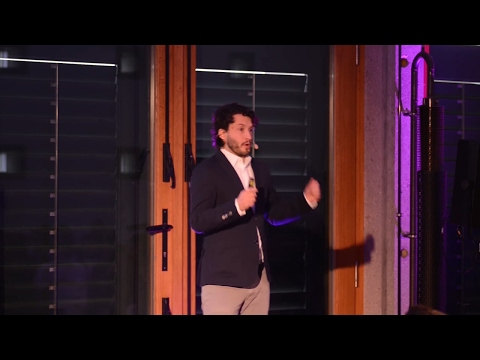
my name is Jacob I’m a biologist I have
a master’s in biology and then I have a
PhD in molecular biology but I’m here
today because back in Copenhagen I
started an insect farm with edible
crickets and I actually brought a few
crickets today which on the table over
here and they may join the conversation
at some point and then I’m also
co-founder of a company that produces
juice with insects in in 2011 I read an
article in The New Yorker that
absolutely blew my mind it was called
grub and it explained how two billion
people on the planet Eden sex at the
time I had no idea that you could eat an
insect but it turns out that it’s
actually only us in the Western
the article went on to suggest that we
to start to eat insects and it described
how more and more people are starting to
follow this advice so why should we eat
insects you may ask I know I asked that
question as a biologist the topic of
edible insects it really piqued my
interest and as i continue to do
research on them i found that not only
can you eat insects it’s actually also a
pretty good idea you see we as a species
we’re facing a severe food security
crisis it’s becoming increasingly
difficult to produce food enough for
everyone on the planet in fact it’s so
severe that some experts are calling it
the food pakka lips the United Nations
estimate that there will be a rise in
the demand for protein of seventy
percent as we get closer to 2050
so this rise is largely fueled by a
growing global population but also as
people get wealthier they prefer eating
more protein so why can’t we just eat
meat the way we used to just produce
more meat as we used to do it and here
it turns out that the meat production
industry is actually the primary
contributor to many of the global
environmental problems that we’re facing
today it is for instance the biggest
emitter of greenhouse gases if you
really want to do something good for the
environment it’s better to stop eating
beef than it is to stop travelling by
car train bus and airplane combined also
soon two-thirds of the global population
will live in areas that suffer from
water shortages and still we spend more
than fifteen thousand liters of water to
produce just one kilo of beef fifteen
thousand litres maybe next time you have
a steak you can just for a second
consider how much water went into
producing that steak how many thousands
of litres of water so if we want to
avoid global warming and an array of
other environmental issues we have to do
something different about the way we
produce and consume protein okay here
comes the good news insects contain up
to seventy percent protein so kilo by
kilo that’s more than beef or any other
type of animal that that were used to
consuming also instead of the fifteen
thousand liters that it takes to produce
a kilo of beef it actually only takes
eight liters of water to produce a kilo
of crickets and in the process you spend
much less feed and you emit 100 times
less carbon dioxide
so insects are a fantastic alternative
to the way we produce we produce protein
today however these dry data they don’t
change the fact that we in Europe and in
the United States in the Western
Hemisphere we are confronting a huge
cultural barrier when it comes to eating
insects most people in southeast asia in
central Africa and in large parts of
Latin America they eat insects without a
second thought but as Westerners we
squirm at the thought of swallowing a
meal worm or feeling the crunch of a
cricket between our teeth so if we want
to push our food consumption habits in a
positive direction we have to break down
this cultural barrier and it’s a
challenge luckily that a growing number
of people and small businesses are
choosing to take on so for me personally
the first time that I tasted an insect
it was in the form of these it was these
freeze-dried crickets made in California
and they had this very strange cheddar
cheese powder sprinkled on them but
mostly I just found it incredibly
difficult to take this entire animal and
put it in my mouth and chew it and II
did I two-faced that cultural barrier
but at the time i had spent so much
energy talking about edible insects to
my friends that I kind of just had to
put on a straight face and he did as if
it was the easiest thing in the world
but then I then I actually tasted it I
discovered this tastes quite good then
they have a strong nutty flavor and then
they are packed with you mommy so
in the fall of 2015 armed with this
knowledge of how great edible insects
are and reassured that they actually
taste good I volunteered at a place
called big cricket farms in Youngstown
Ohio it’s the only place in the United
States that’s certified to produce
crickets for human consumption and not
only are they masters at producing the
crickets they also at the forefront of
the movement to to motivate consumers to
give edible insects a try so Youngstown
is a crazy place it used to be one of
the richest cities in America it made
its money of steel mills then on one day
in 1979 for steel mills went bankrupt
and soon more followed thousands upon
thousands of people lost their job and
many fled the city to find new
employment houses were abandoned and the
streets were left empty today it’s one
of the poorest cities in America so into
this this post-apocalyptic world came
the founders of big cricket farms you
see the the abandoned cities of the
American Rust Belt they’re becoming
fertile land for people that are still
looking for the American dream though
maybe you have a huge art project you
can buy an abandoned house for cheap and
use it as a studio or maybe you want to
build a start-up on a shoestring like a
big urban farm that produces edible
crickets then you can do that so it was
in the confines of this incredibly
inspiring city that I learned the craft
of producing edible insects I spent days
in the stables and hearing the insects
sing the song of the crickets and
watching them go through the different
stages of life you wouldn’t know it but
it can actually be one of the most
relaxed
things to just see insects going about
the daily business it’s true though it
was also here that I learned that you
can produce three kilos of crickets per
square meter per month and that they are
masterful small escape artists one thing
we would do quite often at the farm was
that we would go to food fairs and
festivals and here we would serve
insects so we wanted to introduce
insects to people but equally important
we wanted to watch their reactions as we
did so and I quickly discovered that
just like that have been in my case it’s
the first insect which is the most
difficult one it’s it’s there that the
cultural barrier is strongest so if we
want to fight this cultural barrier it’s
at the first insect that the battle is
to be fought we must motivate the
Western consumer to dare to eat that
first insect once that happens then they
will know that they actually taste good
and they will discover that they survive
the experience and they actually live to
tell about it and soon they will also
want to eat more insects on a regular
basis so however currently we just have
to acknowledge that the cultural barrier
is very strong and we must respect that
consumers in the West feel this way I
mean that at least is our guiding star
in insect Copenhagen we must meet the
consumers where they are in their
development in their evolution towards
eating insects so two factors have
proven particularly important when it
comes to nudging consumers towards
trying that first insect the one is to
integrate them in already well-known
products in this way
you can turn the unknown into something
known so this can be as simple as adding
a bit of a cricket to snack bars or
maybe to some pasta or as we do to Jews
products and the second thing is to make
sure that that people get a lot of
information and education that
particularly important once you know the
many benefits available in sex you’re
also more prone to liking them we live
in a time where food and ethics must
overlap you can no longer just say ask
what a product does for you in the
moment you also have to ask where does
it come from what was the environmental
impact of its production and once you’re
done with it what will happen with it
and as this realization spreads it
becomes possible to reach consumers with
stories of sustainability I mean it’s
it’s well known especially around these
beautiful parts that that you can make a
wine taste better by talking about the
southern slopes that the grapes have
grown on or the complexity of the
terroir in a similar fashion you can now
negotiate with consumers taste buds with
facts like how much carbon dioxide was
released during production or how little
water was spent when you made the
product so the good news is that the
insect revolution has started the
meanest just but just as being here
today is evidence of that consumers are
warming to the thoughts of trying
insects media abounds with stories of
how amazing they are and we feel that
less and less communication is necessary
before people give them a try producer
consumers are ready to take
responsibility for their food
and for how it’s made and often they
even want to make it themselves I
imagine a future where there’s an insect
farm in every home I mean maybe maybe
like the one that we have here there’s a
trend towards decentralization of our
food supply why not make your own
protein at home you can feed them with
you can feed the insects with the
surplus fruits and vegetables like or
maybe the leaves on the outside of a
cauliflower or the greens on top of a
carrot in that way you also avoid food
waste and we can stop feeding animals
with produce that we might as well just
eat ourselves and one of the most
amazing things about crickets is the way
you can change their flavor by modifying
their feed I think the closest I have
ever been to a miracle was the first
time that I cooked with crickets that
had been fed basil now there was not a
shred of basil in the kitchen yet when I
blanched the crickets that was the most
intense smell of basil in the entire
kitchen and it was around Halloween so
it was almost a year ago to the date and
I made this very simple pasta with with
pumpkin and Parmesan cheese salt pepper
and then these basal fed crickets and it
tasted exactly as if there was also
basil in the dish at bugging Denmark we
are continuously developing new flavors
so we’re making we’re making peanut and
banana crickets maybe for a nice dessert
we’re doing licorice root crickets so
maybe you know the Danes are completely
obsessed with licorice so we think that
this one’s going to be very popular we
are doing ginger crickets maybe for some
nice asian food and then we’re also
doing rosehip crickets where we pick
rosehip around the farm in Copenhagen
and and feed it to the crickets also
we’re feeding them with with apple pulp
from our juice production so by feeding
them was something that we
otherwise have been a waste product
we’re making our our cricket production
even more sustainable so in conclusion
let me just say that I believe that the
story of edible insects would be a happy
one they are coming to a table near you
and they will help push our food
consumption patterns in a more
sustainable direction in 5-10 years it
will be completely normal to have
insects on the menu in the cafes and
restaurants so instead of asking
yourself whether you dare to eat an
insect maybe just ask yourself what is
your favorite flavor going to be thanked
[Music] [Applause]