
thank you very much it’s great to be
here and I was so worried I speak a lot
and I’m usually don’t get very nervous
but I thought I would be so it would be
so sad if I was so shown up by these 7th
graders and 8th graders and so I was
really really nervous you guys have been
awesome I’ve been really really really
excited to be part of this so take a
look at this image so it’s fingerprint
right it’s obvious we’re told that our
fingerprints are fundamental to our
identity that they are kind of like a
biometric you know way passport that can
unlock everything in our world like a
snowflake there’s no 2 in the world that
are the same what about this this is a
strand of DNA and the beauty of DNA is
it has all the information to build all
the cells in our world just like the
ones and zeros that make up the world of
computers DNA makes up every cell and if
you take the DNA in just one cell you
can replicate the whole make a whole
nother one so DNA and fingerprints are
both you know something that have
everything to do with our identity they
have everything to do with our
individuality everything to do with our
uniqueness but they are what they are
right i mean we were born with them we
didn’t have to design them we didn’t
have to create them we didn’t have to
write the code for them but there’s
something else that becomes a really
important part of your individuality and
your kind of sense of self that you have
to work a little bit harder at you have
to spend a little bit more time on and
practice on you have to have a lot more
intention it’s your voice I’m not
talking about the sounds you make when
you talk your pronunciation or maybe
your accent I’m talking about voice
I’m talking about the substance of what
you communicate when you talk about the
things that are really authentic to
yourself when you’re communicating your
ideas to somebody else your passions to
somebody else what you value what you
love maybe even a best-kept secret when
you are really communicating who you are
that’s your voice now the evolution of
voice is a pretty you know kind of
interesting thing if you think about you
know how your voice started it was
pretty primitive you came out of the
womb you screamed and it meant that you
either needed to be changed you were
bored you were hungry you know or
something had to happen and your mother
or caretaker probably believe that she
could tell the difference between your
cries to know exactly what you needed
and be able to give it to you that was
the beginning of voice so soon you grew
up you added vocabulary we’ve heard a
couple of examples today about how that
might have come sooner or later you
added words you added nuances I brought
to click my slide sorry nuances
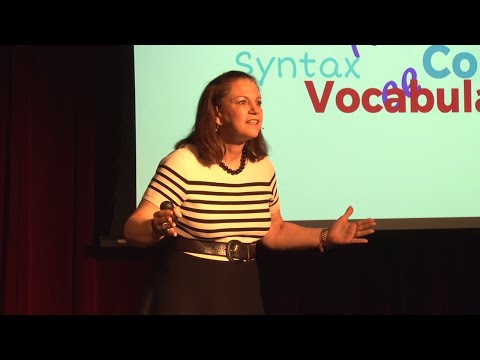
vocabulary syntax everything started to
kind of come together for you and you
even gained an appreciation of the power
of space and time when you were asking
for something how many of you have
carefully choreographed when you asked a
parent for something you really really
wanted you wanted to make sure they
weren’t cranky that they weren’t hungry
that they weren’t too stressed out right
so that shows an appreciation of space
and time and I would wager that by the
time you were in sixth grade you
probably had a pretty sophisticated
sense of getting your voice now as we
start to think about that
you probably found yourself able to
communicate a lot more than just what
you needed you were able to communicate
what you were thinking about ideas you
were starting to communicate you know
your intentions your ability to
understand things that you were becoming
aware of and maybe even what you were
feeling so what are some of the things
that helped a voice evolve well one
thing is by trying on other voices and
we’ve heard today some stories about how
kids can jump on to situations where
they try on other voices that are not so
kind that can be hurtful and less
compassionate we our voices evolved when
we share new experiences and we don’t
even have the words to express them but
we know we want to communicate it our
voice is influenced by the people we
meet we’ve heard speeches from people
that inspire us we’ve heard things from
people that make us want to do things
and your voice is especially
strengthened when it’s shared in a
public forum from the values that you
believe now what’s really interesting
and we’ve heard a little bit about that
today speaking before a group is the
number one fear in the world right
number one more than death anybody know
what number two is snakes snakes sm
button is kind of in tie with the death
thing Heights Heights is number two
deathly fear of speaking before a group
but if you look at the statistics and if
you believe Warren Buffett and Forbes
magazine if you have a command of public
speaking public speaking literally
literacy will increase your value
throughout your career and throughout
your life by almost fifty percent
getting comfortable talking to people in
a public
forum is something that will really
build your value now in today’s world
you have a lot of ways of being able to
express yourself amplify your voice but
you need to remember to do it with your
voice not somebody else’s so why is that
important well let me let me give you an
example in the olden days when I was a
kid things were very analog there was no
such thing as digital and we used to do
things like write a note or letter on
paper very analog form in longhand we
would send it to just the person we
intended to send it to maybe they would
show it to one or two other people but
it wasn’t it was limited by proximity
and it wasn’t something that got shared
really widely in today’s world you have
a different situation you need to
nurture and evolve your voice on
multiple platforms maybe even with
multiple personas your persona on xbox
might be very different than your
persona on Facebook and the evolution of
your voice won’t be degrading in a
landfill like mine it’ll be out there
online and off in the public domain and
you’re evolving voice will be publicly
following you into adulthood so for
those of you who are in middle school
now you need to start thinking of
yourself as an editor of your own voice
you are creating right now across these
many platforms what will become a
digital record of your voice that will
follow you for the rest of your life
into friendships potential dates job
interviews roommate applications renting
apartments everybody looks at your
digital fingerprint now
as evidence of your voice and who you
are today the average teen spends four
and a half hours a day on social
networks like Facebook Instagram
snapchat and others and texting has not
only replaced phone conversations but it
has replaced the boredom you know saying
something stupid because when you text
of course everything is perfect right
right it’s it’s replaced awkward
situations like having to ask somebody
for a date all of those things that used
to be part of growing up texting has
taken them away waiting in line being
bored trying to figure out how to ask
somebody out sitting in traffic and now
texting is even you know something you
use when you break up with somebody the
average teen sends between 60 and a
hundred and fifty texts a day and
teenage girls send a little bit more
4405 a month is the average I know some
that do much much more the good news is
that all this technology can be a
fantastic way to develop and amplify
your voice or it can be blathering
chatter that publicly haunts and
embarrasses you for the rest of your
life but you can choose I suggest that
developing our voice takes a little bit
more mindful approach so how can we make
it more mindful mindfulness is my
business so I start thinking about how
we can cultivate a mindful voice it
involves intentional accountable
communication that is beneficial for all
parties intentional accountable
communication that’s beneficial for all
parties involved wow that’s mindful
communication that’s what does that mean
intentional means it’s on purpose it
means you know what you want to make
happen accountable means your voice
doesn’t hide behind anonymity it’s your
our voice beneficial for both parties
you think about what it is you’re trying
to communicate how it should be
delivered how it should be received and
if it is being received in the way you
intended so how can you become more you
know mindful intentional accountable and
make things more beneficial for other
people you have to start by knowing
yourself you have to know your strengths
your weaknesses what you feel how you’re
going to bring that out into the world
and you need to know what your buttons
are that other people can push you need
to know what you’re talking about so if
you’re giving a speech or you’re having
a conversation or you’re asking for
something that you want you need to know
all about that you need to be able to
explain it a lot of different ways you
need to be able to really think about
how you can explain it to a bunch of
different kinds of audiences in many
many different ways you need to learn to
really listen and you need to especially
when you are listening to somebody that
has a different opinion than you
somebody that feels very differently
about something than you you need to
listen with a curious brain a very very
disruptive idea a brain that questions
you know it’s a very different situation
than waiting for your turn to talk we’ve
all been on those conversations where
we’re speaking and we can just feel the
other person leaning forward kind of
waiting for their turn to talk listen
with the curious brain seek to
understand the different perspectives of
your audiences you know entertain those
perspectives yourself empathize with
them what might it be like to feel that
way they feel to be communicating with
finally if it comes to your turn to talk
to open your mouth to speak I want you
to think about deciding what it is you
want to communicate what do you want the
person you’re talking to your audience
to hear what do you want them to do you
send a text or a snapchat or something
what is it you want to make happen are
you explaining something to them are you
trying to provoke something are you
trying to persuade them we heard a great
example earlier persuade them to do
something and then now that you know
what you want to say you need to choose
the right platform to express yourself
choose it carefully and in favor of what
it is you want to say let me give you an
example seven percent of all
communication is verbal the words the
articulation that we spend so much time
on and ninety-three percent of it is
nonverbal of that 93% fifty-five percent
of that is body language so if I’m not
very open to what you’re saying you know
I might be standing like this whereas if
I am open to what you’re saying I might
be leaning forward and listening a
little bit more carefully and
thirty-eight percent of it is tone of
voice whatever so if you even with
emojis I would suggest the texting or
tweeting probably is not the best way to
express how you feel about something
you’re really passionate about right
that might happen somewhere else that
might happen in a public forum it might
happen on a blog might happen in a way
that you can show pictures and all sorts
of things so think about the expression
and the platforms as an editor would and
take a deep breath let it go don’t be
afraid of awkward silence when I was a
young advertising executive I would do
research and I would sit in rooms with
people and ask them questions and
sometimes I just sit there and be quiet
look at them and smile that makes them
so uncomfortable they just spill their
guts they tell you everything you need
to know because they’re so uncomfortable
so don’t be afraid of awkward silences
many things are exchanged there be sure
to check in with your audience are they
understanding what you’re saying are
they asking questions or are they just
waiting for this to be over so they can
leave and remember that understanding is
not the same thing as agreement and I
think that’s where a lot of young people
get very confused if somebody doesn’t
understand ask questions to find out
what they don’t understand where did you
lose them and then explain it
differently don’t just repeat yourself I
can remember learning this lesson the
hard way as I went through life you know
kind of with parents and then bosses and
saying you know we’ll just listen as if
I by saying it one more time again it
would become clear and they would agree
with me that’s not how it works if your
audience understands but doesn’t agree
your missions accomplished agreement
shouldn’t be your objective necessarily
because benefit you chew alee beneficial
communication is your objective if your
audience sees the value for themselves
in something you’re talking about then
they will agree with them but not if you
just show the value for yourself
developing your voice is about being
able to express your ideals your values
your authentic self confidently
passionately and clearly
and I want to say that today we’ve heard
some really heroic stories of people who
have lived through incredible challenges
to get to where they are now and the
teasing and the bullying and the
you know maybe we just heard that for
the very first time there was an article
in the LA Times that said bullying in
middle school 30 years later holds the
same degree of psychological scarring as
if you suffered from physical abuse 20
30 40 years later emotional scarring so
it’s important when we think about our
voice having a voice really suggests
huge responsibility every time you speak
whether it’s a text a snapchat a
Facebook post a slur a poke on the bus
you leave a little of yourself out there
a little pixie dust if you will on
things so when you’re communicating you
have to think is this coming from your
voice or is this some sort of mindless
responsiveness and chatter is this
something that got caught up in a group
think you have to ask yourself am I
mindful e cultivating my voice or am I
simply making noise thank you you
Please follow and like us: