
whenever you engage in an important
discussion you’re going to have to
answer one particular question what do
you think well what do you think it’s
not always an easy question to answer
you may not feel like you have all the
information available and you may find
yourself reverting back to snapshots of
arguments to emotive statements or
headlines or slogans take like this now
although the most of you were too young
to vote I’m sure you all got swept along
in the EU referendum debate and this was
the baby that was characterized by these
kinds of slogans and headlines really
trying to appeal to your emotions you
all sort of deeper feelings and this in
many ways can be dangerous the EU
referendum saw many people have you want
to think and when you’re surrounded by
this kind of narrative it becomes
incredibly difficult to ensure the
opinions that you therefore whole are
the ones that you truly believe in ones
that are based on facts and information
and not your emotions the reality is
that all of these opinions
exhibit a number of common
characteristics they’re going to be
limited they’re going to be
sensationalized they’re going to be a
motive they’re going to be bias because
nobody can tell you the whole story and
therefore go tell your story they want
you to hear and i’m going to use the
information that’s going to heal to the
most the emotive and sensational parts
of any debate to really get to you and
that leads to a situation like this now
these two headlines are about the same
event but they could hardly be more
different and that’s because all of this
leads to a situation where we get a
divided society I’m sure you all solid
during the referendum you have the lead
campaign and you have the romaine
company and early on in the debate
almost everyone came to a decision as to
which side they were going to support
and this wasn’t necessarily based on
information but rather on the kind of
emotive headlines and slogans and
refer to you before so what happens in
the situation is that you get some
deciding what they believe before we
have all the information so then when
they come to look for information they
look for the information that supports
that opinion that they have already
decided on for someone who believes that
we should leave EU or remain in the EU
looks to information that supports that
view the two sides of the argument will
come more and more convinced that they
are the ones that are right and they get
pushed further and further apart this
ground in the middle is sort of I just
think that it’s the common sense area
the reality that both sides have pros
and cons because almost completely
ignore now this isn’t something that
it’s just normal people who are guilty
of it’s actually something that people
far higher up make mistakes or as well
the UN and NATO organizations that are
built on certain core assumptions
assumptions such as our belief in
democracy in freedom in human rights and
are these these are noble things to
believe in unlock codes are not good but
these beliefs can also in the same way
that our belief that we should we
you can lead to making mistakes now I’m
studying for my thesis of the moment and
11 will talk about is the situation in
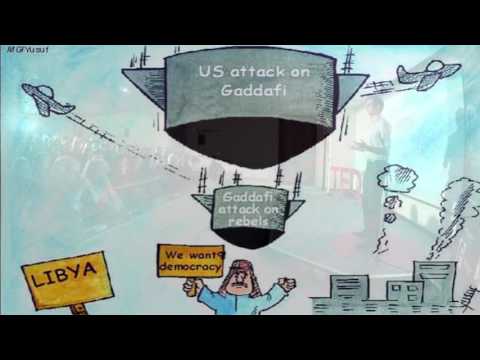
Libya in 2011 now this cartoon is
actually surprisingly accurate about
what happened but but to just give you a
brief overview Colonel Gaddafi the
dictator in Libya and being in power for
more than 40 years that many of those
years use an oppressive dictator in a
lot of ways so in 2011 as part of a
wider picture of the Arab Spring he
faces protest all these people
particularly in the city of Benghazi and
now he uses his security and structure
is his armed forces attack these
protesters and the situation escalates
and escalates until until the rebels
hold the city Benghazi Gaddafi is
fighting back he’s using his air force
he’s hitting his own people with Miss
islands and the UN looks the situation
and they see a dictator brutally
attacking your own people this is
against everything the UN believes it so
when Qaddafi stands up and says that
he’s going to go house by house room by
room and purifying his country of the
rebels the UN quite simply panics and
understandably they say about killing
his own
violating that human rights and they
always immediately authorized
intervention by NATO to protect
civilians that is that is the reason for
this intervention to protect civilians
and what this leads to do is NATO
missile strike on behalf ease forces to
get rid of an immediate threat but they
don’t stop that they keep hitting these
forces they remove his means of holding
on to power until eventually several
months later the rebels capture and kill
their former ruler now this was a
contentious issue from status wasn’t you
know a clear-cut quit but matter but the
reality was that early on many people
saw this is a victory or a potential
victory for democracy for peace they saw
a chance to take country that never
before had elections that have been
under the rule of one man 40 years and
to turn it into a democracy to bring
peace and stability to the area but that
situation just didn’t bear out now a
picture can’t tell the whole story and
this is just one that found on Google
but the situation in Libya is probably
not what you’re imagining it was before
the Civil War Libya was not some failed
state where people struggling to feed
themselves Lydia was actually the
wealthiest country in Africa it was the
country with the highest GDP the highest
human development index the lowest child
mortality and the highest life
expectancy and a lot of this was
actually due to Gaddafi when he took
over Libya was a very very poor country
and he did a lot improved a lot in the
situation in many areas I’m not going to
say he was a moral man because in many
cases he also oppressed his people quite
brutal but there are two sides of the
coin situation now low we’re now in 2017
six years after the intervention and the
sill illness but no effective government
in living thousands of people are still
dying every year organizations like Al
Qaeda and Isis a starting to get a
stronger foot have fun because there’s
no security matter quite simply you have
to look at this situation say how did an
intervention that was there to protect
civilians result in a situation like
this well to bring it back round to the
EU referendum in the same way but we
made assumptions about what we believe
to be right when we were voting on
remote
Britain’s situation in the EU the UN
polls and certain core assumption their
belief in democracy in human rights in
freedom and the protection of civilians
and it’s led to this situation I how
does that happen well I’m going to
propose that perhaps through certain
hard truths of the UN failed to
acknowledge when they made the decisions
in to be in Libya first of these you can
perhaps already guess at the tater chips
can be good now get acne as I’ve already
said do a lot to improve the economic
situation in Libya you know the part of
the reason the teacher can be successful
typically in a volatile situation like
that huh is that they are able to act
quickly is sizably and even if it
sometimes may be troubling for swimming
whereas the democracy gets caught up and
slow bureaucratic processes the need to
come to an agreement between everyone
well that means that they can be open to
abuse and subversion why people are
willing to use more violent means that
is why democracy failed to sing holding
the second are true perhaps even more
difficult summer now I don’t mean this a
sense that we should just turn a blind
eye when we see people being killed by
the leaders the difficult assumption the
difficult assumption that the UN made is
that they improve the situation the
reality is if you if the UN not
authorized intervention it actually
would have likely defeats the rebels in
a matter of weeks stability would have
content you Olivia would have continued
to be an affluent country yes he may
have oppresses people but in many ways
you have to look into the situation
would be far better for the majority
people that it currently is now that can
be quite difficult swallow or what point
do we say we can’t allow these human
rights abuse or point we believe we can
improve the situation I hope have a
simple answer but it leads on to the
final point that I want to make now I’m
not going to tell you what’s faint here
because that goes against the entire
points my soul but I do want you to do
that’s you self-serving questions look
at this situation in Libya and so I say
if values such as democracy and human
rights who lead to such destruction
because people fail to look at me
critically
then what are some of the assumptions
that I followed what are some of the
things that I think how they affect in
my day-to-day life are they effective
decisions that I making the thing is
that I hold so there are a few things I
want you to go away from there and think
about first thing play devil’s advocate
might I don’t just mean talk you look at
what other people say and really
challenge them I mean take a look at
yourself if you find yourself giving an
opinion or arguing a certain point of
view take a step back and say why is it
that is what I’m arguing is it perhaps
because I have informed myself I’ve
looked at all the arguments that I’ve
come to an informed decision or is it
because I’m getting swept along in the
sidewalk people around me think in
certain emotive headlines am I getting
caught up in a way
it’s a very difficult thing to do but if
you do that then you’re making the first
steps informing yourself more
effectively which brings on second point
I don’t mean when I say read watch and
listen I don’t mean just look at the
mainstream news sources I mean go beyond
that and really hunt for information
hunt for knowledge read journal articles
and magazines read you know books by
people who know what situation really is
like listen to podcasts or any number of
podcasts and radio shows that unpick
current affairs and look at different
time mate watch documentaries are even
technology they’re all the fantastic
ways to really challenge the way you
think the finally the perhaps most
importantly ask questions the important
thing is not some questioning now quite
asking a question is not a sign of
weakness it’s not a sign of ignorance if
I ask you a question is the best way to
make sure that you are well informed
it’s the best way to actually using the
information that is available to you
effectively it’s the best way to make
sure that the opinions you hold the
opinions that you spread in the world are truly your own