
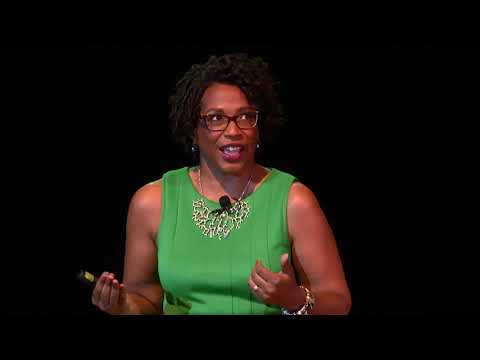
being a teenager is hard it may not have
been hard for all of you here but I know
for me and for most teens it was a
challenge and that’s because the teenage
years
adolescents aren’t just about your body
changing but they’re really about
figuring out who you are the
developmental psychologists in the world
call that identity formation and they do
big research that focuses on racial
identity and gender identity and sexual
orientation identity but identity is
more than that it’s all of who you are
it’s all of the characteristics that you
have that make you the person you are
the smart girl the shy girl the nerd but
when you’re a girl like me fighting a
chronic illness like severe asthma that
also becomes part of your identity you
become the girl with an inhaler
the stick girl I remember when I was 15
years old we were living in a low-income
housing development the project’s I was
at home babysitting for my five-year-old
sister and my three-year-old brother
they were outside playing with other
kids under the watchful eye of other
neighbors because that’s what neighbors
in a community do and I was in our
apartment trying to breathe and not
doing a particularly good job of it I
was lucky because my little brother came
in to get a drink of water and he found
me on the floor I was in convulsions I
was barely breathing and he had the
presence of mind to go back outside and
get one of the grown-ups who came in and
as the story was told to me later they
called an ambulance and then there was
the trip to the emergency department and
then the stay and the intensive care
unit at some point during that day I
heard a conversation between a couple of
nurses one of them saying that was a
really close call
have we seen her here before
and another one saying yeah she was a
frequent flyer and even though I was a
little out of it I knew what that meant
and I knew the judgment behind that term
because it was a term that was used for
people who didn’t take care of
themselves who didn’t take their
medicines who were a failure at caring
for their own health and who were
wasting time and energy that could be
spent on other people they chose to give
me that label to add that to my identity
partially because I did spend a fair
amount of time in the emergency
department but you have to wonder
whether it was also because of my race
and because of my Medicaid card and
because of my address but whatever the
reason it was a label that mattered and
it was labeled that wasn’t associated
with great health outcomes in fact in
reality for generations populations in
our society populations that have been
placed at risk and made vulnerable due
to unfair social and power structures
and due to disproportionate exposures to
toxic stress and toxic environments have
gotten those labels and worse
not just frequent flyer sickly lazy weak
helpless hopeless and those kinds of
labels and terms have allowed people to
become comfortable with the disparities
that impact the health and well-being of
those populations populations like the
one we’re standing in here in the
clingen lincoln district disparities in
infant mortality disparities and
employment disparities in life
expectancy luckily i survived the health
challenges of my adolescence and headed
off to college packed my bags and my
baggage and pursued a career ended up
pursuing a career as an epidemic
just epidemiology is the study of the
causes and treatments and outcomes of
diseases in populations when I started
studying and I really didn’t know what
an epidemiologist did but what I knew
was it could help me learn how I could
be part of making a difference making a
change we needed to move away from the
treat release repeat model that wasn’t
doing anybody any good my goal was to
figure out how we could help teens
develop an optimal health identity one
that was based in empowerment and
engagement and not colored by blame and
shame as a researcher I started off
focused on the patient on the team I put
together a great team of researchers at
Nationwide Children’s Hospital here in
Columbus Ohio and we started off by
trying to understand do teens with
chronic illness have the skills that
they need to take care of their own
health this is a concept that we call
health literacy and it really is about
the ability to find and understand and
apply health information to make
informed decisions about your health and
the results that we found were scary
we found that half of teens with chronic
illness didn’t have those skills and it
was considerably more than half when you
looked at the african-american
population and those people who didn’t
have those skills weren’t likely to be
able to use the information on a
nutrition label or on a medication
bottle to make good decisions about
their own health that finding made me
wonders so we’ve got a lot of kids who
need a lot of health information and a
lot of them who don’t understand it
where are they getting the information
that they’re using to manage their
health so like any good researcher we
went out and collected data on that we
did interviews we did focus groups we
asked teens what were their information
sources some of them said I asked the
doctor others said they wouldn’t have a
clue how to contact
some said they asked their parents
others said their parents don’t know any
more than they do many of them said I
asked dr. Google dr. Google was actually
a commonly used phrase and when we look
back at our data we saw that that was
underlined in what we saw in our results
because most teams were looking for
health information online and when we
asked them so how do you know that what
you’re finding online is reliable or
timely or true we got a lot of blank
stares a few people had a few ideas but
for the most part they said I trust what
I find that finding the finding that
people were trusting things online
without evaluating it that people had
limited health literacy when they were
looking for these things that they
wanted more help led us to develop a
tool that we’re using to help teams
become more facile at using health
information both face-to-face
communication and online health
information we want teams to be able to
develop an identity that starts at
competence that lets them say I got this
and if I don’t I know how to get it the
nice thing about teams is that most of
them don’t exist in this world alone
they have parents and actually some of
my colleagues have said why are you even
bothering with training the teens just
tell their parents and they’ll take care
of it it’s their job but I would argue
that not all parents do that job the
same way and not all parents do it well
some parents do too much helicopter
parents parents who wouldn’t trust
little Timmy to call in his own refill
until he was at least 30 parents who do
too little parents who overwhelmed with
work and other children and just
life expecting me to start calling in
his refills as soon as he’s old enough
to dial the phone neither of those are
optimal and within our health systems
and within our communities we need to
train parents about what it means to be
the parent of a teen with a health issue
about the fact that the transition from
being a teen under parents care to an
adult under their own care as a trend is
a process and it requires time we want
to get to the point where parents can
know that they need to do the right
thing at the right time for each child
and get to the point where teens trust
and believe that they can rely on the
adults in their lives because parents
matter because families matter but
beyond that there’s also the community
you know when I was lying in that
hospital bed and listening to that nurse
conversation that nurse didn’t know half
the story what she was seeing was only
the tip of the iceberg for kids like me
who were in that situation because she
didn’t know about the cigarette smoke
and the pests in the household that
caused asthma attacks she didn’t know
about the pollution and the particulates
in the community that did the same thing
she didn’t know about the uncertainty
about whether there’d be money for the
next inhaler and maybe we need to skip a
few doses to stretch this one out she
didn’t know about the daily stresses the
toxic stresses that just make life hard
in the world of public health we call
these social determinants of health
factors and our communities where we
live work learn and play that influence
our health outcomes factors that can and
do create health problems and that can
make existing health problems even worse
but it’s also important to know and to
remember
that there are factors in our
communities that make us better and make
us stronger right now I’m standing in a
historic school and a historic community
I’m right near an intersection that has
a hospital and a library and a
hairdresser and a church all community
assets and a neighborhood that has
committed residents and supporters who
are trying to expand access to food and
to jobs and to entertainment things that
give us relaxation and relieve stress
because the reality is children and
families exist in communities and the
research we’re looking at now says from
the earliest days of development what
goes on in those communities matters for
the health and development of a child I
think back to coming home from the
hospital I think back to neighbors
coming up to me when they saw that I was
out and everyone telling me a slightly
different story about what happened
because according to them everybody saw
it and in a neighborhood like that of
course everybody’s in everybody’s
business for better or for worse I’m
gonna say for better because I knew that
they knew enough to care and I knew in
the coming days when people saw me they
spent an extra minute looking at me
making sure it looked like I was okay
they asked how I was doing they were a
community of support they were building
my health and we can build stronger
teens and families and communities that
support health how can we do this one
way is to improve the way we educate
everybody about health how our health
systems do it and how our schools do it
it’s time for us to move away from
thinking about health education class as
Anatomy or nutrition and to really think
about it as
health preservation class teaching
people about how to find health
information about how to make good
health decisions about how to navigate
our ridiculously complex health care and
health insurance systems you might be
surprised to know that Ohio the state
that we’re in right now is the only
state in this country that does not have
health education standards it’s amazing
to think about the amount of time and
energy we spend talking about
proficiency and test scores when we’re
not willing to commit to creating
proficiency and the basic skills to stay
alive it’s an opportunity that we need
to grasp and while we’re building
stronger individuals and families
through education we need to be building
stronger communities a lot of the money
that we spend on sick care is better
spent on keeping people from getting
sick in the first place you may not
think that remodeling houses are
starting community gardens or job
training programs or health
interventions but they are because to
the extent that those things build
security and safety and self-esteem
those are the foundations of a good
health identity and I say we start with
teams we start with teens because
they’re in that time of betweenness
between childhood and adulthood between
parent care and self care between being
who we want them to be and who they
choose to be that’s the time when
they’re developing their identity and
that’s the time where we can create the
most change the time that we can get to
the point where we help teens to
understand that yes I have health
hurdles and yes they may feel
insurmountable but I can be part of
creating the best me I’m dr. Dena
Chisholm and what I’m being dr. dena I
create tools that help
teens create the best of them to promote
health equity across our community thank
you
[Applause] you
Please follow and like us: