
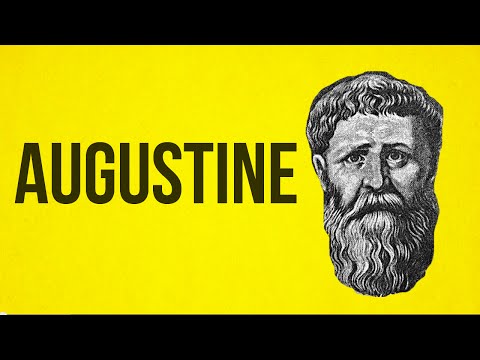
Philosophy
St. Augustine
St. Augustine is a Christian philosopher,
lived in the 5th and 7th centuries on the outskirts of the declining Roman Empire,
in the northern city of Hypon.
He has been a priest for 35 years,
it becomes a source of inspiration for the otherwise uneducated and poor community.
In the last days of his life
a German tribe known as Vandali,
burns down the town of Hippone, defeats the Roman legion and murmurs young women in the city,
but leaves the Cathedral of Augustine and the library untouched
from respect for the achievements of the old philosopher.
For us, modern non-religious people are important because of his criticism of Rome.
His values and appearance.
And because Rome is very much like the modern Western world.
Especially with the States.
The Romans believe in two things in particular –
First – the earthly happiness.
They are generally very optimistic.
Builders of Pon-du-Gar and Coliseum believe in technology,
in the power of men to rule themselves, to rule over nature,
and to be responsible for their own happiness and satisfaction.
Writers like Cicero and Plutarch are largely proud, ambitious and confident of the future,
which, with minor adjustments, would also have a place in modern media.
Romans are hardcore supporters of what we call self-help today,
encouraging the audience to success and productivity.
In their eyes, man is highly inclined to perfection.
Second – a just social order.
For a long time the Romans believe that their society is crowned with justice.
Justice.
Ambitious and intelligent can reach the top,
the army is considered meritocratic.
The opportunity for getting rich is considered as a reflection of both the practical benefit,
but also somewhat of internal virtues.
So – the demonstration of well-being is honest and godly.
Fame is a deeply revered ideal.
Avgustin angrily rejects both ideas.
In his masterpiece, the City of God, he unravels them thoroughly.
That human life can be improved and that society is fair
in a way that is important to us today.
Augustine thought of the idea of the first-born sin.
He asserts that all people, not just here or there, someone unrelated,
are corrupted and burdened by Adam’s eternal sins.
Our sinful nature gives birth to what Augustine calls Libido Dominandi –
a thirst for power.
As evidenced by the cruel, blind and ruthless way we treat those around us.
We can not love properly because we are endlessly undermined by our selfishness and pride.
Our ability for prudence and understanding is too fragile.
Wickedness fills our days,
we do not manage to understand ourselves,
we are pursuing visions, overwhelmed with anxiety.
Augustine finishes his accusation with reproach to all philosophers,
as he says – “They wished so much happiness here on Earth
and to achieve bliss themselves. “
It may sound oppressive,
but it may be a special comfort that our lives are not in turmoil
because of the accident, but a priori because we are human, and nothing human can not be perfect.
We are creatures destined to feel the virtue and love,
but forever incapable of possessing them completely.
Our connections, professions, countries
are inevitably not what we want.
But not for something that is our business – the chance simply is not in our favor at first.
Augustine’s pessimism takes some of the tension that we would feel,
when we perceive imperfection our imperfection and that of our actions.
We should not be angry and believe we have been chosen as an unjust punishment
It is simply part of the human experience, the inheritance of what, even if we do not believe in the theology of Augustine,
we call the first-born sin.
During their peak periods the Romans believe that their society is meritocratic –
that is, those who have reached the top,
have deserved it at the expense of their own virtues.
After Emperor Constantine accepted Christianity,
the philosopher Eusebius Caesariyski claims that earthly power
is the instrument by which God establishes the Christian faith on Earth.
Therefore, those who have power in Rome are not just privileged,
but also blessed and righteous in the eyes of God.
“But arrogant, self-conscious and cruel allegations!” “replied Augustine.
There has never been and will be no justice in Rome
or anywhere else.
God did not give to the rich state and power,
nor has he defrauded those who do not.
Augustine highlights the ideas of “two cities”
The City of Men and the City of God.
The second is an ideal for the future, paradise,
where the good will rule, the power will be fair
and where virtues will prevail.
But people can not create it on their own
they never have to believe they are capable.
They are doomed to wander in the City of People,
which is a society full of grotesque flaws, where money is never a reflection of virtue.
Augustine says –
True righteousness will not exist except in that state,
created and under the authority of Christ.
It may sound bleak,
but made the philosophy of Augustine especially benevolent to failure,
poverty and defeat – ours and that of others.
It is not in the hands of people to judge each other according to the external signs of success.
This creates a lack of morality and snobbery.
It is our duty to be skeptical of power and merciful to failure.
We do not need to be believers to find comfort in these statements.
They are the universal contribution of religion to political philosophy and psychology.
They perfectly reminisce some dangerous risks,
which conceals belief in perfection
or that misery and darkness are the true incarnations of sin in the City of Men.
“The School of Life” Augustine Blessed
St. Augustine
St. Augustine is a Christian philosopher,
lived in the 5th and 7th centuries on the outskirts of the declining Roman Empire,
in the northern city of Hypon.
He has been a priest for 35 years,
it becomes a source of inspiration for the otherwise uneducated and poor community.
In the last days of his life
a German tribe known as Vandali,
burns down the town of Hippone, defeats the Roman legion and murmurs young women in the city,
but leaves the Cathedral of Augustine and the library untouched
from respect for the achievements of the old philosopher.
For us, modern non-religious people are important because of his criticism of Rome.
His values and appearance.
And because Rome is very much like the modern Western world.
Especially with the States.
The Romans believe in two things in particular –
First – the earthly happiness.
They are generally very optimistic.
Builders of Pon-du-Gar and Coliseum believe in technology,
in the power of men to rule themselves, to rule over nature,
and to be responsible for their own happiness and satisfaction.
Writers like Cicero and Plutarch are largely proud, ambitious and confident of the future,
which, with minor adjustments, would also have a place in modern media.
Romans are hardcore supporters of what we call self-help today,
encouraging the audience to success and productivity.
In their eyes, man is highly inclined to perfection.
Second – a just social order.
For a long time the Romans believe that their society is crowned with justice.
Justice.
Ambitious and intelligent can reach the top,
the army is considered meritocratic.
The opportunity for getting rich is considered as a reflection of both the practical benefit,
but also somewhat of internal virtues.
So – the demonstration of well-being is honest and godly.
Fame is a deeply revered ideal.
Avgustin angrily rejects both ideas.
In his masterpiece, the City of God, he unravels them thoroughly.
That human life can be improved and that society is fair
in a way that is important to us today.
Augustine thought of the idea of the first-born sin.
He asserts that all people, not just here or there, someone unrelated,
are corrupted and burdened by Adam’s eternal sins.
Our sinful nature gives birth to what Augustine calls Libido Dominandi –
a thirst for power.
As evidenced by the cruel, blind and ruthless way we treat those around us.
We can not love properly because we are endlessly undermined by our selfishness and pride.
Our ability for prudence and understanding is too fragile.
Wickedness fills our days,
we do not manage to understand ourselves,
we are pursuing visions, overwhelmed with anxiety.
Augustine finishes his accusation with reproach to all philosophers,
as he says – “They wished so much happiness here on Earth
and to achieve bliss themselves. “
It may sound oppressive,
but it may be a special comfort that our lives are not in turmoil
because of the accident, but a priori because we are human, and nothing human can not be perfect.
We are creatures destined to feel the virtue and love,
but forever incapable of possessing them completely.
Our connections, professions, countries
are inevitably not what we want.
But not for something that is our business – the chance simply is not in our favor at first.
Augustine’s pessimism takes some of the tension that we would feel,
when we perceive imperfection our imperfection and that of our actions.
We should not be angry and believe we have been chosen as an unjust punishment
It is simply part of the human experience, the inheritance of what, even if we do not believe in the theology of Augustine,
we call the first-born sin.
During their peak periods the Romans believe that their society is meritocratic –
that is, those who have reached the top,
have deserved it at the expense of their own virtues.
After Emperor Constantine accepted Christianity,
the philosopher Eusebius Caesariyski claims that earthly power
is the instrument by which God establishes the Christian faith on Earth.
Therefore, those who have power in Rome are not just privileged,
but also blessed and righteous in the eyes of God.
“But arrogant, self-conscious and cruel allegations!” “replied Augustine.
There has never been and will be no justice in Rome
or anywhere else.
God did not give to the rich state and power,
nor has he defrauded those who do not.
Augustine highlights the ideas of “two cities”
The City of Men and the City of God.
The second is an ideal for the future, paradise,
where the good will rule, the power will be fair
and where virtues will prevail.
But people can not create it on their own
they never have to believe they are capable.
They are doomed to wander in the City of People,
which is a society full of grotesque flaws, where money is never a reflection of virtue.
Augustine says –
True righteousness will not exist except in that state,
created and under the authority of Christ.
It may sound bleak,
but made the philosophy of Augustine especially benevolent to failure,
poverty and defeat – ours and that of others.
It is not in the hands of people to judge each other according to the external signs of success.
This creates a lack of morality and snobbery.
It is our duty to be skeptical of power and merciful to failure.
We do not need to be believers to find comfort in these statements.
They are the universal contribution of religion to political philosophy and psychology.
They perfectly reminisce some dangerous risks,
which conceals belief in perfection
or that misery and darkness are the true incarnations of sin in the City of Men.
“The School of Life” Augustine Blessed
Please follow and like us: