
People always suffer pronouns.
If you do not speak German, the pronunciation method will not be obvious to you.
The safe bet is to start with (G) in Ger and reach ter. Result: (Ger-ter)
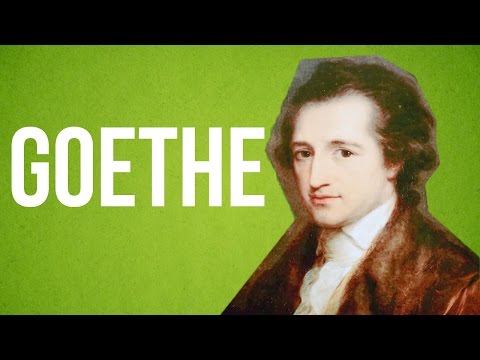
Johann Wolfgang von Goethe
He is always seen as one of the greatest heroes of European culture,
Compared with Shakespeare, Dante, and Homer.
During his life, the fans of Goethe were amazed at his literary work.
But they were impressed with something more than they liked any book of his books,
What impressed people at the time, is the way he lived his life,
I’ve been a person who
We can pick up some lively lessons from them:
1. Stop being too romantic
The first post suitable for Goethe after the Faculty of Law was to serve as an assistant in a national court,
The cases are governed by many small German states
This is what the Holy Roman Empire did at that time.
While working, Goethe fell in love with the fiancee of one of his colleagues.
Then he committed an act of folly and wrote a novel about this forbidden love relationship.
He called it “Porter’s Passion”.
The pivotal figure, Ferter, represents a compelling personal image.
The book tells the story of how Ferter / Goethe
He fell in love with a young woman, Charlotte.
It is a detailed description of all the small steps taken by the plug
In the way leading to fascination.
They danced together.
They touched their feet from one point under the table.
They smiled, and wrote to each other small comic notes.
It makes falling in love seem like the most romantic experience in life.
Verter asks himself,
“What is life without romantic love? A magic lantern without a lamp.”
This deep and charming novel was a bestseller.
Throughout Europe for over 25 years.
Napoleon boasted of reading it seven times.
The end of the story was tragic.
Charlotte does not like Ferter and rejects him in the end.
In a moment of despair, he kills himself.
This tragic ending shows Goethe
It begins by recognizing the limitations of a romantic view of life.
Romantic love is very attractive,
But it also causes huge dilemmas.
The basic problem, as Goethe saw it, is:
Romantic love aspires to freeze beautiful moments.
In the summer evening, after dinner,
Ferter walks in the forest with his sweetheart.
He wants to be so always.
So he thinks they should get married, have a house, and have children.
But in fact, the marriage is not equivalent to anything at all like the beautiful June night.
There is exhaustion, payment of bills, wrangling, and the feeling of being locked up.
For comparison, with the hopes of extreme romance,
True love, as Goethe saw it, is always, necessarily,
A terrible disappointment.
That is why Goethe gradually moved away from romance.
Towards an ideology of love he called it “classical”
Characterized by a high degree of pessimism
And accept the troubles that afflict all couples over time,
And the need to abandon some reckless childhood hopes
For calm, administrative efficiency.
Goethe was a critic of the romantic idea,
Not because he was cold-hearted or handicapped to the imagination,
But because he understood the charms of romance deeply and closely.
And then understand their risks.
2. Get a real job
In April 1775, not long after his great success with Verter
Goethe got a job in the civil service.
Karl August, Duke Weimar,
Appointed as Senior Advisor
And a great administrator to help manage his country.
Goethe continued to do this work for most of the days that remained for him.
His main job was the Minister of Roads.
And overseeing the state-owned silver mining process.
It may seem like a strange step to a very creative and successful personality,
As if the award-winning poker player had become a civil servant.
We assume that art and literature
Contrary to the enthusiasm of the government administration.
But Goethe does not see it that way.
He believed that understanding management would help him test big ideas.
Later in his life,
Instead of writing about the importance of owning a national theater,
Was able to create one,
Rather than simply saying that cities should contain green spaces.
He was able to urge the government apparatus to do so
Indeed, he created a typical urban garden.
3. Travel as a treatment
In September 1786, after 10 years of civil service in Weimar,
When his fortieth birthday was approaching
Gothe tired of Germany:
Cold, poor food, and especially his need for sex.
So, he went to Rome carrying a traditional idea of the purpose of traveling.
The purpose of this external journey was to move the internal towards maturity.
I felt that parts missing from him could only be found in Italy
But, like many visitors to Rome,
When he arrived there, he felt a bit disappointed.
Later wrote poems about his experience, in his famous book: Roman invasions,
The description of the great city was steeped in dead ruins
She was famous, but now she did not mean anything to him.
“My words are stones,” he said.
It is a feeling passed by many visitors to Rome later.
Goethe realized that what he needed was not a more accurate tourist guide,
But a relationship with a suitable person
Someone who would embody the spirit of where he was.
In his poems, he describes the woman he met as Faustina.
They spent the afternoon lazy in bed.
She was not a great intellectual, but she breathed the spirit of Rome.
Tell him about her life,
From the building you pass on its way to the market for the Pantheon
About Baroque church designed by Bernini, which did not realize that it was a famous church.
They were all just as much buildings as they were nearby
While she went to fetch milk and eggplant.
The purpose of traveling from Goethe
Not relaxing, or breaking the routine
He had a higher goal in mind.
The purpose of travel is to go somewhere,
Where we can find the missing element of maturity.
4. Live life to the fullest
One of the most striking things about Goethe’s character is she
How his horizons were wide, and his interests as well,
This is specifically illustrated by his most famous book: Faust.
Goethe worked on Faust all his life, the oldest drafts dating back to the days of his adolescence.
He did not decide to end the book until he was 80 years old.
Faust is two parts that can be performed together within 13 hours
Even Goethe himself did not see full performance and few people did.
Faust is an academic and medieval scholar.
He is well educated but does not work much.
He did not get enough love, he did not have money, or strength.
The knowledge possessed by the infidel, feels that his life is aimless, and wishes death.
But after that, a visit from a demon called Mephistophilis came to him.
Which offered him infinite energy and good appearance
And the ability to make whatever he wants.
The question is: What does VAWS want to do?
Faust’s first danger is to remain academic and resist the influence of the world.
With the help of Satan, he can become the greatest intellectual
He can lay his hand on the oldest and most rare manuscripts.
But Faust felt weary of the words, and went to work
The second danger now is to use his new power
To satisfy his overwhelming appetite for food
It may just become purely lustful
Faust works in this way
He goes to a bar, and all of them are drunk and reach the height of the orgy and the madness
But then he realizes that what he is really looking for is love and beauty.
This leads to drinking and sex.
The third danger is that Faust becomes politically confident, but superficial
But in the second part of the play Faust pursues a higher purpose.
Eventually it begins to create reforms that are sweeping the country
Reminds us – to a certain extent – of the Dutch Republic,
Which at the time was the most enlightened and successful society in the world.
Faust is a moral story for all of us
View the author’s pitfalls in our lives and show us how to avoid them.
Faust knows a lot, but he has to be academic.
He loves sex, but does not surrender himself to the groom.
He loves power but does not surrender himself to the madness of greatness.
He uses it to serve noble ends.
Faust’s career path is no different from Goethe’s
Faust is pursuing a theory that enables us to live a full life.
He is very interested in ideas, but he is not a scientist.
Visited Italy, but did not stay there.
Back to work.
He runs into the administration to learn how to exercise power.
But once he has mastered this aspect of his personality, he goes on to another.
The Faustian idea is: if we want to elevate ourselves
We have to mess with things that seem serious
While maintaining a sense of supreme purpose.
5. Science for those engaged in art
Goethe was the last European to do such remarkable work:
Writing great novels and plays, and also playing an important role in science.
His interests ranged from geology, metrology, biology, and chemistry.
His most important work was in botany.
In 1790, he published a study: Transformation in Plants.
And a book in optics and color, he called: color theory,
Published in 1810.
After that, this combination of great works
In the arts and sciences.
Disappeared from European civilization.
Goethe tells us how this happened
He is a hero for a people of high artistic and literary sensitivity.
Who are attracted remotely to broad topics and issues in science.
Who find the details less attractive.
I love Goethe’s science that you can do yourself,
By examining the world around you.
For example, he has done a great deal of his research in plants.
In his backyard in Weimar.
He has done a great deal of his research with optics
Candles and colored pieces of paper in his study.
I like to train the same by asking
“What do I really see?”
Goethe was very interested in the psychological aspect of our relationship
With some things taught by science: plants, light, stones
Instead of excluding issues of personal significance,
He sees it as essential for achieving the full investigation of nature
Goethe was worried about the direction science was taking
Which is particularly related to the work of Isaac Newton.
As Goethe saw it: the mark of academic professionalism
He was not interested in a personal connotation of the things they were studying,
He then helped kill the subject.
He continued his work, with age.
He continued to search for love and sex.
In his 70s, he fell in love with a woman named Ulrika.
Love was not reciprocal.
He died at his home in Weimar in 1832, at the age of eighty-three.
There is a lot to learn from.
We do not hear people often proclaiming their wish to be like Goethe.
But if we do, the world will certainly be more vibrant and humane.
Please follow and like us: