
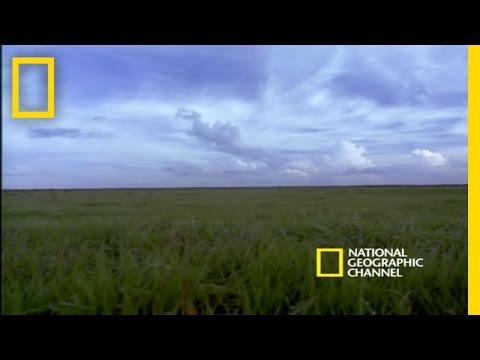
from its origins in the mountains of
Venezuela and Brazil to its delta on the
coast of the Atlantic Ocean the Orinoco
River flows for nearly 1300 miles along
the way it passes ancient rock
formations glorious waterfalls dense
tropical rainforests and vast grassy
plains the orinoco delta the area where
the river’s water empties into the ocean
is a swampy maze of canals and streams
many smaller rivers or tributaries
connect to the Orinoco one of these
tributaries of the corona features Angel
Falls the highest waterfall in the world
the Orinoco is home to several South
American Indian cultures who have lived
in harmony with the river for thousands
of years in fact the name Orinoco which
means place to paddle comes from the
language of the war our people one of
the Orinoco native cultures is the
Yanomami about 2,000 Yanomami live near
the river far removed from the modern
world for them and about 20 other local
cultures the Orinoco is a vital natural
resource the river offers not only a way
to travel but a supply of clean water
and fresh food
there are more than a thousand different
species of birds that roost here and a
huge variety of fish swim in these
waters including the dangerous piranha
then there’s the Orinoco crocodile which
at 20 feet in length is the longest of
its kind in the world and there are big
snakes too like this giant the Anaconda
one of the largest species of serpent
anywhere in the rainforest you may catch
a glimpse of a rare cat like this Jaguar
but out in the open plains or jános
you’re more likely to see the planets
biggest rodent the capybara scurrying
around in the last 50 years or so a few
cities and towns along the river such as
Ciudad Guayana have grown tremendously
and there are some signs that the modern
industrial world is creeping in parts of
the Orinoco now have dams to control
flooding and to harness the rivers
energy to produce electricity mining
companies are digging for rich mineral
deposits like gold and diamonds
international oil companies have started
to pump natural gas and oil out of the
ground and from the mouths of the
Orinoco huge commercial vessels now sail
along the river for 250 miles but
despite these changes the River in the
region have stayed relatively untouched
several national parks and forest
preserves have been set aside to keep
the area wild for future generations
these preservation efforts will help the
Orinoco River continue to be an
important resource for Venezuela a vital
waterway that supports the people and
living creatures that rely on it
Venezuela and Brazil to its delta on the
coast of the Atlantic Ocean the Orinoco
River flows for nearly 1300 miles along
the way it passes ancient rock
formations glorious waterfalls dense
tropical rainforests and vast grassy
plains the orinoco delta the area where
the river’s water empties into the ocean
is a swampy maze of canals and streams
many smaller rivers or tributaries
connect to the Orinoco one of these
tributaries of the corona features Angel
Falls the highest waterfall in the world
the Orinoco is home to several South
American Indian cultures who have lived
in harmony with the river for thousands
of years in fact the name Orinoco which
means place to paddle comes from the
language of the war our people one of
the Orinoco native cultures is the
Yanomami about 2,000 Yanomami live near
the river far removed from the modern
world for them and about 20 other local
cultures the Orinoco is a vital natural
resource the river offers not only a way
to travel but a supply of clean water
and fresh food
there are more than a thousand different
species of birds that roost here and a
huge variety of fish swim in these
waters including the dangerous piranha
then there’s the Orinoco crocodile which
at 20 feet in length is the longest of
its kind in the world and there are big
snakes too like this giant the Anaconda
one of the largest species of serpent
anywhere in the rainforest you may catch
a glimpse of a rare cat like this Jaguar
but out in the open plains or jános
you’re more likely to see the planets
biggest rodent the capybara scurrying
around in the last 50 years or so a few
cities and towns along the river such as
Ciudad Guayana have grown tremendously
and there are some signs that the modern
industrial world is creeping in parts of
the Orinoco now have dams to control
flooding and to harness the rivers
energy to produce electricity mining
companies are digging for rich mineral
deposits like gold and diamonds
international oil companies have started
to pump natural gas and oil out of the
ground and from the mouths of the
Orinoco huge commercial vessels now sail
along the river for 250 miles but
despite these changes the River in the
region have stayed relatively untouched
several national parks and forest
preserves have been set aside to keep
the area wild for future generations
these preservation efforts will help the
Orinoco River continue to be an
important resource for Venezuela a vital
waterway that supports the people and
living creatures that rely on it
Please follow and like us: