
the conventional transport system is in
deep trouble it’s fast and convenient
but it’s extremely costly and maybe we
can’t afford it maybe the planet can’t
afford it the Vermont sale Freight
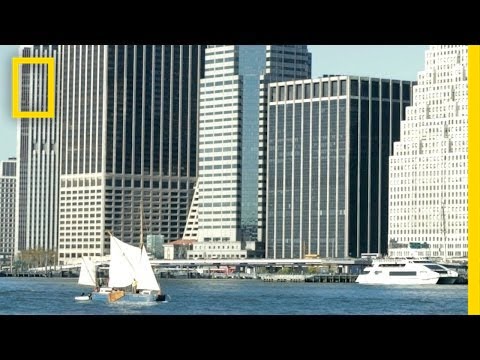
project it’s a sail cargo venture
connecting farmers in northern New York
and New England with lower Hudson Valley
originally I thought of the Vermont sale
for a project as kind of a publicity
stunt a way of sort of raising the flag
for real oak eliza’s and making a point
about energy issues but we believe that
there’s a value in transporting food on
a regional scale sort of rebuilding a
regional food system that’s not
petroleum dependent and if people who
are on the receiving end of the food
value that kind of resiliency then
that’s a reason for them to get their
maple syrup from us rather than from the
local corner store or from a grocery
store there’s no refrigeration
whatsoever on board our barge everything
that we have is selected because it can
maintain quality or a journey of up to
three weeks duration
water-based infrastructure offers us
much greater efficiency at the cost of
speed we’re hoping to provide part of
the solution this area was before the
brooklyn bridge was built it was where
food came into the city and it will
audit with seafood so yeah the Vermont
sail project does not bring seafood here
per se but it represents the fact that
this was a place where ships brought
food to the city the Vermont self great
project is a really beautiful extension
of the young farmer and
there’s something inherently attractive
about a sailing ship and that we’re
trying to take that and make it more
than just a tourist event to actually
make it an economic event and also i
think that people are really very eager
to reconnect with the water in a
meaningful way so many times water
features in our landscape are nuisances
that there’s something that has to be
bridged over or tunneled under or driven
around and to revisit the possibilities
of these waterways to support human
existence I think it’s part of who we
are in the Northeast nine out of ten
people in the Northeast live within a
very short distance of a navigable
waterway because water transport works
and it’s capable of supporting human
existence with a gentler footprint on
the place
you
you
Please follow and like us: