
creativity is considering the idea and
coming up with something original
innovation is figuring out how to put it
in practice I’m Sean Garrity and I get
to work on one of the most exciting
conservation projects going on anywhere
in the world the goal is to secure in
North America a reserve based on the
grasslands in Northeast Montana that
would operate at full scale that means
it is big enough to have all the
original species of modern times to be
able to have almost all of them back
with enough room to survive just about
any kind of thing characteristic of this
landscape we started with about 20,000
acres we have 300,000 now and growing at
about 25 to 35 thousand acres a year now
all the question is a scaling up we have
brought in some yearling calves and
we’ve done this before we’ll open these
gates you never know what’s gonna happen
they might stand there for hours just
like that because they’re afraid or they
might come barreling out of here both
all things
we have maybe a hundred friends from
Fort Belknap Indian Reservation both
Assiniboine and Rowe vaunt tribes it’s a
nice celebration of saying ok it’s
happened again
another batch is coming and once they’re
out the door that’s that’s it we don’t
touch you anymore
one thing that’s very interesting as
time gets away from him you think
something’s gonna take a certain amount
of time you plan it all out and I’ll go
here and go there and then 45 minutes
here and there just evaporates there’s a
couple of species but really make the
thing work you can hear this chirping
behind us those are prairie dogs and
needs to be out here in the tens of
millions we’re definitely working to to
bring them back to two more historic
populations there the soil engineers the
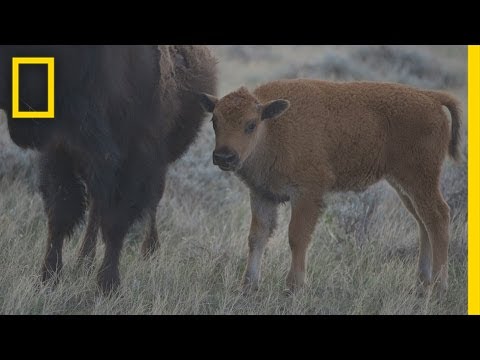
bison here are also a keystone species
they do a different kind of engineering
as they move across the landscape
obviously they they eat a lot of forage
but the way they move it’s a very secure
this route so what we want out here is
to have as much diversity in terms of
habitat and they helped mess it up
they’re critical but you need a lot of
them and they need a lot of space to
move
at the moment I think we’re sitting
probably roughly in the area of 350
animals we’re headed for 10,000 minimum
that’s the largest herd on the planet
we’ll keep going as long as we have room
the question comes up is what does it
take to make it sustainable and not
depending on particularly a Kris mattock
leader and we started thinking about
that from day one the scale of what
we’re doing here really requires a
continued expansion of collaboration
there’s no substitute for people walking
and seeing things with their own eyes
setting up camera traps and seeing the
sea and fueling landscape day after day
after day so we can click on that one
and we just captured a great bobcat in
an area that was quite unexpectedly yeah
there’s that with the two spots above it
on that leg and out in the flats walking
through the sagebrush at about five
o’clock morning so realizing you know
some of our assumptions about wildlife
are going to be changing because we have
so many highs out there basically the
key is how do you make it become
something that is treasured by everybody
so you have to build this starting now a
vast constituency of people who see it
who value it admire it and see it as a
treasure that deserves protection
you’re drawn into long-term thinking as
opposed to getting to the two o’clock
meeting you’re doing the thing but then
having a conversation with somebody to
say hey let’s hang on a second here 100
years from now how much does this matter
the opportunity to work on so many cool
things just keeps growing every year so
this is it there’s the time to be
involved
coming up with something original
innovation is figuring out how to put it
in practice I’m Sean Garrity and I get
to work on one of the most exciting
conservation projects going on anywhere
in the world the goal is to secure in
North America a reserve based on the
grasslands in Northeast Montana that
would operate at full scale that means
it is big enough to have all the
original species of modern times to be
able to have almost all of them back
with enough room to survive just about
any kind of thing characteristic of this
landscape we started with about 20,000
acres we have 300,000 now and growing at
about 25 to 35 thousand acres a year now
all the question is a scaling up we have
brought in some yearling calves and
we’ve done this before we’ll open these
gates you never know what’s gonna happen
they might stand there for hours just
like that because they’re afraid or they
might come barreling out of here both
all things
we have maybe a hundred friends from
Fort Belknap Indian Reservation both
Assiniboine and Rowe vaunt tribes it’s a
nice celebration of saying ok it’s
happened again
another batch is coming and once they’re
out the door that’s that’s it we don’t
touch you anymore
one thing that’s very interesting as
time gets away from him you think
something’s gonna take a certain amount
of time you plan it all out and I’ll go
here and go there and then 45 minutes
here and there just evaporates there’s a
couple of species but really make the
thing work you can hear this chirping
behind us those are prairie dogs and
needs to be out here in the tens of
millions we’re definitely working to to
bring them back to two more historic
populations there the soil engineers the
bison here are also a keystone species
they do a different kind of engineering
as they move across the landscape
obviously they they eat a lot of forage
but the way they move it’s a very secure
this route so what we want out here is
to have as much diversity in terms of
habitat and they helped mess it up
they’re critical but you need a lot of
them and they need a lot of space to
move
at the moment I think we’re sitting
probably roughly in the area of 350
animals we’re headed for 10,000 minimum
that’s the largest herd on the planet
we’ll keep going as long as we have room
the question comes up is what does it
take to make it sustainable and not
depending on particularly a Kris mattock
leader and we started thinking about
that from day one the scale of what
we’re doing here really requires a
continued expansion of collaboration
there’s no substitute for people walking
and seeing things with their own eyes
setting up camera traps and seeing the
sea and fueling landscape day after day
after day so we can click on that one
and we just captured a great bobcat in
an area that was quite unexpectedly yeah
there’s that with the two spots above it
on that leg and out in the flats walking
through the sagebrush at about five
o’clock morning so realizing you know
some of our assumptions about wildlife
are going to be changing because we have
so many highs out there basically the
key is how do you make it become
something that is treasured by everybody
so you have to build this starting now a
vast constituency of people who see it
who value it admire it and see it as a
treasure that deserves protection
you’re drawn into long-term thinking as
opposed to getting to the two o’clock
meeting you’re doing the thing but then
having a conversation with somebody to
say hey let’s hang on a second here 100
years from now how much does this matter
the opportunity to work on so many cool
things just keeps growing every year so
this is it there’s the time to be
involved
Please follow and like us: