
one of the crown jewels of that treasure
is the Gibbon
at least seven different species of
Gibbons now live in Indonesia half of
them on Sumatra one unique type found
here is the sea among the largest of its
kind in the world reaching weights of up
to 30 pounds this primates most
distinguishing characteristic is an
enlarged throat set which when inflated
can be as big as a human head the sac is
belief help amplify its calls see among
spend most of their time in the lush
treetop canopy and get around in a way
entirely befitting the environment they
propel themselves to the trees in an
acrobatic hand-over-hand swinging
process called brachiating when moving
quickly they can actually seem like
they’re flying from branch to branch not
a small feat for the world’s largest
given despite the sea among size it is
not the largest animal in the trees of
Sumatra that title belongs to the only
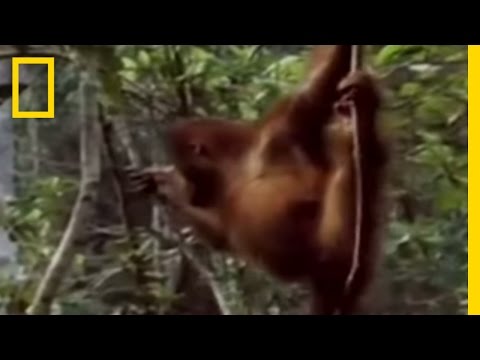
great ape living in Asia the orangutan
this charismatic reday was once
widespread throughout mainland Asia but
it is now found in the wild on only two
islands Sumatra and Borneo
scarce but strong an orangutan has an
upper body strength four times that of
its human relatives
even so life in the trees is far from
carefree an Asian pit vipers venom can
kill a young orangutan such dangerous
neighbors must be put into place
as the largest tree climbing mammal a
fully grown male orangutan may weigh as
much as 200 pounds and dines on fruit
bark buds flowers and the occasional
insect so how does a primarily
vegetarian creature pack on the pounds
simple the Arang has a mind for its menu
or put another way it’s got a good
memory they develop mental maps of their
personal space in the forest and note
just where to find ripe food at every
turn orangutans particularly males which
are distinguished by their cheek pads
tend to be more solitary than their
chanted gorilla counterparts however the
bonds of an orangutans mother and baby
are one of the strongest among primates
it takes a mother about seven years to
teach her youngster what it needs to
know to survive on its own in the wild
that survival is becoming increasingly
more difficult for the highly
intelligent Arang and other primates of
the indonesian landscaper hunting and
habitat loss due to deforestation have
these creatures teetering on the brink
however the future for one of the
orangutans smaller primate cousins isn’t
quite as bleak meet the macaque
these long-tailed monkeys hold special
meaning for many people of Indonesia
some believe they are part of the Hindu
monkey gods army of workers and that
they protect the islands in temples
the macaque is an ecologically diverse
animal able to live in a number of
differing habitats from forests and
swamps to coastal areas
whether swimming drinking or hunting for
crabs these petite primates seem to
enjoy the water
long-tailed macaques live in large
troupes with well-defined hierarchies
covered by a strong set of social rules
which are never far from the surface
this troops intricate social structure
is reinforced with each intimate act of
grooming
and with primping comes power not to
mention that it probably feels pretty
good to light for the macaque however
isn’t all swimming and grooming although
it’s a protected species in Indonesia
these monkeys still face serious
challenges from habitat loss hunters and
farmers but among the biggest threats of
them all is the fact that they are one
of the top five primate species
collected and used in medical research
an estimated 9,500 to 12 thousand
monkeys enter the United States each
year for research purposes conservation
and education may be the most useful
tools in turning the time these
beautiful primates
of every shape and size populate the
vast and exotic islands of Indonesia
they’re charming intelligent and social
creatures which may be wide many of us
find them so breathtaking to behold and
impossible to forget
is the Gibbon
at least seven different species of
Gibbons now live in Indonesia half of
them on Sumatra one unique type found
here is the sea among the largest of its
kind in the world reaching weights of up
to 30 pounds this primates most
distinguishing characteristic is an
enlarged throat set which when inflated
can be as big as a human head the sac is
belief help amplify its calls see among
spend most of their time in the lush
treetop canopy and get around in a way
entirely befitting the environment they
propel themselves to the trees in an
acrobatic hand-over-hand swinging
process called brachiating when moving
quickly they can actually seem like
they’re flying from branch to branch not
a small feat for the world’s largest
given despite the sea among size it is
not the largest animal in the trees of
Sumatra that title belongs to the only
great ape living in Asia the orangutan
this charismatic reday was once
widespread throughout mainland Asia but
it is now found in the wild on only two
islands Sumatra and Borneo
scarce but strong an orangutan has an
upper body strength four times that of
its human relatives
even so life in the trees is far from
carefree an Asian pit vipers venom can
kill a young orangutan such dangerous
neighbors must be put into place
as the largest tree climbing mammal a
fully grown male orangutan may weigh as
much as 200 pounds and dines on fruit
bark buds flowers and the occasional
insect so how does a primarily
vegetarian creature pack on the pounds
simple the Arang has a mind for its menu
or put another way it’s got a good
memory they develop mental maps of their
personal space in the forest and note
just where to find ripe food at every
turn orangutans particularly males which
are distinguished by their cheek pads
tend to be more solitary than their
chanted gorilla counterparts however the
bonds of an orangutans mother and baby
are one of the strongest among primates
it takes a mother about seven years to
teach her youngster what it needs to
know to survive on its own in the wild
that survival is becoming increasingly
more difficult for the highly
intelligent Arang and other primates of
the indonesian landscaper hunting and
habitat loss due to deforestation have
these creatures teetering on the brink
however the future for one of the
orangutans smaller primate cousins isn’t
quite as bleak meet the macaque
these long-tailed monkeys hold special
meaning for many people of Indonesia
some believe they are part of the Hindu
monkey gods army of workers and that
they protect the islands in temples
the macaque is an ecologically diverse
animal able to live in a number of
differing habitats from forests and
swamps to coastal areas
whether swimming drinking or hunting for
crabs these petite primates seem to
enjoy the water
long-tailed macaques live in large
troupes with well-defined hierarchies
covered by a strong set of social rules
which are never far from the surface
this troops intricate social structure
is reinforced with each intimate act of
grooming
and with primping comes power not to
mention that it probably feels pretty
good to light for the macaque however
isn’t all swimming and grooming although
it’s a protected species in Indonesia
these monkeys still face serious
challenges from habitat loss hunters and
farmers but among the biggest threats of
them all is the fact that they are one
of the top five primate species
collected and used in medical research
an estimated 9,500 to 12 thousand
monkeys enter the United States each
year for research purposes conservation
and education may be the most useful
tools in turning the time these
beautiful primates
of every shape and size populate the
vast and exotic islands of Indonesia
they’re charming intelligent and social
creatures which may be wide many of us
find them so breathtaking to behold and
impossible to forget
Please follow and like us:
Be First to Comment