
when I wrote this book faces of Hope
which is a photo book but I you know I
did the text with it looking at these
children throughout the world in
developing countries Africa Asia Latin
America and the Middle East marian
wright edelman this incredible woman
head of the Children’s Defense Fund hope
you’re out there wrote the foreword for
this book and she called me and said you
know I looked through your whole book I
love it but you need to really
photograph children in poverty in
America and I said let’s do it so we
collaborated and for a year I went
around the United States and I
photographed poverty in America which
blew my mind it you know when you see it
in other countries there’s you know it’s
you do get it you can’t help but be
emotionally involved but there’s
something about singing our own country
that you’re like how can this happen you
know but this was at a powwow on a
Navajo Reservation and the children were
so you know the ingrained they’re really
trying to green the culture in them and
you know that very celebratory and in
their traditional clothing and trying to
keep them you know abreast of their
their culture in their ways and then
going home with them seeing how they
actually lived and this is on an old
school bus in the dead of winter with no
electricity no water no heat and and
then in the hogans the same thing these
sort of you know traditional homes and
there’s kind of this I think false idea
that you know a lot of Indians are
making this money from gaming or
whatever but they’re you know so many of
them they don’t even have the ability to
work it’s no Matt it’s no longer a
pastoral culture so they have to go into
cities to find work so many of them are
living in these sort of old hotels or
you know they can’t they don’t have a
way that they can get back and forth
from the reservation one of the Hogan’s
here now this is a food bank this also
was very enlightening to me because this
was in a part of ohio on the appalachian
area that 700 to 800 cars a day go
through this one particular food bank
and there’s a number of them and I had
no idea that food banks worked on that
level that this was the only way that
people in this country were going to eat
and this is a you know they’re getting
baby food but unfortunately a lot of the
food is processed and not good food and
it’s causing you know the people can’t
get good foods so even the social
workers are bringing mcdonalds coupons
so they’re getting not not good
nutrition and I just can’t believe that
it’s on this level so the food banks
need to be really really supported or
they even are the kids I couldn’t
believe how many kids just were not
getting food this was the migrant
workers in Texas also very interesting
to see you know they’re a great source
of our economy and there’s actually a
whole band in the Rio Grande Valley of
where the many mexicans are living that
are giving legal status to live on
American soil then they have children
that are born as American that then give
their parents American citizenship
rather than them the parents giving
their kids citizenship the kids are
given the parents citizenship again they
have no water they go to a well like a
well where they have to fill jugs to get
water on these colonias these girls this
girl on the right suffering from
clinical depression and I just couldn’t
believe what these kids had like all
these acronyms I didn’t even had never
heard of you know but you know a TD HDD
depression I photographed a little
eight-year-old boy that had tried
committing suicide I photographed a
mother that had she had just tried
committing suicide because she can’t buy
food and shoes for her kids and I
thought this is appalling in our own
country a mother you know raising her
kids in Appalachia it’s no longer you
know these Dorothea Lange days where you
know they’re living in the shotgun
shacks you know poverty in America is
like a single mother trying to raise
three kids on 425 an hour while
working in a strip mall and wendys and
that’s kind of what it’s like just
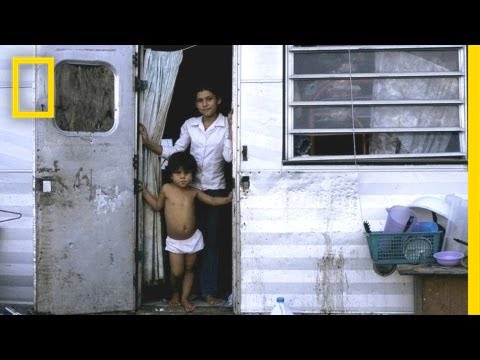
trying to keep it together Mississippi
went two thousand miles around the
Mississippi Delta and this was a woman
living with 16 people and a trailer and
this was also you know something that
was discussed when I come back with
these photos because it was like well
these people don’t look hungry and I’m
like this is what poverty looks like in
America you know it’s not real thin
people like Africa and India you know
it’s it’s diabetes and it’s heavy and so
it’s getting them proper food
you
which is a photo book but I you know I
did the text with it looking at these
children throughout the world in
developing countries Africa Asia Latin
America and the Middle East marian
wright edelman this incredible woman
head of the Children’s Defense Fund hope
you’re out there wrote the foreword for
this book and she called me and said you
know I looked through your whole book I
love it but you need to really
photograph children in poverty in
America and I said let’s do it so we
collaborated and for a year I went
around the United States and I
photographed poverty in America which
blew my mind it you know when you see it
in other countries there’s you know it’s
you do get it you can’t help but be
emotionally involved but there’s
something about singing our own country
that you’re like how can this happen you
know but this was at a powwow on a
Navajo Reservation and the children were
so you know the ingrained they’re really
trying to green the culture in them and
you know that very celebratory and in
their traditional clothing and trying to
keep them you know abreast of their
their culture in their ways and then
going home with them seeing how they
actually lived and this is on an old
school bus in the dead of winter with no
electricity no water no heat and and
then in the hogans the same thing these
sort of you know traditional homes and
there’s kind of this I think false idea
that you know a lot of Indians are
making this money from gaming or
whatever but they’re you know so many of
them they don’t even have the ability to
work it’s no Matt it’s no longer a
pastoral culture so they have to go into
cities to find work so many of them are
living in these sort of old hotels or
you know they can’t they don’t have a
way that they can get back and forth
from the reservation one of the Hogan’s
here now this is a food bank this also
was very enlightening to me because this
was in a part of ohio on the appalachian
area that 700 to 800 cars a day go
through this one particular food bank
and there’s a number of them and I had
no idea that food banks worked on that
level that this was the only way that
people in this country were going to eat
and this is a you know they’re getting
baby food but unfortunately a lot of the
food is processed and not good food and
it’s causing you know the people can’t
get good foods so even the social
workers are bringing mcdonalds coupons
so they’re getting not not good
nutrition and I just can’t believe that
it’s on this level so the food banks
need to be really really supported or
they even are the kids I couldn’t
believe how many kids just were not
getting food this was the migrant
workers in Texas also very interesting
to see you know they’re a great source
of our economy and there’s actually a
whole band in the Rio Grande Valley of
where the many mexicans are living that
are giving legal status to live on
American soil then they have children
that are born as American that then give
their parents American citizenship
rather than them the parents giving
their kids citizenship the kids are
given the parents citizenship again they
have no water they go to a well like a
well where they have to fill jugs to get
water on these colonias these girls this
girl on the right suffering from
clinical depression and I just couldn’t
believe what these kids had like all
these acronyms I didn’t even had never
heard of you know but you know a TD HDD
depression I photographed a little
eight-year-old boy that had tried
committing suicide I photographed a
mother that had she had just tried
committing suicide because she can’t buy
food and shoes for her kids and I
thought this is appalling in our own
country a mother you know raising her
kids in Appalachia it’s no longer you
know these Dorothea Lange days where you
know they’re living in the shotgun
shacks you know poverty in America is
like a single mother trying to raise
three kids on 425 an hour while
working in a strip mall and wendys and
that’s kind of what it’s like just
trying to keep it together Mississippi
went two thousand miles around the
Mississippi Delta and this was a woman
living with 16 people and a trailer and
this was also you know something that
was discussed when I come back with
these photos because it was like well
these people don’t look hungry and I’m
like this is what poverty looks like in
America you know it’s not real thin
people like Africa and India you know
it’s it’s diabetes and it’s heavy and so
it’s getting them proper food
you
Please follow and like us: