
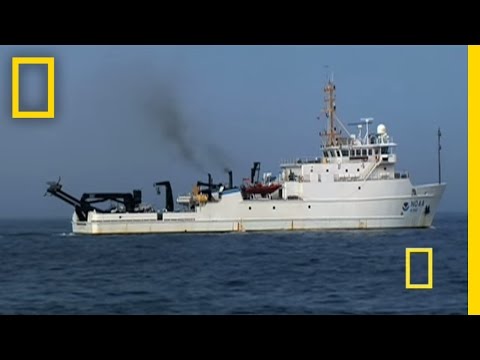
off the coast of Boston scientists scan
the horizon for something large humpback
whales
in the busy waters of the Stellwagen
bank National Marine Sanctuary whales
must navigate around submerged fishing
gear
and on the surface collisions with ships
result in injury and death researchers
with the National Oceanic and
Atmospheric Administration or NOAA and
the census of marine life need to know
more about whale behavior so they can
better protect the animals some of the
management issues that are really
important is to be able to know how
they’re behaving in areas of high
traffic where we end up with lots of
ship strikes and you know how are the
wheels moving from one patch to another
what are the things that cue them to go
into or out of shipping channels and
things like that scientists want to know
where humpbacks go underwater and how
they forage for food leading this study
is dr. David Wiley we’ve got two tags
both short-term five six hour tags the
idea is to try to put the mind animals
that are feeding in the same group
and get the multiple foraging strategy
here on the open water
the researchers boat seems like a toy
compared to the massive humpbacks which
can grow to 50 feet and Link the whales
must be tagged by hand a procedure that
takes patience precision and oh yes
courage dr. Ari Friedlander an expert
tagger carefully coordinates his moves
with Wiley the driver Friedlander
reaches out with the pole and
successfully slaps a tag on the flank of
a moving target
equipped with suction cups the tag will
stay on the whale for up to 24 hours
these tags will act as the researchers
eyes and ears recording audio and
tracking the whales movements under the
vast dark waters of the Atlantic
designed by Mark Johnson of the Woods
Hole Oceanographic Institution the tag
also emits radio signals allowing the
team to follow the whales course when
the temporary tag releases at a
prescribed time the researchers quickly
retrieve the device back at command
central the team prepares for the next
step
visualizing the tag data so this is
on-track plot which is some software
we’ve developed which you can see this
ribbon here represents the whales track
over several hours and it helps you see
various kinds of events what you’re
seeing here is the animal presumably
bottom feeding so this is data that came
from just yesterday another
visualization program developed by the
Center for coastal and ocean mapping
replays the Hoyle behavior retrieved
from the tags the innovative tags and
visualizations solve many mysteries of
whale behavior
the data will become part of the census
of marine life the project to assess
marine biodiversity past present and
future these scientific discoveries also
aid researchers planning safer fishing
methods and have led to a shift in
shipping lanes within the Stellwagen
bank National Marine Sanctuary ships now
avoid areas where large numbers of
whales congregate by revealing the
oceans secret world researchers help
keep traffic in this congested waterway
safer for all
sponsored by National Geographic mission
programs taking science and exploration
into the new millennium
the horizon for something large humpback
whales
in the busy waters of the Stellwagen
bank National Marine Sanctuary whales
must navigate around submerged fishing
gear
and on the surface collisions with ships
result in injury and death researchers
with the National Oceanic and
Atmospheric Administration or NOAA and
the census of marine life need to know
more about whale behavior so they can
better protect the animals some of the
management issues that are really
important is to be able to know how
they’re behaving in areas of high
traffic where we end up with lots of
ship strikes and you know how are the
wheels moving from one patch to another
what are the things that cue them to go
into or out of shipping channels and
things like that scientists want to know
where humpbacks go underwater and how
they forage for food leading this study
is dr. David Wiley we’ve got two tags
both short-term five six hour tags the
idea is to try to put the mind animals
that are feeding in the same group
and get the multiple foraging strategy
here on the open water
the researchers boat seems like a toy
compared to the massive humpbacks which
can grow to 50 feet and Link the whales
must be tagged by hand a procedure that
takes patience precision and oh yes
courage dr. Ari Friedlander an expert
tagger carefully coordinates his moves
with Wiley the driver Friedlander
reaches out with the pole and
successfully slaps a tag on the flank of
a moving target
equipped with suction cups the tag will
stay on the whale for up to 24 hours
these tags will act as the researchers
eyes and ears recording audio and
tracking the whales movements under the
vast dark waters of the Atlantic
designed by Mark Johnson of the Woods
Hole Oceanographic Institution the tag
also emits radio signals allowing the
team to follow the whales course when
the temporary tag releases at a
prescribed time the researchers quickly
retrieve the device back at command
central the team prepares for the next
step
visualizing the tag data so this is
on-track plot which is some software
we’ve developed which you can see this
ribbon here represents the whales track
over several hours and it helps you see
various kinds of events what you’re
seeing here is the animal presumably
bottom feeding so this is data that came
from just yesterday another
visualization program developed by the
Center for coastal and ocean mapping
replays the Hoyle behavior retrieved
from the tags the innovative tags and
visualizations solve many mysteries of
whale behavior
the data will become part of the census
of marine life the project to assess
marine biodiversity past present and
future these scientific discoveries also
aid researchers planning safer fishing
methods and have led to a shift in
shipping lanes within the Stellwagen
bank National Marine Sanctuary ships now
avoid areas where large numbers of
whales congregate by revealing the
oceans secret world researchers help
keep traffic in this congested waterway
safer for all
sponsored by National Geographic mission
programs taking science and exploration
into the new millennium
Please follow and like us: