
on a sunny summer day Iceland’s Westman
Islands seemed a vision of serenity
but despite the Placid appearance this
is in fact one of the most volatile
places on earth
volcanic activity runs rampant in
Iceland earthquakes and eruptions occur
frequently and the land above and below
the sea is in a constant state of flux
the landscape is not the only thing
changing in the Westman Islands
something mysterious is happening to one
of the islands best-loved inhabitants
the Atlantic puffin and the puffins have
actually been dying they’ve found them
next to the holes and they feel that
they’ve been starving but their loss
will be a blow for their neighbors the
people of Jemez puffins plays a huge
role in the culture of this society it
has a place in the heart of everybody so
it is sort of important that hopefully
things improve throughout history birds
have been abundant here the high grassy
peaks provide ideal nesting grounds and
the Seas have offered up a steady supply
of fish from year to year it’s been the
almost ideal spot for Atlantic puffins
and over time they’ve become tied to
this place
this is one of the world’s largest
colonies with an estimated 1.3 million
nesting pairs they spend most of the
year at sea returning to land in the
spring to rear a single chick but for
the past three years something has gone
wrong almost none of the puffins are
breeding researchers say they think they
know the root of the problem historical
catch records indicate a severe decline
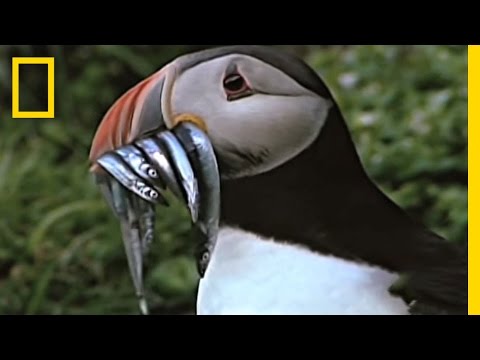
in the puffins favorite food
a small nutritious fish known as the
sand Lance but for the last three years
it’s been scarce in areas where it used
to be abundant the fish is also shown up
late in the puffins breeding season
puffins are not the only birds that may
be affected by the loss of the sand
plants other Icelandic seabirds have
also had breeding problems for the same
three-year period it was kind of sad to
experience a third year in a row of of
total breeding failure or close to that
one wonders if that’s going to continue
ecologist air / handsome has observed
that some birds travel great distances
to find food
many have opted not to reproduce and
those that did reproduce held off until
very late in the season perhaps waiting
for feeding conditions to improve in
desperation some breeding birds have
attempted to feed their offspring other
types of fish that the youngsters can’t
manage the sand
Celie the tiny little fish that the
puffins are used to eating hasn’t been
available they’ve seen puffins parents
come in with large herring but the
little babies can’t swallow that so they
can’t eat that the researchers believe
the loss of the sand lance may be linked
with climate change in Iceland ocean
temperatures have increased by three
point six degrees Fahrenheit in the past
two decades these puffins are not the
only ones to be affected by global
warming the researchers say this colony
is critical since it’s one of the
largest in the world it’s true birds
have one unique advantage over other
species faced with changing surroundings
they can fly away
these puffins may do so seeking out new
nesting grounds if the food supply and
Iceland continues to decline
changing temperatures are creating
turmoil and nature across the globe but
for the Westman Islands where puffins
have reigned supreme the changes are
hitting close to home
sponsored by National Geographic mission
programs taking science and exploration
into the new millennium
Please follow and like us: