
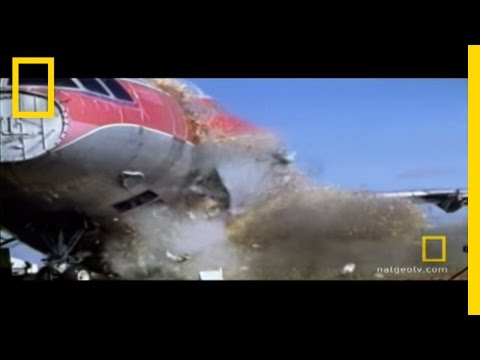
high-speed cameras from multiple angles
and pressure gauges that measure the
force of the blast record explosions on
actual aircraft studying how the
aircraft materials respond to a blast
how and where it fails assists and new
aircraft designs could materials be
developed to harden baggage containers
to make them bomb-proof this is actually
an example of a blast mitigation system
that’s been developed for commercial
aircraft specifically wide-body
commercial aircraft it’s called the H
uld or harden unit load device
effective blast resistant materials have
been developed
this is actually a hardened container
that’s been tested and you can see
there’s slight deformation to the
container panel materials but that’s not
going to affect the aircraft structure
materials for this specific container
it’s basically Kevlar construction but
depending on the type of design you
could use a wide variety of materials a
greater challenge is to find materials
that can withstand a bomb blast from a
carry-on panels for a plane’s fuselage
made of different aluminum alloys are
being tested this test fixture is called
the explosive shock hole test fixture
the type of explosive the size of the
threat and the conditions under which we
test it or classify so I can’t go into
any any great detail on that basically
we’re going to actually place an
explosive charge on the other side of
this panel detonate that explosive
charge and then look at the structural
response of this material from that the
blast effect
yeah like it started at every three
safety briefs been given Rose blocked
all personnel are accounted for
three two
why
multiple high-speed cameras record the
blast so what you see here is a failure
of the material due to shock hole
failure but you can see where the
materials kind of bent out and peddled
back the make up of the alloys is
classified but it’s obvious you wouldn’t
want to fly with this one our second
panel of a different composition is
prepared
now you can see this material was
successful in mitigating that specific
explosive threat that we just tested we
can get a look at the other side of the
panel you can see some imprinting from
the blasts of scorching but material was
successful this is now the computer
rendition of the surface full of the
damage to the panel and all of the
deflection happens in the first two
point four milliseconds
and pressure gauges that measure the
force of the blast record explosions on
actual aircraft studying how the
aircraft materials respond to a blast
how and where it fails assists and new
aircraft designs could materials be
developed to harden baggage containers
to make them bomb-proof this is actually
an example of a blast mitigation system
that’s been developed for commercial
aircraft specifically wide-body
commercial aircraft it’s called the H
uld or harden unit load device
effective blast resistant materials have
been developed
this is actually a hardened container
that’s been tested and you can see
there’s slight deformation to the
container panel materials but that’s not
going to affect the aircraft structure
materials for this specific container
it’s basically Kevlar construction but
depending on the type of design you
could use a wide variety of materials a
greater challenge is to find materials
that can withstand a bomb blast from a
carry-on panels for a plane’s fuselage
made of different aluminum alloys are
being tested this test fixture is called
the explosive shock hole test fixture
the type of explosive the size of the
threat and the conditions under which we
test it or classify so I can’t go into
any any great detail on that basically
we’re going to actually place an
explosive charge on the other side of
this panel detonate that explosive
charge and then look at the structural
response of this material from that the
blast effect
yeah like it started at every three
safety briefs been given Rose blocked
all personnel are accounted for
three two
why
multiple high-speed cameras record the
blast so what you see here is a failure
of the material due to shock hole
failure but you can see where the
materials kind of bent out and peddled
back the make up of the alloys is
classified but it’s obvious you wouldn’t
want to fly with this one our second
panel of a different composition is
prepared
now you can see this material was
successful in mitigating that specific
explosive threat that we just tested we
can get a look at the other side of the
panel you can see some imprinting from
the blasts of scorching but material was
successful this is now the computer
rendition of the surface full of the
damage to the panel and all of the
deflection happens in the first two
point four milliseconds
Please follow and like us: