
one of the gas is used extensively for
early balloon flights was hydrogen and
this is because it’s so easy to make and
we’re gonna show you how we’re passing
an electrical current from the six volt
battery through a column of water and
we’re splitting the water into its
component parts hydrogen and oxygen from
the positive end of the battery we
create oxygen from the negative end of
the battery we create hydrogen is a
process called electrolysis and in fact
the father of electricity himself the
Victorian scientist Michael Faraday
invented rubberized balloons to store
the hydrogen produced during his
experiments I bet you didn’t know that
the big advantage of a lighter-than-air
gas like hydrogen is that once you’ve
filled your balloon it floats it’s as
simple as that no heat is required and
because hydrogen in large quantities
produces a lot of lift it wasn’t long
before people were attaching machinery
to balloons to achieve a powered flight
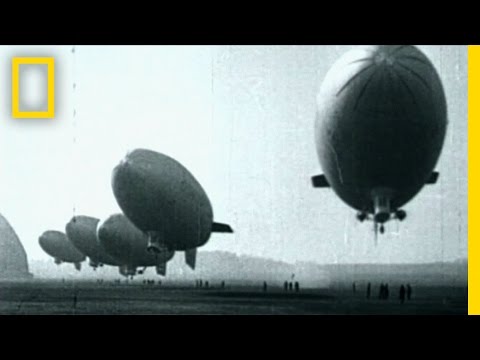
these powered balloons became known as
airships originally they were hand or
even steam-powered but the real
breakthrough came with the development
of the internal combustion engine at the
beginning of the 20th century the German
count of von Zeppelin showed what was
possible with this new form of transport
it wasn’t long before the British and
Americans were following his lead 30
years before the arrival of
transatlantic civilian passenger planes
airships dominated long distance travel
for most of that time they had a
surprisingly good safety record but all
that changed with a series of
high-profile disasters their most famous
being the Hindenburg but despite its
notoriety an amazing two thirds of the
passengers and crew survived it was
however the final nail in the coffin
that ended the use of hydrogen in
airships for good they’re small
descendants are still around today but
they’re now filled with a much safer gas
helium
you
early balloon flights was hydrogen and
this is because it’s so easy to make and
we’re gonna show you how we’re passing
an electrical current from the six volt
battery through a column of water and
we’re splitting the water into its
component parts hydrogen and oxygen from
the positive end of the battery we
create oxygen from the negative end of
the battery we create hydrogen is a
process called electrolysis and in fact
the father of electricity himself the
Victorian scientist Michael Faraday
invented rubberized balloons to store
the hydrogen produced during his
experiments I bet you didn’t know that
the big advantage of a lighter-than-air
gas like hydrogen is that once you’ve
filled your balloon it floats it’s as
simple as that no heat is required and
because hydrogen in large quantities
produces a lot of lift it wasn’t long
before people were attaching machinery
to balloons to achieve a powered flight
these powered balloons became known as
airships originally they were hand or
even steam-powered but the real
breakthrough came with the development
of the internal combustion engine at the
beginning of the 20th century the German
count of von Zeppelin showed what was
possible with this new form of transport
it wasn’t long before the British and
Americans were following his lead 30
years before the arrival of
transatlantic civilian passenger planes
airships dominated long distance travel
for most of that time they had a
surprisingly good safety record but all
that changed with a series of
high-profile disasters their most famous
being the Hindenburg but despite its
notoriety an amazing two thirds of the
passengers and crew survived it was
however the final nail in the coffin
that ended the use of hydrogen in
airships for good they’re small
descendants are still around today but
they’re now filled with a much safer gas
helium
you
Please follow and like us: