
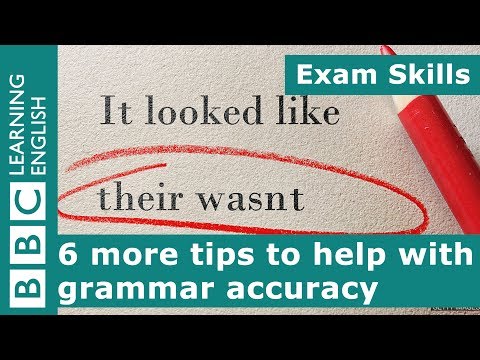
Using grammar with accuracy means not making many mistakes – but how can you improve
your grammar and how accurate do you really need to be? Our top tips will hopefully help
you out.
The first thing to remember is that mistakes are ok – but think about why you made them
and then try to improve on them. You could research the areas that you make mistakes
in or you could ask for help from a teacher or a more fluent-speaking friend.
Accuracy is not always important – in some situations you may want to focus on what you
want to communicate rather than how accurately you do so. It’s better to say something rather
than not because you’re worried about making mistakes.
But accurate grammar is important in certain situations – like in exams, where accurate
grammar will get you higher marks. To prepare you for exams, concentrate on aspects of grammar
you personally find more difficult. Also, you’re likely to be more accurate if you don’t
rush your English – take your time and think about what you say or write.
Serious grammar mistakes can sometimes prevent you from communicating your ideas to other
people – or it can make your writing very difficult to understand.
So always check your writing and think about what you’re going to say before you speak.
Grammar mistakes can also give a bad impression if, for example, you make errors in your CV
or professional emails or letters.
Finally, as we’ve said before, listen to English being spoken and read English material regularly.
This will help you hear and see the correct use of the language.
Good luck!
Please follow and like us: