
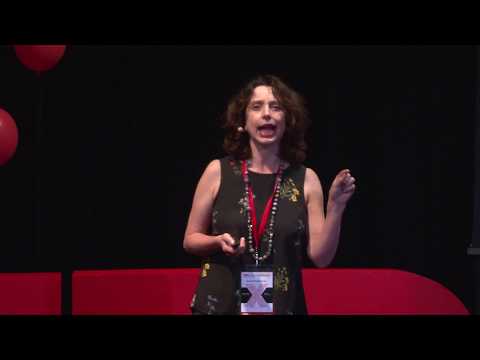
hello everybody what’s your story I’ve
come here today to talk to you about the
power of storytelling and the use of
anecdotal stories in the classroom as a
tool for learning it is my belief that
storytelling can be used in the
classroom to promote innovation
integration and education in every
classroom no matter what subject it is
that you’re teaching all of you out
there have been learners at some point
and I believe that you all have
interesting stories to tell me so to
start it up start us off what I’d like
you to do is I’d like you to turn to the
person next to you and have a good look
at them have a good look at that person
next to you and think about what stories
might they have to tell you if you’re at
home what you knew so you’re watching it
around the globe I’d like you to look at
me and think what stories might Sarah
tell for have to tell you okay so why
pedagogy and teaching well
storytelling is one of our oldest forms
of teaching and what is pedagogy well
pedagogy is just another word for
teaching and teaching comes in many
forms storytelling being one of them and
stories come in many forms two stories
can come in the form of narratives they
can come in the form of anecdotal
stories they can come in the form of
conversations or reflections as teachers
when we’re exchanging ideas about what
works well or doesn’t work well in our
classroom one of the most important
skills that the teacher needs is
communication and I believe that
teaching is all about being able to
communicate with another person and
interaction within that classroom it is
my belief that we all follow stories on
a daily basis so to illustrate this
point I’m gonna bring up a logo and I’d
like you in the audience to tell me what
you think this logo is are you ready
okay here it comes what is it
Instagram yes Instagram is a form of
social media where people put up a
photograph and they follow each other’s
stories by photographs that photograph
tanyka story okay let’s do another one
what’s that yes snapchat snapchat is
another form of social media where
people upload their story they upload
their picture and it stays up there for
24 hours and then it disappears so I
quite like that story that being up
there and social media and being with
you a snapshot in time if you like so if
we go on with this idea that every
picture tells a story I’m going to share
an activity that I do with my learner’s
my teacher trainers in the classroom
what I’d like you to do is I’d like you
to raise your hand if you have a mobile
phone okay so that’s the only everyone
in here now I’d like you to raise your
hand again if that mobile phone has a
picture on it again nearly everybody in
here
so this is an activity that I do with my
trainee teachers as a Worman and
icebreaker activity I get them to get
their phones out find a picture and I
get them to show each other the picture
on their phone and tell the story of
that picture so I’ve got one from my
phone and this is a picture of me who do
you think the other people in the
picture are with me they are they’re my
family they’re actually my sisters I’ve
got three very bossy older sisters so
there’s three of us where do you think
the fourth one is she is the oldest one
is taking the picture she always likes
to be in charge so I believe that every
picture tells a story ok the
conversation theory and this was a
theory that was brought about by a
practitioner called procced
and the basic premise of this is that
conversation is the conversational
pedagogical tool that you can use in
your classroom where learners exchange
stories with each other and learn things
from each other I’m going to share
another activity now that I do with you
in my classroom with training teachers
and this is what I often do as a Worman
an icebreaker
and what I do is I bring in a blank tea
and I get the students to write some
pictures symbols numbers anything
keywords anything but tell us a story
about them so I’m going to do my t-shirt
with you so here’s a picture of me this
is Sarah Telfer and I want you to guess
things about me are you ready okay what
do you think the first thing is yeah my
first degree was in drama that’s where I
like to get my communication skills from
who do you think Mesa yeah I’ve got two
children their names their Amy and
Laurie next one yep so I’ve been a
teacher for over 15 years and a teacher
educator as well and last one who do you
think this is husband no I’d like it to
be but sadly it’s not I’ve just put him
in jester just to raise your interest
today okay so one of the people that I
looked at in my doctoral research was a
chat could either Goodson he works at
Brighton University and he’s done a lot
of work on narrative teaching and
learning and I just like to read a quote
from him that I really like to you and
he says man lives in a world where each
occurrence is charged with echoes and
reminiscences of what had gone before
what each event is a reminder of other
things man remembers preserving and
recording his experiences in this way a
person’s self of sense is embedded in
narrative construction life narratives
can facilitate learning that is
transformational okay so how do we use
narrative pedagogy in education
well narrative pedagogy is just the use
of stories in teaching and Goodson talks
a lot about what he calls pedagogical
counters and I quite like that so in
pedagogical counters it sounds quite
exciting but what it is is the swapping
and sharing of stories he also talks
about narrative teaching narrative
teaching could be simply a teacher
sharing an anecdote with their class
at narrative learning is the sharing of
learning or stories between students and
I believe that all of you can be
collaborative storytellers and that you
have fabulous interesting stories to
share
teacher as human I believe that when a
teacher shares an anecdotal story it
makes them become more human to their
class and it actually elicits a story in
response just go back on that one um
just to say that teacher is human very
often as teachers what we’re told not to
share stories with learners are putting
personal boundaries I actually disagree
with that i think if you share a
personal anecdote with your class it
makes you seem more human as a teacher
learner is storyteller this is actually
one of my training teachers this is ish
Teac he used to come and tell his
fabulous new interesting stories about
his teaching practice Monnett i’ll say
that adult learners are funds of
knowledge and what that means is that
all of you have interesting stories and
experiences life experiences work
experiences to bring to the classroom to
teach each other I’m just gonna very
often as a teacher trained that I share
anecdotal stories to show you that I
make mistakes as a teacher too and I’m
going to share a story with you this is
a very quick story when I was working in
Italy it was my first job I was only 24
and I got the graveyard shift of the
teenagers and a Friday afternoon he
didn’t want to be there to learn English
so in order to get them interactive I
decided to do a quiz and they really got
into the quiz and they were jumping up
and down on the desks and the noise
level was rising with lots of shouting
and screaming going on so much so that
the secretary he was working in the
office downstairs came upstairs and said
Bob who’s going on up here
so what mistake did I made as a teacher
and I tell this story when I’m talking
about controlling behavior in class what
mistake could I made I hadn’t set the
ground rules for the quiz therefore I
have lost control
so when you go into your classroom next
and this is a picture of me and my
teacher trainers I would like you to
think about what stories do your
learners have to tell officer talks
about the impact of teaching on learning
what impact is our teaching have on
learning and I would like you to
consider what storytelling can do to
make your teaching more effective it
could be something as simple as what
made you decide to come on the course
when they’re talking about the past the
middle and the future of their lives it
could be something as simple as getting
them to reflect on their teaching
I mean teacher education and we ask them
to write a blog where they talk about
their teaching experiences at the
beginning the middle and the end of
their course or it could be something as
simple as give me an example of when you
have so that you’re relating experiences
to true life experiences of the students
and the theory stories very often have
international things and stories cross
continents if you like so if we have a
look at this model behind us once we’ve
introduced ourselves to our students and
they get to know each other very often
on teacher training courses they’ll come
across some kind of crisis or
complication and what we have to do is
teach educators is to find some kind of
resolution or conclusion to help our
students so it’s very important that we
listen to their stories I’m a collector
of stories so I’d be very interested to
hear all of your stories I think we’ve
heard some inspiring stories today I
would love it if people would email me
their stories any activities or ways
that they’ve used teaching stories and
teaching I’d be very interested to hear
and I believe that the next speaker is
going to tell you a very interesting
story that starts with a can of sardines
so I’m going to leave you with that
question and I’d like to hear back to
you what’s your story
[Applause]
Please follow and like us: