
take a moment to think about how life
has suddenly changed for the 64,000
American families that have lost the
life or that have lost the loved one due
to a drug overdose in just this past
year alone in fact since the turn of the
century over 600,000 Americans have lost
their life due to a drug overdose over
600,000 and what’s more alarming is that
more than half of these overdoses
involve just one common drug class
opioids opioids are a class of highly
addictive painkillers that are
prescribed for patients suffering from
Quantico from chronic pain so quotes him
kione’s from dreamland the morphine
molecule exerts an analogue is
brainwashing on humans pushing them to
act contrary to their own self-interest
in pursuit of that molecule substance
abusers betray loved ones they steal
they live under freeways in harsh
weather and run similarly horrific risk
to use that molecule to clarify morphine
was the first synthetic opioid derived
from the opium plant in the year of 1805
it was originally synthesized as a way
to relieve pain using a less addictive
substance than the opium plant itself
based on what we know now these these
opioids and other prescription
medications are the fuel to the current
drug epidemic which is killing more
Americans on an annual basis than
hiv/aids then gun violence and
automobile accidents at each of their
respective Peaks so today my talk is
designed to challenge you all to
critically think about what you can do
to make a difference in this epidemic
what can you do to prevent this from
happening to one of your friends or one
of your family members perhaps even to
yourself so most of us don’t even know
that a simple behavior
maybe contributing to this epidemic
allow me to explain how many of you have
ever not taken your full prescription
and then what what did you do with those
drugs did you get rid of them or were
they left to linger in your medicine
cabinet for days for weeks for months
perhaps perhaps yes sometimes even for
years and now the simple question is why
why did you not get rid of those drugs
were you afraid that you may need to use
them sometime soon if something
unexpected happened were you holding on
to something that was a value at one
point or like most did we just simply
not know how we should discard of them
so when I asked you earlier how you can
make a difference in this epidemic did
you ever consider that properly
disposing of your drugs could be that
difference the DEA and CDC have recently
reported that roughly 70% of non-medical
prescription opioid users are obtaining
their supply directly from a friend or a
family member and not from a written
prescription to put that into
perspective nearly 7 out of 10
non-medical prescription opioid abusers
are obtaining their supply from everyday
run-of-the-mill citizens and not from an
authorized professional that’s licensed
to do so yes we are talking about
everyday citizens we’re not even talking
about drug dealers but it doesn’t stop
there
those that are disposing of their drugs
often do it in a way that is harmful for
the environment some surveyed consumers
they’re simply just flushing them down
the drain which is ok but I think we can
do better
flushing them down the drain just
pollutes our environment it dangerously
affects some of our wildlife again I
think there’s some room for improvement
some surveyed consumers are mixing them
with an unpalatable substance
only to throw them in with normal trash
the recommended substances are coffee
grinds kitty litter or even sawdust and
these substances they don’t do anything
other than make the mixture just a
little physically unappealing if you
will again this is okay but I think we
can do better
some surveyed consumers are even
bringing their their unused portions to
a public location for safe and secure
disposal these locations are popping up
in pharmacies in hospitals in law and
law enforcement offices around the
country but the inconvenience of having
to drive to and from one of these
locations and the somewhat uncomfortable
feeling of having to dispose of your
drugs in a public location has limited
the expected outcomes it is estimated
that since the program started in 2009
these these locations in whole have
collected about 2% of the total volume
of unused medications that have
accumulated since that time period most
well most survey consumers they’re not
doing anything and they’re just keeping
their supply in fact over 70% of
patients prescribed an opioid not only
reported having leftover amounts but
also reported keeping them so I’ve been
working on a concept for a few years now
that I believe
will streamline the process of drug
disposal making it more effective more
convenient and safer for the environment
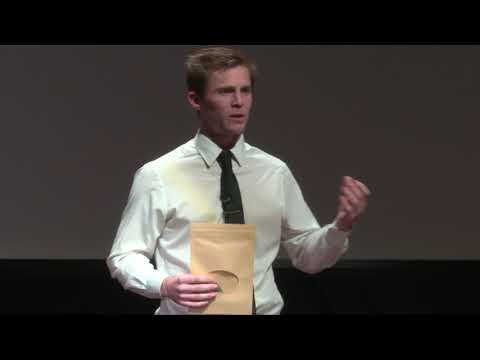
here I have a patent pending drug
disposal pouch that is capable of
rendering medications inert and unusable
it’s quite simple and easy to use and if
you guys allow me I just want to show
quick demonstration all you do is tear
it open you insert your medications
then you add water seal it up and you’re
done
it works on solids works on pills
patches tablets and it also works on
liquids again allow me to demonstrate
it’s so simple tear it open insert your
medications
again add water and you’re done
seal it up the addition of water
functions to release a proprietary blend
of chemicals that begins to neutralize
the active components of many dangerous
pharmaceuticals by rupturing major
functional groups and molecularly
altering the substance into a less
abusive form thus far this blend of
chemicals has been shown to be effective
in neutralizing not just opioids but
other classes of drugs such as
benzodiazepines and aesthetics hormones
estrogens several classes of
over-the-counter medications and in
addition to rendering the substances
inert and unusable the addition of water
in addition to rendering the substances
inert and unusable this blend of
chemicals also functions to absorb the
entire neutralized solution into a 100%
biodegradable eco-friendly Jill so it’s
quite simple after the final seal this
package is fully absorbed just takes a
couple minutes you can throw this
directly in with normal trash it is
considered one hundred percent landfill
friendly and you know that when you are
discarding your drugs you’re not doing
it in a way that may be polluting the
environment so my belief is with with
more convenient and more sustainable
options the end user market will be more
apt to participate in a safe disposal
campaign which will in turn lead to many
positive changes in the drug epidemic
such as a reduction in the number of
substance abusers even going down the
pathway of addiction to start this
technology this type of innovation it
empowers many stakeholders across the
entire continuum of care at each
separate intervention point not only do
end-users benefit directly from using
the pouch
but doctors pharmacists policymakers
everybody we can all use this tool as a
way to push to push the conversation
forward in the direction for change so
to wrap everything up whether you
participate in a safe disposal campaign
or not I want you to know that there are
a few simple changes that you can make
today when you go home today that can
make a difference in this epidemic you
can start by having a conversation with
your child about the dangers of drugs in
fact children who learn about these
risks directly from their parent or
their caregiver are up to 50 percent
less likely to abuse drugs than children
who do not obtain this information
directly from home the next time you get
a prescription you can actually listen
to your doctor your pharmacist when they
ask you if you want to be consulted on
how you should properly use this I’m not
asking anything major of you guys or
anything too complex there are just some
tiny simple little things that you can
do to be a part of a solution thank you
all very much for your time
[Applause]
you
Please follow and like us: