
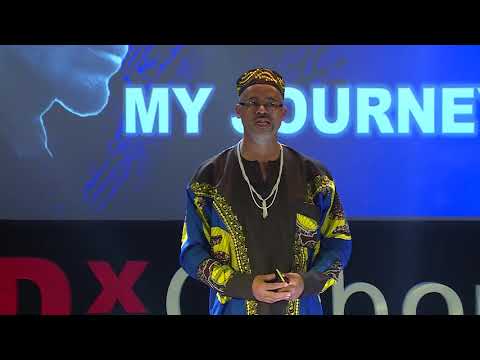
I move slowly in this world accustomed
to aspiring no longer to appear I’m
using this as my entry line for this
talk because it explains part of my
experience in life and as I have
connected with and had conversations
with so many African people around the
continent and the Diaspora I realized
that this also describes the experience
of many other Africans black men know
yourself I’ve chosen this title it’s
lifted from one of the tracks on Femi
Kuti album from that was released about
20 years ago called shoki shoki and in
this song he motivates the African man
to denounce the effects of colonialism
of the culture that has been taken away
from from Africa in many ways or
denounced and ridiculed and for African
men to stand up and own their journey
and their identity and this talk is
inspired by that song knowledge of self
we could say that self-knowledge is the
beginning of all knowledge ease it’s the
platform that you stand on is the
ability to be without it from an African
point of view you will be unable to
really form a purpose and to hold
yourselves in terms of
self-determination in terms of who you
are supposed to be as an African man or
as an African woman this is a sensitive
subject and I need to make a disclaimer
when I say for instance I referred to
certain challenges that African men and
Joe it is not in opposition or it’s not
to the neglect or it’s not to undermine
their many many atrocities and
experiences that are enjoyed by African
women it’s also not a competition about
who’s got it worse I think it’s more a
realization that we all
have problems and this talk wants to
address some of the ones some of the
issues that African men face it is also
not a pity party it’s not this is not
about feeling sorry for ourselves this
is not about African men just pleading
with weakness this is about taking
responsibility and it is also not to
paint all black men with the same brush
and say that we all have exactly the
same experience I think we have many
common denominators but we are aware of
the diversity of experiences of African
men and it’s not to the neglect of that
so who is the African man I think if we
were able to go deeply into history we
see that the African and African man
appears in this world as somebody of
responsibility of somebody as somebody
as who is a builder a healer a great
contributor to his society his family
and his nation if we go a few steps
further in history we see how
enslavement how colonialism and the many
atrocities that has been done by people
who invaded this continent how it has
also affected the African man to such an
extent that it seems like we remember
the African man more for what he is not
so the African man is not seen as a good
provider not as a good politician not as
a good knowledge holder not as a good
community person we remember a whole lot
of negative images and it’s important to
question that especially at a time when
we hear voices saying that all black men
are trash all black men are useful
useless it’s important to question where
that comes from and whether that is in
fact true this reminds me of a
conversation I had with young men 20
years ago I was living in Norway at the
time and we had an organization called
African youth in Norway and we wanted to
have a youth camp so we had one youth
camp for the young men and one for the
young women and in both camps we asked
who is your role model who do you aspire
to who I would you draw inspiration from
and almost exclusively in the young
women’s camp
they chose mother’s auntie’s women that
they have met women that they can go and
visit women are in their lives and
almost exclusively in the young man’s
camp they chose men that they have never
met men that I probably will never meet
men that they know through TV through
music through sports and it made me ask
is it so that many of us as African men
struggled to find role models so
struggle to look up to other African men
and as I’m saying this I would like for
you in your own mind to just reflect how
many men that you have access to would
you describe as great role models for
you I hope you come up with a big number
but from the work that I’ve done I
wouldn’t be so surprised if some of you
struggle to come up with many numbers
because it seems like we are not really
dwelling so much on the contributions
that African men have made and this is
interesting to me as it has become part
of my journey I work with men women
children youth elders but part of my
work is solely dedicated to
understanding African men communicating
with African men through my scholarly
work through my writing through my
interaction I have dealt with lots of
lots and lots of African men from
different countries different parts of
the world but I think what I’m left with
is even more their ability to engage and
see that African men across nationality
is a cross religion across many things
that divide us have many common
experiences and many of them are under
communicated so as I’ve been walking
this journey 10 years ago and idea came
into my mind that this voice that
African men obviously have and that I’m
it’s like I’m being made a participant
of conversations that I don’t really see
reflected in the general society and I’m
thinking we really need to be able to
position a platform for African men and
this became the project called that is
called Chewbacca men of Africa which has
been going to many African countries and
tomorrow will be doing it for
first time in Botswana so this journey
is really about decolonizing what
masculine seas have become icy and I
experienced that many of us as African
men have gotten stuck in a very
problematic understanding of what a man
is supposed to do and be and many of
those traces was back to what happened
to us during invasion the problems with
our families the problems with identity
the problems with understanding who we
are has created for many men different
and quite disconnected understanding of
masculinity so this is the statement
that I come across with a lot of African
men saying I need to understand who I am
and I wanted to illustrate in a brief
way what some African men declare or
talk about when they sit in a session of
explaining themselves and I want to
explain this through a synthesis of
stories that I’m going to present to you
through the character of Africa so
Africa is a young African man he grows
up in a village he’s the heard boy and
he is expected to go out in the field
work with other boys and and and look
after cattle now his experience is that
as a young boy he goes out and he’s
being taken advantage of by the bigger
boys who beat him up who do things to
him that obviously is painful and
degrading he then decides he cannot he
doesn’t want to be out in the field so
he makes up a lot of excuses yes
headache yes stomach stomach ache so
that he can stay closer to the compound
his father is devastated what kind of
boy is this this boy is supposed to be
out in the field and now he’s scared now
he doesn’t want to go and the father
statutory term ending call him names say
he’s a sissy say he’s a girl to the
point that even one day he takes a
picture of Africa and put a dress on him
and say look at my stupid little girl I
thought I had a boy but look at this and
he puts the picture on the wall and it
itches itself into Africa’s memory as
the definition of what he can never
become a man the African man
so African men know your power power is
a very problematic experience for many
African people and in the context of
African men the aftermath of having been
invaded the aftermath of white supremacy
as a power the aftermath of having been
marginalized completely to the side has
an effect where many African men
struggle to understand where to position
their power there is never any excuse
for rape but if we want to understand
what rape is about if we want to resolve
it these are some of the questions we
need to ask what has happened to the
experience of power because the
experience of power we have is to invade
is to take is to own is to define and as
a very problematic power constellation
when you take it into a relationship
into interacting with somebody that you
are supposed to treat as a royal partner
so Africa grows he um at one point as a
teenager he’s invited to a party and he
has now experienced that he’s interested
in girls but he doesn’t know how to
approach them and he finds that other
boys are talking very roughly about what
they do to girls how they grab them how
they take them and he doesn’t have any
intention of doing that to women so he
doesn’t know maybe this is because of
what my father said I’m a girl I’m a
weak person I cannot do this so he’s at
this party he’s he hears some commotion
in one room and one young man comes out
and grabs him and say come here now
you’re going to show that you’re a man
and he realizes that he is drawn into a
situation where a young girl is being
raped by several young men and she’s
lying there in his mind he wants to flee
he wants to escape but the need for him
to show and prove and demonstrate that
he is in fact an African man takes over
and in that moment he engages himself in
something that he would never have
believed he could do understanding that
he’s actually contributing to the soul
murder of the young lady African men
know your culture culture becomes a very
difficult place to go to when you see
that African culture has been ridiculous
been downgraded has been associated with
barbarism and things that don’t really
work at best African culture appears to
be cute and colorful that’s not a place
an african strongman wants to go so a
lot of African men become removed from
their cultural identity and it has an
effect on how they then need to draw
cultural tools to raise this African men
within themselves Africa gets a
scholarship he moves to a town and he’s
accepted into a good education which
leads to a good job which leads to good
money which is the dream of every
African parents to be able to end so he
is now at the point ways actually seem
to be a successful man but within
himself he cannot connect everything
that he has done seems like he has had
to check his African s at the door and
not bringing into the place of operation
so he strives to be more Eurocentric he
strives to speak good English he strives
to prove to the world that he’s not a
barbaric backward African he’s the
modern Eurocentric westernized African
man and this becomes quite problematic
he goes further he meets a woman and a
great woman and the woman agrees that
she likes him they get married they have
children now he’s even elevated to
another level that many African men envy
and many African men look to that this
is the greatness of success but because
of the pain and the brokenness within
Africa he finds it difficult to be next
to a woman who always is interested in
how he really feels how he what his
opinion is over time and he finds
himself wanting not to be so much at
home so he spends time at the bar he
spends time with other women and he
becomes a man who’s unfaithful the
African family is supposed to be a place
of strength we say that African culture
is built on the African family but what
happens when the African family is so
affected by its history and its lack of
cultural strength that it reproduces
some of the oppressive effects that we
have enjoyed for centuries on this
continent
abraca is now at the point where he is
no longer expecting to be a strong man
he falls into a deep hole within his
mind and his soul and it takes to
drinking he consoles himself for all the
things that he feel his not he abuses
himself for the shame that he has of
what he has not accomplished and he
slowly dies within now Africa has
changed Africa has been able to
understand more of his history
understand more of what is expected of
him as an African man moved to a
stronger place that does not mean the
problems disappear it does not mean that
life is necessarily easy but he
approaches it from a completely
different point of view because he has
developed a sense of self a sense of
rootedness a sense of anchored Ness so
when he moves he moves with a different
sense of power and when he’s confronted
with issues he doesn’t just react with
fear or don’t or the need to dominate he
can humble he can take a step back
reflect and find a solution this to me
is the practical interpretation of what
Steve Biko explained as black
consciousness the ability to rally
around the center of our oppression
which is the color of our skin and at
the same time also operate as a group to
to cut the shackles that have
represented the oppression that we have
enjoyed I no longer move slowly in this
world
I refuse to be accustomed to aspiring no
longer to appear this is the call for
African men who no longer should just be
marked by being men who obey very
problematic messages and pressure points
men who violates because the voice
inside is so full of Rage and men who
shut down because they don’t know how to
develop a language to express what is
happening within what we call for
African men to become a men who rise men
stand up with confidence men who rebel
and this is an important point to
mention because when you stand up as an
African man the world around you will
see it as a declaration of war we don’t
expect that African men should be
honorable responsible and strong in a
balanced way we have gotten so far that
we don’t expect a lot from African men
and as African men we know it and it
kills us we need my African men who can
relate because the African man is nobody
without being able to relate to African
women to African children to the African
community your identity will never be
whole just because you have a success in
your own corner African culture roots
you because you are part of a bigger
whole as I’m standing here I raised my
face not just as a symbol of struggle
and rage but also in confident belief
and faith in what this world will become
when black men know themselves
[Applause]
[Music]
Please follow and like us: