
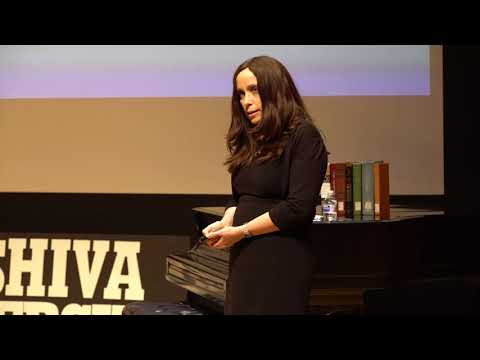
it’s all about the mission and I will
tell you why I was the head of
fundraising for Doctors Without Borders
known internationally as med ssangsun
frontier or MSF in 2004 I led the
organization in making a risky
counterintuitive and courageous decision
this is the story I want to tell you and
what we can all learn from it day one it
was December 25th 2004 most Americans
were at home enjoying the holidays with
their families on the other side of the
globe
a major earthquake struck the Indian
Ocean 9.1 on the Richter scale the third
largest earthquake ever recorded in
history and it triggered a massive
tsunami leaving two hundred and twenty
seven thousand eight hundred and
ninety-eight people dead
tragically Doctors Without Borders
sprang into action
we sent teams we prepared materials and
sent volunteers from across the globe I
was part of a skeleton crew around 4:00
during the holidays and we launched our
emergency fundraising plan it had been a
slow media cycle during the holidays and
this became the story for days The Wall
Street Journal New York Times CNN every
major media outlet put us at the top of
their giving lists and the outpouring of
generosity was incredible it also
happened to be the end the last week of
the year the height of the philanthropic
season when most Americans do their
philanthropy and all this combined to
unleash an incredibly powerful force of
giving in our country day three I
stood in amazement at my computer it was
the early days of internet giving and
the money just kept coming in ten
million dollars fifteen million dollars
twenty million dollars we barely had to
do anything and the money was just
coming in it was truly incredible but
then I started to worry really worried
you see I have been working for Doctors
Without Borders for more than ten years
at the time and I knew that despite what
the media was telling you most of the
victims had died and the and despite
what the media was telling you the rest
of the population was relatively healthy
Doctors Without Borders mission was to
provide emergency medical care which
included water and sanitation and
everything to ensure the health of a
population but in this case with
millions of dollars coming in I knew
that we might make more money than we
can actually use for this emergency I
kept thinking about what happened to the
Red Cross after September 11th after
September 11th again there was a
tremendous outpouring of generosity and
the Red Cross had more money than it
probably would have spent on the
families affected by 9/11 so it decided
to use some of the funds for it’s very
important work it’s blood work and for
other crises and the tremendous backlash
that they face there were tests there
was congressional hearings and people
were really upset and it created this
climate in the United States where
people were not trusting nonprofits and
this was very bad and I was just
becoming very worried day five we were
starting to get reports back from the
field from our field volunteers and what
the reports were saying was that we now
know the scope of our response and once
we knew the scope of our response it was
becoming pretty clear that we were gonna
make more money than we could spend well
so this was a day of questions what do
we do
if we told the public something that no
one had ever told the public in the
middle of emergency before would they
understand what we were saying with
270,000 people dead wouldn’t they say to
themselves why doesn’t Doctors Without
Borders just scale up and do something
if we said to the public that we didn’t
need money would they then cut back on
money for us for other situations or
would they stop funding the
organizations that were doing
reconstruction and rebuilding the
tsunami affected areas so we started to
experiment we started saying to John
Orr’s giving five figure gifts perhaps
he might consider giving to our general
emergency relief fund so we can be
prepared to respond elsewhere in places
like Darfur Sudan or the Democrat the
Democratic Republic of Congo and some
people said yes and then we had a woman
whose father had been a missionary in in
South Asia and this woman said well I
just want to give in South Asia and we
knew we were reaching our threshold and
if we took her very substantial gift and
meant we might have to say to hundreds
of other people we can’t take your gifts
so we ended up making the decision not
to take that gift and to move on now
inside my team not everybody agreed with
the notion that maybe we would be in the
position to tell the public that we
would stop taking money I’ve been in the
fundraising business at a long time and
fundraising is really hard I do not know
any other fundraiser in the whole United
States of America or the world who ever
really had to do something like this but
Doctors Without Borders was very
transparent with its public and we just
kept trying and thinking what to do we
had to instruct our call center whose
job usually was to take money to start
asking people to do all kinds of things
differently to consider giving to
consider giving to a general fund to
consider and we just kept experimenting
to see what might work day 7 we posted
the following message on our website we
have received an A
ordinary outpouring of support for the
people of South Asia and we are
extremely grateful as you know it is
very important to msf that we use your
contribution as you attend it to be used
MSF estimates that we have received
sufficient funds for our currently
unforeseen emergency response in South
Asia we kindly request that you
contribute to our general Emergency
Relief Fund which is enabling our quick
response to our current disaster in
South Asia as well as the humanitarian
needs in war-torn Darfur Sudan and
elsewhere in more than 70 countries
where MSF is working around the world
and then we took the next week’s and we
started to contact the public people who
had given us for South Asia and we asked
them for permission to do restrict their
gifts away from South Asia in order to
let us use it elsewhere around the world
where the needs were the greatest you
see sometimes natural disasters are
something what I used to call a CNN
emergency
a CNN emergency was an emergency that
was easy for the media to tell you about
and it was something that really
resonated with people I think today we
can all think about what happened in
Houston or in Puerto Rico and these type
of emergencies are really are easy to
understand and they’re not so political
they might be different than some sort
of conflict in some far-off place that
maybe you’ve never heard of between
people that you’ve never seen before in
your life
but Doctors Without Borders always makes
this decision based on humanitarian
needs and humanitarian needs alone and
this is what we said to the public we
had a strong backlash against us and
when a Nobel Peace Prize winning
organization says to the public you
don’t need meat you don’t need funds in
the middle of crisis all the other
organizations get worried and concerns
and they went out and they criticized us
publicly and I didn’t know it at the
time and it took a long time for us to
know but we ended up having huge
reputational gains because of what we
did in the tsunami the harris poles of
public sentiment showed year after year
dr.
Porter’s was one of the best regarded
organizations in all of the country and
I participated in benchmarking groups
with the other nonprofits you see by
telling the people who who gave to us
that we were who we were and how we
would take their money we set a goal
that we would try to renew at least 20%
of them now many people who give in
disaster times they are giving to the
disaster not to the organization but we
set a goal that we would have 20% of
those people at least give to us and
sitting in those benchmarking groups
with the other international
organizations a year later I saw that we
were able to retain and reach our goal
and retain more donors than all the
other groups putting us on the next
level so for the short term we
definitely took we definitely took a
loss but it was all for the gains in the
long term and we also helped restore
faith of the public truck and Trust in
nonprofits so how does an organization
incentivize courageous decision making
how does an organization lead a leader
like me to know how to do something
carry counterintuitive completely
opposite of the job that I do did every
single day and I will tell you it’s all
about the mission Doctors Without
Borders started in not in the year I was
born in by Afra which is today Nigeria
it was the first time that Western
audiences saw distended bellies of
people suffering from malnutrition are
and hunger on their television sets now
the doctors at the time who were Red
Cross doctors were not allowed by the
mandate of the Red Cross to speak out
and to address the reasons for this
famine now what you might not know is
famine is often political think Yemen
today or the ends of the second beta
make – the second temple famine orphan
has very political cause
and these doctors felt that in order to
truly serve their patients they had to
be able to speak out and do it by
advocacy on their behalf and at the root
of advocacy is having a public and
people who will listen to you so when we
started fundraising for Doctors Without
Borders in the United States our
strategy was to have a broad base of
support so that when we spoke out there
were people who had affinity to us and
who would listen to our messages and
really take them to heart so at the very
core of Doctors Without Borders was a
commitment to truth because truth was
the only way telling the truth and the
story of people was the only way that we
could accomplish our mission dr. Joe
borders we called our type of advocacy
we used the French word taman Yosh and
hemorrhage means testimony but it means
more than testimony
timon Yosh means solidarity solidarity
with the people that you were helping
so that’s solidary and complete
alignment with our mission meant that we
couldn’t tell our audiences our donors
anything other than the truth even
though it was counterintuitive even
though my teams had a hard time with it
even though it we had to align 19
offices around the world that were
raising funds for Doctors Without
Borders
all around this one very hard and
powerful message and to tell the public
we were able to do it because it was
what it was woven into our DNA through
our mission and our commitment to
advocacy and to testimony and to truth
it’s all about the mission T for
transparency Doctors Without Borders is
really committed to transparency
I hear transparency bandied around by
many many organizations every
organization loves to say that they are
a transparent organization but
transparency isn’t a buzzword Doctors
Without Borders transparency was real
Doctors Without Borders had board
meetings that were open to the staff
they had board meetings that were open
to all the other doctors nurses and
logisticians who had been in the field
with Doctors Without Borders
and at these meetings they would
question and look at all the decisions
being made of the organization take for
example a few years ago the Ebola
outbreak the rest of the world was
calling the doctors of Doctors Without
Borders heroes but inside a board
meeting at Doctors Without Borders
people were saying how did we let that
epidemic spread so widely how did we not
get the other world bodies to help how
could we improve our medical response
the next time Doctors Without Borders
groupthink was an asthma because when
your admission is to save lives you have
to do what’s best for your patients and
sometimes it was that lonely voice that
had the very right idea of what to do so
we had a very strong commitment and
transparency and transparency met not
just internally but also the way when we
spoke externally again this was I had 10
years of training on the on the tenets
of transparency so when I had to make
this decision and lead an organization
and participate in a worldwide movement
this was very natural it’s all about the
mission and the final piece is mission
at the heart of Doctors Without Borders
mission is a very Jewish idea it’s the
sanctity of every human life someone
recently asked me after treating
patients millions of patients around the
world did the doctors get jaded and I
say no they don’t it’s the very human
act of treating one person at the time
giving each person the ability to heal
normal people whose lives are disrupted
by conflict or epidemic normal people
people like us who live in all kinds of
places around the world who are just
taking care of their families and then
something comes along and the act of
delivering medical care one patient at a
time
letting people go back to their lives so
that they can have power and make
decisions again for themselves that’s
the heart of the mission and mission
meant that we never put dollars in
before a mission
Jews without borders have the strictest
gift acceptance policy of any
organization I have ever heard of we
didn’t take money from Alcohol Tobacco
arms mining pharmaceuticals and
pharmaceutical companies probably would
have been the natural donors to Doctors
Without Borders but the reason we didn’t
take money for them is because we had to
advocate for cheaper and better
treatments for our patients it was all
about the mission so when I hesitate the
decision to tell the public the truth
and to say we were fully funded the
mission told me what to do and it told
us what to do
it was all about the mission and what I
think how this applies to everybody in
this room we all have a mission the
president initially the University at
his investiture spoke about the five-two
wrote and the last one of the values
that he shared was the redemptive at the
redemptive value of us all improving our
world so whether you’re working at a
non-profit like me or is she B
University or you’re helping a cause
that you care about or you’re working in
a laboratory to develop a treatment for
a patient or building a technology
that’s going to make life easier for
someone or just contemplating your own
personal mission later mission B your
Constitution check everything against it
it’s all about the mission make the
mission that you select and pour it in
and then be really true to your mission
thank you
you
Please follow and like us: