
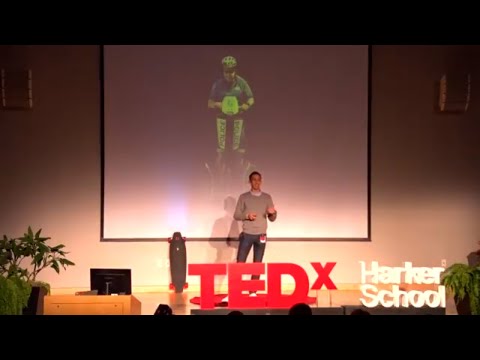
my company’s called inboard technology
and we’re a company that’s focused on
completely revolutionising the personal
electric vehicle industry now personal
electric vehicles are probably new to
most people you might not have heard
that term before and that’s because
Transportation is changing at the
fastest time ever in the last 100 years
so that today I’m going to talk to you
about the ways that we’re getting around
specifically urban areas today and how
big of a shift we’re gonna see over the
next ten years and how products like the
inboard m1 here are going to become a
staple of this new transportation
paradigm shift up who remember seeing
these things it was like 2002 they came
out they were $12,000 I really really
wanted one they were super cool and
everyone talked about how they were
gonna completely change the way that we
got around urban areas how we actually
did transportation and they were super
cool and was a great technology and it
was a great need for personal mobility
but there are a few huge challenges Dean
came in one of the creators of the
Segway talked about Segway parking lots
Segway charging stations can you imagine
trying to get a Segway like this into an
elevator like not gonna happen and so it
was a great technology but it was a
technology that was trying to get
society to change for it
and I remember back in you know kind of
the mid 1990s there was a show on
Discovery Channel called beyond 2000 and
they would talk about all these new
technologies that was gonna happen
and one was self-driving cars and they
were gonna put these pucks in the roads
like built into the roads these metal
pucks that would have magnets and as the
cars would drive over them they would
read the pucks and they would know where
to go you know here we are 30 years
later and there’s no pucks in any roads
we’ve created technology that works
within society it’s very difficult to
try and get society to change for your
new technology and invention so what
ended up happening with segways well
unfortunately they kind of went to mall
cops and police like this and there’s a
lot of really good YouTube videos of
people falling and getting hurt
this is
your traditional Segway taking off and
then this one’s difficult to see but
it’s Usain Bolt the fastest man in the
world with the cameraman next to him and
him swooping and taking him out so this
was 2002 Segway was created it was
$12,000 a few years later we had this
2015 and this was about 300 or 400
dollars so what happened in that period
of time we saw a lot of new innovations
and mobile devices and drones and
reduction and battery costs and that’s
what we were able to get the product so
much cheaper unfortunately even though
it was cheaper it was still inherently
the same problem it was very unstable
and if you just go into you type
hoverboard fail there’s no shortage of
really great videos well my personal
favorites is Mike Tyson here uh-huh so
again you know Segway was great
everybody really liked the idea of it
was too big it was too heavy it was way
too expensive then he starts his shift
and you go into hoverboards and it’s
more affordable it’s lighter weight it’s
more compact but it’s still inherently
stable and so if you’re looking at this
from like a macro kind of investment
perspective you’re starting to see these
little blips but they don’t kind of
stick around and then there’s another
blip and it doesn’t stick around so but
it does show that there’s an interest
here that people want freedom of
mobility they want lightweight electric
vehicles that they can take with them
and this mark is called personal
electric vehicles or rideable z– and
rida bowls are defined by being
lightweight so under 25 pounds the m1
here is 15 pounds so I can easily pick
it up and I can take it with me
it’s got to be energy efficient so it’s
electric you know that’s gonna allow me
to use it and keep the cost of ownership
very very low it’s got to be clean it’s
got to be green and it’s gotta be
compact and it has to go anywhere and
the great thing about personal electric
vehicles is that if I need to jump in
the back of an uber if I have to get off
a train if I have to go on a bus it
works within society as we currently
live today it’s not like the Segway
where you needed Segway parking lots I
can take this thing with me wherever I
want throw in the back of my car throw
it underneath a coffee table if I’m
meeting some friends for for a bite to
eat or a coffee
and so it really lives with me and this
is it it’s the m1 what we wanted to do
is create the coolest most streamline
person electric vehicle that’s ever been
created now most people say well it’s
still a skateboard but a skateboarder
has four wheels four contact points with
the ground versus the Segway or the
hoverboard which was two wheels and
inherently unstable if you hit a bump on
one of those it becomes you know very
unstable and you start to fall down and
our goal while launching with this
product is to slowly create a complete
ecosystem of products and different form
factors that are safe easy to use and
allow you to get around an urban area
with ease and so the big opportunity
here and the one thing I really want to
drive home today is whether you want to
get on electric skateboard or a scooter
or a different mobility platform cities
are changing and transportation is
changing massively and for the first
time in about a hundred years we can
reshape our cities and a hundred years
ago if you were in a city they had
pollution for transportation
unfortunately the pollution was from a
horse it was a very different type of
pollution we don’t have to worry about
those things anymore we have a different
type of pollution and now we want to see
a shift again towards green and clean
energy and so if you were around a
hundred years ago you have trying to
cross the street you had to look out for
a horse and today it’s a car what I’m
gonna present today is how through a
combination of new technologies we’re
gonna completely redefine the way that
we live in urban areas and it’s due to a
number of technological convergences so
first is artificial intelligence you’re
starting to see this with autonomous
vehicles
the second is mobile devices once cell
phones came on the market accelerometers
low-cost gyroscopes you know very high
power you know mobile processors all of
a sudden because cell phones drove down
the cost of all those components you had
an industry like the drone industry
drones weren’t even possible in 2005
because the components were way too
expensive and so because you had mobile
phones and smart phones you were able to
have drones because of drones and the
increase in electric vehicles you were
able to have advances in battery
technology massive massive changes in
battery technology and if you look at
the m1 here
it’s super thin it looks like a normal
skateboard and these existed in nineteen
1990s but they had a huge battery that
stuck underneath them and that was the
reason that they were so heavy they
weren’t compact you weren’t able to take
them with you we’re seeing a huge shift
in the adoption of electric vehicles I
think you can see every month a new car
company a new auto manufacturer saying
we are gonna go all-electric by X date
and on the other side you’ve got almost
every country and every major city in
the world coming and saying by this date
we’re not gonna gonna even allow you to
buy a traditional car an internal
combustion engine whether it’s diesel or
it’s petrol and so we’re starting to see
all these massive shifts and then beyond
that we’re starting to see an explosion
it’s like the your massive shift in
seeing these different types of form
factors you’ve got skateboards you’ve
got these small bikes you’ve got
hoverboards you’ve got scooters you’ve
got you know wheels you’ve got one
wheels and is one better than another
absolutely not but each one’s different
in each one suits a different need and
again we are in the very very kind of
early Precambrian days of the evolution
of these these form factors but it shows
that there’s gonna be a huge shift and
the way people think about getting
around if you start to do the cost
comparison between something like a
electric bike and an electric skateboard
on electric skateboard weighs 15 pounds
and this bike weighs 60 pounds when it
comes down to carrying it up a flight of
stairs
this is compacted down to this but it’s
still a 60 pound you know twice the size
of a briefcase this I can throw onto a
backpack in terms of speed they both go
about the exact same top speed most have
beginner intermediate in advanced mode
but if you’re going through a city and
in a bike lane most people are riding
around 14 or 15 miles an hour range the
m1 has seven mile range on it but we
actually have swappable battery pack
Syria but to open this guy up and swap
out a battery at any time in about 10
seconds where the electric bike has a
battery that you have to charge for
about four hours and in terms of motor
and power the electric bike is 750 watts
in the inboard m1 is 800 watts but we
have to
Motors in each wheel but one of the big
thing things here is the cost
you know it’s $1,300 for the m1 and it’s
two thousand four hundred and ninety
nine dollars for an electric bike so
you’re starting to see more and more
people use electric bikes to get around
but if I live on the fourth floor and of
an apartment building carrying it up a
flight of stairs that 60 pounds is
incredibly heavy and inconvenient and if
I’m going out after work with some
friends to grab dinner or you know run
to a bar if everybody’s jumping in an
uber and I’ve got this gigantic 60 pound
briefcase that I got to carry around it
doesn’t make it easy it doesn’t fit into
my life and so this is the opportunity
that we’re gonna see with these smaller
form factor electric vehicles is because
they’re compact because they’re
lightweight because they can go anywhere
with you you’re going to use it more
often and this isn’t some like
harebrained scheme that I’m coming up
with this is a concept from Hyundai
called the ionic scooter and this is a
concept from Audi where an electric
skateboard actually comes out of the
bumper of the vehicle so you’ll drive
downtown park a few blocks away from
your office maybe where parking is
cheaper or it’s not as congested and
then you’ll ride your last you know 100
meters to a mile to the office and on
the Honda concept here it’s paired with
their hyundai ioniq car so when you open
the door of the car the scooter actually
comes out of the door frame and you get
on it and you go and what they see is as
we start to see this shift towards
electric vehicles the electric vehicle
is essentially a moving supercomputer
with a massive battery bank and it can
charge anything including smaller
electric devices so basically becomes a
mothership and then you can take out
these smaller electric your rideable x’
out of them
and why are why is every single auto
manufacturer and transportation provider
starting to think of these things it’s
because cities are changing massively
and they’re starting to embrace being
car free in San Francisco you’ve got
Market Street which is actually banning
cars this next year you’re only gonna be
able to ride a bike or being a bus or a
taxi Folsom Street I don’t know if you
guys have seen that in San Francisco but
they’re continuing to expand the bike
lanes the shops the lycée which is you
know the most popular street in Paris is
banning cars at the end of this year
Oslo banning cars in their city centre
Milan parts of New York Paris like it’s
it’s happening everywhere and with urban
planners are realizing is that if you
give people an alternative safe way to
get around which is a bike lane and a
protected bike lane meaning that it has
a kerb here it might be difficult to see
but in America this is what we’re doing
here in you know cities like San
Francisco New York Chicago Portland is
we’re putting a small curb along the the
side of the road and you’re able to ride
a bike in that kind of protected area
and Europe they’re doing the exact kind
of next levels this used to be a street
and they’re stopping cars here and now
this is all for pedestrians it’s all for
people to be on a bike on electric
rideable at lower speeds more people in
a compact space and so it’s actually
increasing the efficiency of a city but
beyond that it’s changing the culture of
a city we’ve built all of our cities in
America really kind of post and dust
internal combustion engine so they’ve
really been designed around cars parking
you know from parking garages to street
parking with meters and what we’re
starting to see is if you embrace this
shift you give people restaurants bars
communities parks way more access to be
outdoors to socialize and it changes the
social fabric of the city and the
culture and so in New York there’s a
very successful project called the High
Line and this used to be an old railroad
that was kind of decrepit and left and
now it’s one of the like most bustling
and vibrant areas of the city and people
will travel blocks to get to the High
Line to go for a bike ride or go for a
run and these are the types of urban
projects in the way that urban planners
are thinking about cities not only today
but in the future and the reason that
there’s so much interest and attention
to these shifts is because 51 percent of
cart of trips that people take to
commute are less than five miles so it’s
a massive amount and 21 percent of those
trips are less than two miles in a the
range of a product like the m1 or an
electric skateboard scooter is around
five to seven miles so it’s right inside
that sweet spot you have to worry about
you know paying for car insurance
parking you know getting damage to your
car and you know really it’s the
time because these things are
lightweight and they’re on-demand you
can really use it whenever you want and
so what we’re starting to realize is
that there’s a gap that’s opening up
today I’ll walk a quarter of a mile
you know I’ll walk to my car in the
parking lot but if there’s a Starbucks
that’s you know three blocks away I’m
gonna get my car I’m gonna drive there
I’m not proud of it but it’s what most
people tend to do you’ve got to deal
with parking in the parking lot you’ve
got it you wait at the stoplight the
stop sign it’s actually you know not
that great of an experience but it’s
convenient and to walk you know half a
mile or a mile it’s gonna take me you
know five to ten minutes but we’re
starting to see with the shift to
on-demand transportation like taking an
uber or a lyft is that now all of a
sudden I can wait five or six minutes
and I can get a car that’s gonna come to
me I don’t have to deal with parking and
things like that and if I’m in an urban
area that’s great but I’m also still
willing to walk you know a quarter of a
mile so now I’ve got do I walk a quarter
of a mile which is about five minutes or
do I wait four or five minutes to get a
car to go further and so you’re starting
to see this gap open up for personal
transportation and this is the
opportunity that we’re super excited
about is that if I leave my house I can
throw down an electric skateboard an
electric scooter one of these new form
factors I can get on it I can go you
know a mile get there faster than I
wouldn’t a car and not have to deal with
parking and be able to bring it inside
and have a battery that charges really
really quickly
and so we’ve touched on personal
electric vehicles and I want to talk
about how this fits into this massive
change that we’re gonna see in all of
transportation case is a kind of
abbreviation that’s been thrown a lot
around a lot it’s connected autonomous
shared and electric and these are the
key four things that are going to allow
the adoption of electric vehicles so
number one is that the vehicle itself
has to be connected and you have to be
connected to the vehicle and thanks to
mobile devices we can do that in 2005
uber couldn’t have existed but because
of the smart phone that’s what allowed
us to find a driver at any given time
and immediately engage with them the
vehicles need to be autonomous that’s
what’s gonna bring down the cost of
transportation it’s what’s gonna make it
safer for cities they need to be shared
meaning you know I can hail it with my
phone and
we’ll come to me it’s not something that
I have to own all the time and then the
last one is they have to be electric and
they have to be electric for a number of
different reasons but one of the biggest
is that if you get in an internal
combustion engine car there’s about
1,800 moving parts in that drivetrain
and if you get in an electric car
there’s 18 moving parts in that
drivetrain and so if you’re a
transportation provider Sam Ford today
I’m trying to sell cars I want to sell
more cars so if you get 150 200 thousand
miles out of a car that’s great but if
I’m Ober I don’t want to buy cars that’s
gonna last 150,000 miles and I’m not
buying a car because it’s got you know
nice leather seats I’m buying a car
because I want it to last a long time I
wanted to last a million miles and so
now auto manufacturers are completely
redesigning and rethinking the way that
they actually build a vehicle because
it’s not about getting you know five or
eight years out of it at 200 thousand
miles it’s about getting a million miles
out of it in about you know four or five
years and so this is one aspect of the
shift that we’re starting to see and
once the cars are connected once they’re
autonomous once their shared
intersections and cities are actually
gonna start to look like this if you
have every car in an urban area having
an autonomous shared and connected
infrastructure all of a sudden the cars
can talk to each other they can
communicate which means you don’t need
stoplights and you don’t need stoplights
that you know are gonna slow down
traffic create congestion you’re able to
create a consistent flow now most people
would say well you know you can’t do
that because if you’re the person
driving a regular car you can’t drive in
that ecosystem in about eight years you
won’t be able to drive a car in most
cities humans will not be allowed to and
the number one reason is because of the
cost of insurance once you get to about
15 percent of people driving on time or
using like a ride-sharing service like
uber and it’s completely autonomous
insurance prices because now you’ve got
15 percent of people who are not paying
for insurance start to go up for anybody
who’s driving a human powered vehicle as
though that starts to happen it creates
a feedback loop and so insurance prices
start to climb insanely quickly which
means driving a car especially if I own
it I have to pay for the car I have to
maintain it I have to pay for the
insurance meanwhile I’m in an autonomous
vehicle that
have a driver it’s incredibly cheap
about 70% cheaper than you can get an
uber today and so this is one of the
reasons that this shift is going to
happen so incredibly quickly and most
people don’t even realize it so this is
1950 in New York and you can see this is
a little bit difficult because of the
bright light but these are all horse and
carriages and over here on the left it
says where’s the automobile and if you
look really really tiny there’s one
automobile right here and it actually
looks like a horse and carriage
the people who revolutionized you know
the automobile were not the people who
were building the horse and carriage it
was people who understood mechanical
engineering it was you know Ford who
understand how to industrialize it and
could create the assembly line
it was mercedes-benz who understood the
mechanical properties of an internal
combustion engine and so you can’t look
to the existing transportation providers
as the ones that are going to disrupt
the industry so this is 1900 and this is
1913 this is 13 years later and on the
left here it says where is the horse and
if you look these are all cars all
automobiles and if you look right here
there’s one horse and that’s 13 years
the amount of change we’re going to see
in the next eight years in every major
city in the world is gonna be like five
times that you’re gonna see such a shift
so quickly it’s gonna be mind-boggling
and so one of the interesting things is
when it comes down to transportation
when it comes down to living in a city
if I’m walking around San Francisco New
York any city and I get to an
intersection as long as I’m walking down
the street it’s no problem but as soon
as you get to an intersection you’ve got
the crosswalk you’ve got the don’t walk
sign you’ve got the walk sign and all of
a sudden cars take precedent you know I
can’t just walk across the street I’m
gonna get hit and there’s a sense of
just kind of nervousness whenever you
have to get around an urban area and we
already had you know AI transportation
once or at least intelligent
transportation if you walked in front of
a horse and carriage in 1900 the horse
would stop you know you could be on your
you could be reading a book and you
could walk across the street and the
horse isn’t gonna kill you today if you
are on your phone and you walk into an
intersection you’re gonna get hit by a
car and so the ship that we’re actually
gonna go back to
is gonna be a lot more similar to the
way that we actually used to get around
an urban area when we had a horse and
buggy you can walk her in front of an
autonomous vehicle and it’s gonna see
you as a person and you’re gonna get the
right-of-way whereas if you do that in
New York and you’ve got an angry taxicab
driver they might accelerate you never
know and so bringing all these things
together you’ve got lightweight personal
electric vehicles you’ve got a massive
shift towards autonomous vehicles you’ve
got a shift in infrastructure where
cities are starting to ban cars in
certain areas and you’ve got a lot more
technology that’s happening and so right
now there’s a lot of early adopters of
this products they’re willing to you
know learn how to ride a skateboard for
the first time most of our users are not
skateboarders they’re getting on this
product for the first time but the major
concerns are like is it safe you know
how reliable is it does it work in all
different types of weather and what
we’re gonna see over the next couple
years is very similar to what happened
in the drone industry drones in 2010
very very difficult to fly and you had
to build them yourself solve soldering
all your own you know PCBs together and
doing all your own calibration I was one
of those really early adopters of drones
then the DJI phantom came out and now
they’ve got the spark literally a drone
that my mom can hold in their hand it’ll
fly up she can wave at it they’ll take
her photo and land back on their hand
like that is an amazing shift and it was
using technology but technology to make
something safer easier to use that it
allowed the market to expand and what
we’re gonna see in the person electric
vehicle market is by making the products
easier to use safer you’re gonna
increase people’s confidence and you’re
gonna expand the market massively and in
the next five years we’ll have products
that range from child consumer products
so an eight or ten year old kid get on
it and ride it to school the products
that my mom who’s you know 67 years old
could take to go to Whole Foods and pick
up some groceries and come back so
though that’s the type of ship that
we’re gonna see and it’s because see
these are changing all that
infrastructure and it’s gonna make it
much safer to live in a city and so what
the future is gonna look like is gonna
be something similar to this you’ve got
your you know autonomous electric
vehicle we got a Tesla Model X right
here you’ve got your kind of shared
public transportation in the middle you
know this is all electric tram you’re
gonna have a massive
expansion in the amount of bike lanes
you’re still gonna have bikes you’re
gonna have different personal electric
vehicles and all these areas that used
to be used for parking are gonna turn
into you know outdoor seating for
restaurants for bars for coffee shops
it’s gonna change the culture of every
country in the world but specifically
you know the United States where if you
still go to areas of Europe in the city
center they were built pre car and
people you know shared things and they
spoke outside they had big city centers
and squares and for the first time
really since the automobile in America
we’re gonna have the opportunity to
completely reshape and rethink the way
that we live and then really the fabric
of our society and hopefully have a more
engaging conversation and lifestyle so
on the bottom here we’ve got walking
this is the easiest thing to do and
everybody can do it in terms of range
you’d probably then get on an m1 or a
different rideable if you’re just gonna
go a short range if you’re gonna go a
longer range you’re gonna go to an
autonomous vehicle and then if you’re
gonna go really really far we’re gonna
have hyper loops and we’re gonna have
drones to get us around all these
different areas last thing that I’m
gonna talk about is building an
on-demand network and you’re starting to
see this with station list bike sharing
companies like mow bike where you’re
able to just find a bike on the streets
scan it with your smartphone and all the
sudden the bike unlocks and you’re gonna
be able to get on it and go I’m actually
gonna be a Web Summit next week with
Mercedes Benz they’ve got a car called
the smart and a program called car to go
and so car to go right now I can pull up
a map and you know a city like Berlin
and I can see all the different cars
that I can just walk up and I can take
you know one of the things that we’ve
talked with them about is putting you
know lightweight electric scooters and
skateboards in the back of their cars
you can just walk up and you can grab a
scooter and you can go eight blocks and
then you can drop it off into another
car to go and so building that network
of on-demand transportation is one of
the other legs of the stool that’s gonna
allow mass adoption because some people
won’t even have to buy it in some cities
you’ll just be able to use it as a
service and so at the end of the day
rideable x’ person electric vehicles
they really give you freedom you give
you freedom to live the life that you’re
currently doing it fits within society
and the construct as we live today but
you’re able to get on a bus in this case
onto a trolley car you’re able to go
live
than the existing infrastructure and
have that freedom of mobility and it’s
something that you know the team at in
board is incredibly passionate about in
a future that we’re super excited to
manifest because in this small little
nuance of building an electric
skateboard we believe that we can have a
much bigger impact and help change
people’s consciousness and reshape the
way that would get around our urban
areas
Please follow and like us: