
[Music]
you
I need to tell you all a story last year
a woman by the name of Jordan Bella
Meyer was sexually assaulted in virtual
reality she was playing a video game
with the system comprised of a headset
which she could use to look around and a
motion controller in each hand which he
could use to reach out and interact the
game system was able to superimpose an
avatar onto her body a body which
corresponding to her real one another
player came up to miss Bella Meyer and
reached for her breasts her groin later
in an interview she described the
feeling of violation as her husband and
brother-in-law watched the feeling of
that reality encroaching on this one
take a second imagine looking down on a
body that looks just the way you look
that moves when you move and imagine
watching someone touch and manipulate
that body
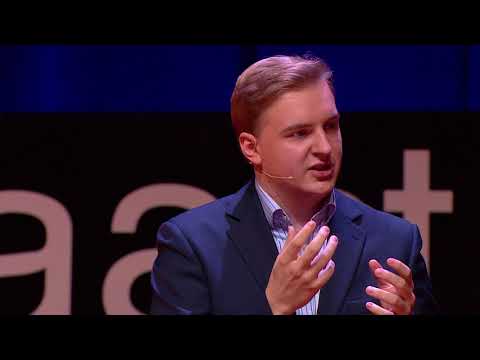
my name is Edmund King and I study law
here at Maastricht University I wanted
to know what this story meant I can tell
you now there was no crime committed but
there was harm there was no crime
committed because we don’t have fully
developed rules for dealing with this
kind of situation that is because
virtual reality is a technology unlike
anything that has come before in the
case of printed media the sensory
experience of the consumer is for the
most part internalized visual media
allows us to witness things we could not
imagine yet we still have context we
know that what is happening is happening
on a screen because we’re able to
contextualize and separate the images
from the realities of our homes or movie
theaters virtual reality erodes that
context this gives it a maze
potential already it’s being used by
doctors to help correct lazy eyes by
psychologists to help treat people for
post-traumatic stress disorders and
phobias educators are able to give their
students experiences that would be
impossible otherwise we rely on our
senses to gain knowledge and information
about the world around us as technology
improves those same senses make less and
less of a distinction between realities
we are immersed in a world which is
different from the one we inhabit in
this moment so imagine the difference in
sensation between pressing a button to
shoot someone on a screen or having to
stand over your victim move to pull out
a weapon aim and actually pull the
trigger that experience is bundled
together with pretty much every other
form of visual media games are games
movies are movies they can be accessed
just as easily and created just as
freely despite the fact that the
elevated sensory experience is different
around the world our system of
regulating access is primarily concerned
with limiting liability of retailers at
the point of physical sale so
theoretically a child can’t walk into a
shop and buy mature rated content over
the counter makes sense but online all
any of us have to do is tick a box this
offers very little in the way of real
protection real safeguards a fractured
system which doesn’t take into account
the homogeny of an open Internet until
now that has been enough but moving
forward we might need more let’s go back
to miss Bella Myers story we know how
she accessed the game she wasn’t a child
who made it possible another
conversation we might have is whether it
is
the call to create these experiences in
such detail currently the authors of
media are to a greater extent protected
by their freedoms of expression that
hasn’t stopped governments across the
world banning certain games and movies
but once again there’s no distinction
between virtual reality and regular
content this leaves gaps in the law as
we try to apply existing norms to an
evolving situation some will ask why a
willing consumer should not be able to
simulate a violent experience is this
not over-regulation indeed a theoretical
economic demand for simulated bloodshed
might well be representative of an
emerging societal norm of acceptance the
thing is outside of well the military
and certain controlled sporting
environments violence is for the most
part discouraged if not illegal is
allowing the additional element of the
physicality of VR to become mainstream
overly desensitizing I have younger
brothers and both of them are fully
embracing different types of media and
technology into their lives as they grow
up Joshua who’s the youngest he’s still
getting to grips with an iPad but Robert
who is 14 finished building his first
computer over the summer if I think
about their relationship to technology
compared to mine at their age it’s
almost inconceivable that we’re part of
the same generation it’s equally
inconceivable to consider the additional
risks that they’re exposed to we also
need to talk about choice the difference
between virtual reality and real life is
that you are i engaging at any virtual
activity is a question of choice the
problem is that increasingly it isn’t it
isn’t realistically feasible to exist
without an email or not to part
taking social media it’s possible but
often debilitating recently Finland
became the first country to grant to its
citizens as a right access to broadband
internet everyone in this room has
certain rights online not to have
information stolen not to be bullied but
miss Bella Mayer did not have the right
to be treated any differently at what
point do we accept that the inherent
risk the potential harm is so great in
an immersive environment that we need
clearly defined rules virtual actions
have all too real consequences at what
point do we acknowledge that what
happened to miss Bella Maier could
happen to so many others and go
unpunished virtual reality expands the
intimacy with which we can interact
online inevitably as we go forward it
will become necessary but that’s the
beauty that’s the beauty of virtual
reality I’m a huge proponent of making
this technology mainstream I’m excited
and I know that when it is we will all
be better off and it will act as a force
for connecting the world this is the
future ladies and gentlemen but we can
only do that by building a cultural and
legal platform I’m not a professor I’m
not an expert I’m not here to answer the
questions that I’ve raised today we have
to do that together whether virtual
content needs to have narrower access
online whether developers can create
freely whether we need to have clearly
defined rights to guarantee a safe space
for everyone information and debate the
most valuable things we can have right
now ladies and gentlemen there are so
many different ways of looking and what
Jordan Bella Maya story means this talk
is about awareness of our evolving
situation we’ve sold problems like this
in the past the
creation of the Internet the rise of
social media ever more closely
integrated personal computers we will
solve the problems of VR now the sooner
we do the sooner we can start really
protecting people and really using this
technology what it is meant for and to
its full potential thank you
[Applause]
[Music]
Please follow and like us: